
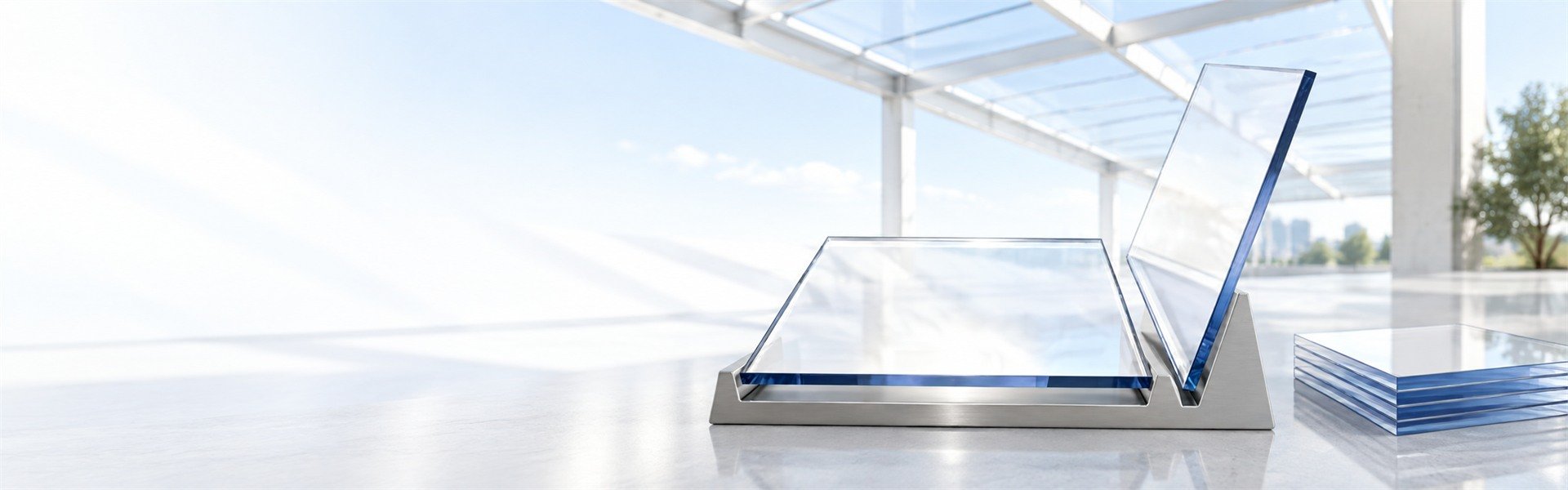
Polycarbonate Roofing Sheet Manufacturer in China
Compared to traditional glass or PVC roofing sheets, our polycarbonate roofing sheets have better safety and durability. Their impact resistance can reach tens or even hundreds of times greater than that of conventional glass, making them less likely to break even under hail, strong winds, or external impacts. If you want to improve your building safety, you can choose them.
Meanwhile, with 89% transmittance, they can provide adequate natural lighting while reducing energy consumption from artificial lighting, which can achieve energy-saving effects. Besides, our polycarbonate roofing sheets use advanced co-extrusion UV protection technology to block up to 95% of ultraviolet radiation, delay sheet aging, and extend their lifespan to 8-10 years.
If you plan to use polycarbonate roofing sheets in roofing projects, contact us, and we will provide you with a detailed guide to help you make the right choice.
Types of Polycarbonate Roofing Sheet
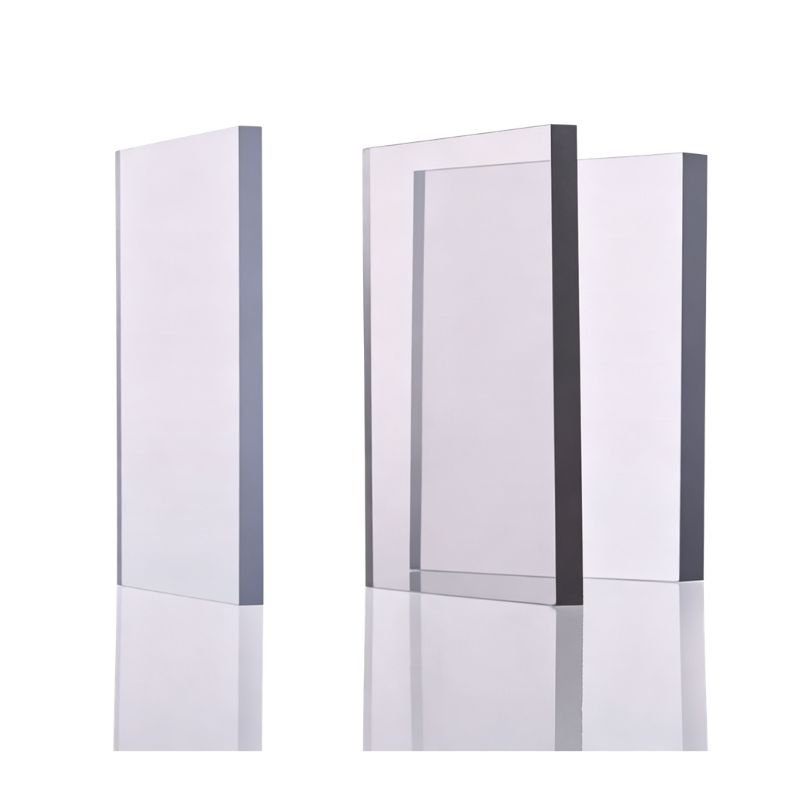
Like glass, it has extremely high impact resistance and optical clarity; it is widely used in safety applications that require high durability and transparency.
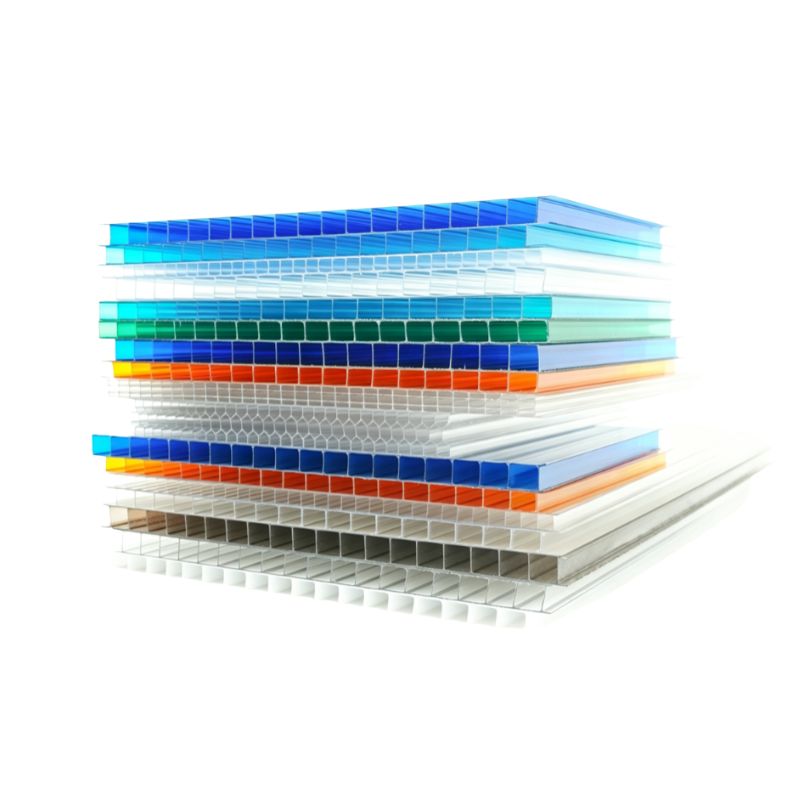
Its interior has air chambers that can make it ideal for places with high requirements for insulation and cost-effectiveness.
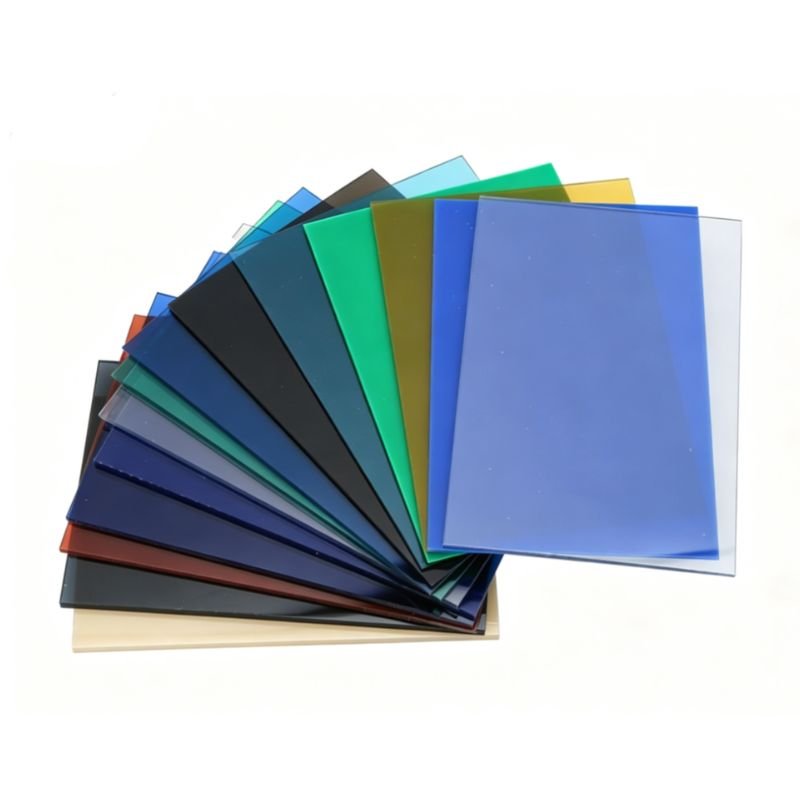
Providing transparent, bronze, milky white, blue, and green panels, it reduces glare, controls heat, and enhances privacy for various architectural and roofing projects.
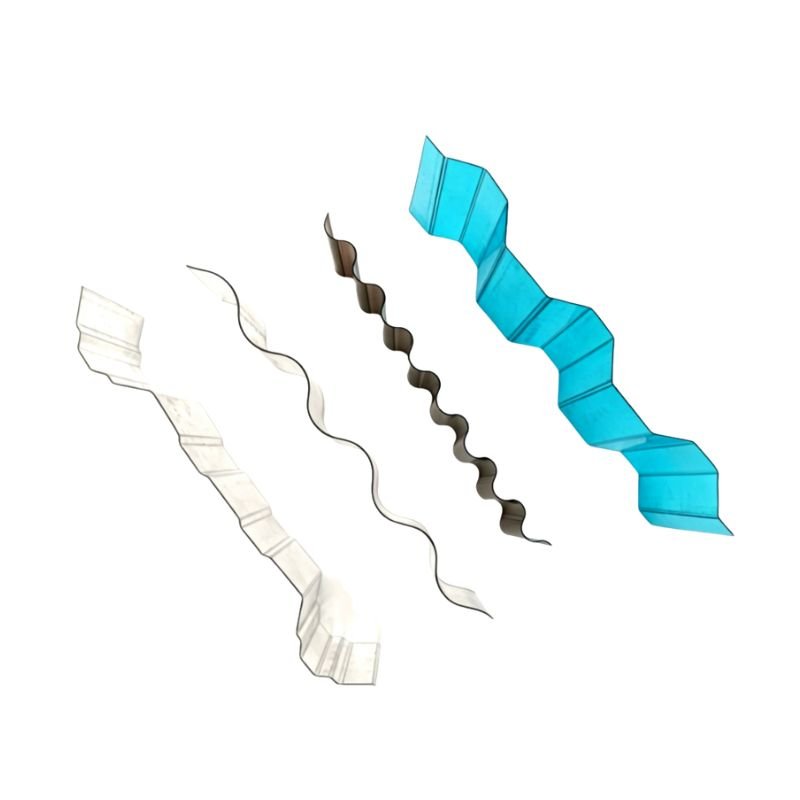
It’s a lightweight and high-strength roofing sheet, with its corrugated structure improving load-bearing capacity, impact resistance, and weather resistance.
What Are the Main Benefits of Polycarbonate Roofing Sheets?

Polycarbonate roofing sheets’ impact strength is higher than that of glass, thus reducing the risk of cracking or breakage during installation and long-term use.

They all have UV-resistant co-extrusion layers, which can prevent yellowing, surface degradation, and performance degradation caused by long-term sun exposure.

Multi-layer polycarbonate sheets can form air chambers, which help improve thermal insulation performance compared to traditional single-layer roof sheets.

You can cut, drill, bend, and customize them into different sizes, thicknesses, structures, and colors to satisfy specific roof requirements.
Why Choose Us
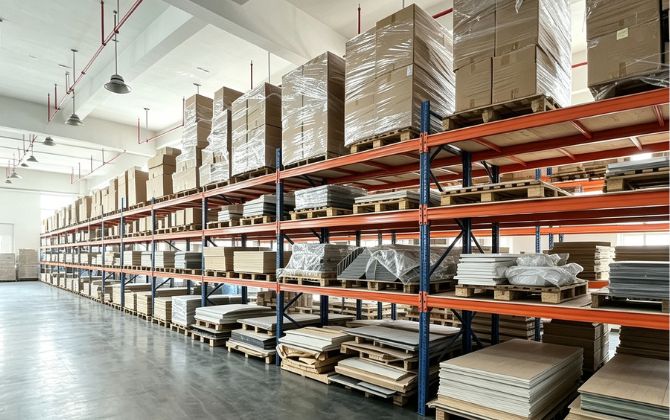
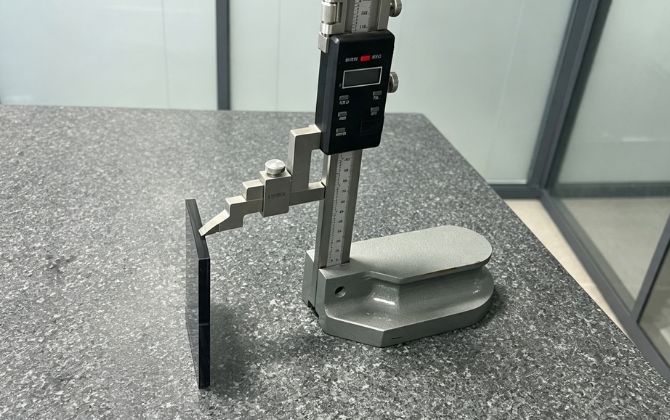
- 100% virgin polycarbonate resin.
- Strict quality standards and a 10-year long-term warranty.
- Global project experience.
- Factory-direct supply with stable quality.
- 72-hour UV aging test before shipment.
- We have batch traceability systems.
- Fast delivery for urgent projects.
- Global shipping support (FOB / CIF / DDP).
Specifications of Polycarbonate Roofing Sheet
| Parameters | Specification |
| Sheet Thickness | 4 – 35 mm (customizable) |
| Standard Width | 600 mm / 980 mm / 1220 mm / 2100 mm |
| Sheet Material | 100% virgin polycarbonate resin (UV co-extruded layer optional) |
| Standard Length | 2 – 11.8 m (customizable) |
| Temperature Range | -40°C to +120°C |
| Fire Rating | B1 (Flame retardant, self-extinguishing) |
| Thermal Insulation | U-value: 1.4 – 3.5 W/m²·K |
| Impact Strength | 200× glass (≈ 850–900 J impact strength) |
| Density / Weight | 1.2 g/cm³ (≈ 50% lighter than glass) |
| Thermal Conductivity | 0.19–0.22 W/m·K |
| Tensile Strength | ≥ 60 MPa |
| Service Life | 8-10 years |
Application of Polycarbonate Roofing Sheet
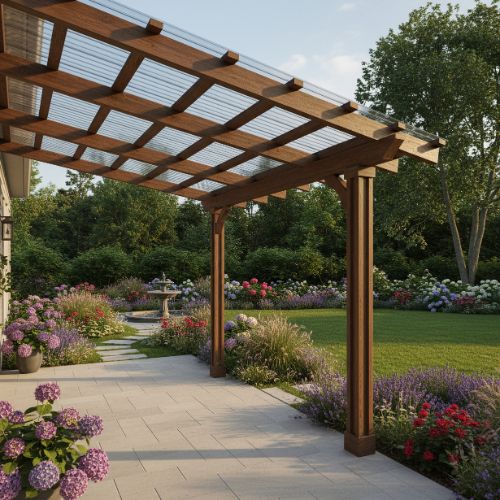
Balconies and canopies are semi-open structures that require both shade and good lighting effects. They also require sheets with excellent weather resistance to withstand the risk of breakage caused by hail, falling objects, or accidental impacts. Our polycarbonate roofing sheets have a light transmittance up to 89%, and their resistance strength is much higher than that of glass, which can well meet these needs.
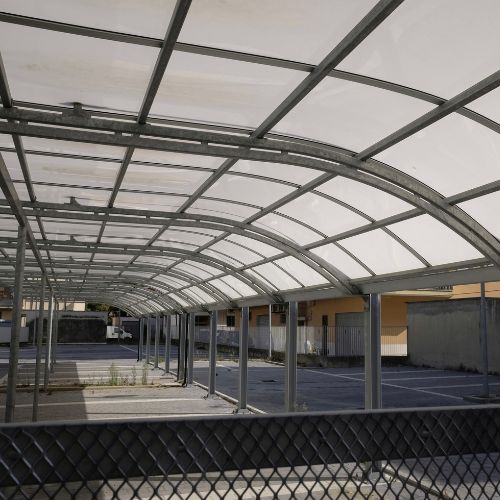
Due to carports and sunshades needing to be exposed to the outside for a long time, they must resist strong ultraviolet rays, rainstorms, and high temperatures. Polycarbonate roofing sheets employ the co-extrusion UV layer technology that blocks up to 95% of UV rays and has excellent impact resistance, making them highly resistant to breakage even in bad weather, and they can protect vehicles well.
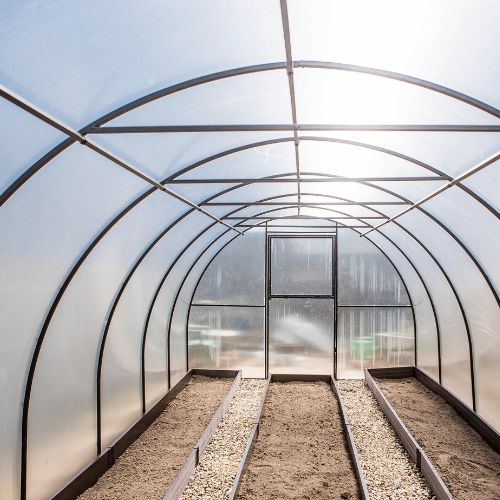
Our polycarbonate roofing sheet can adjust its light transmittance within a certain range through different processes and structural designs, providing sufficient natural light for plants in greenhouses or planting spaces.
Additionally, our polycarbonate roofing sheets have excellent thermal insulation properties, which can reduce heat loss during the day and slow down temperature drop’s rate at night, keep the microclimate inside the greenhouse, and thus increase crop yields.
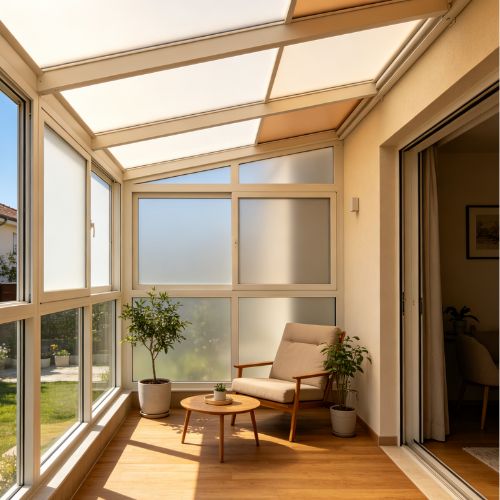
Balconies and sunrooms require good natural lighting, and our polycarbonate roofing sheet has a light transmittance of up to 89%. At the same time, they can soften and disperse the light through milky white and brown types, thus avoiding glare or local overheating caused by sunlight refraction, making the indoor space temperature more comfortable.
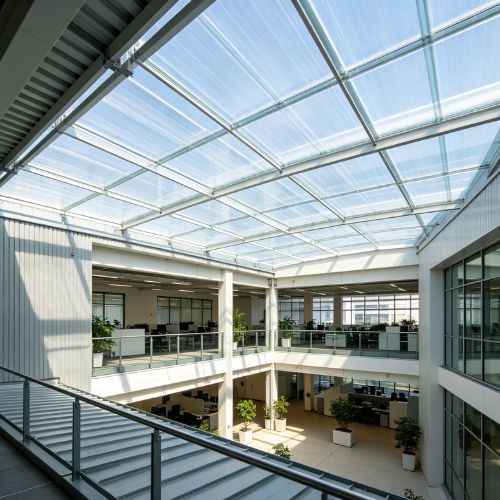
Commercial buildings usually have large areas and high energy consumption, but polycarbonate roofing sheets have good transparency and can introduce natural light, which can reduce daytime lighting electricity consumption and help businesses reduce operating costs.
Meanwhile, they are lightweight, but they have strong impact resistance and can cope with high-altitude falling objects, wind pressure, and extreme weather.
Customer Cases
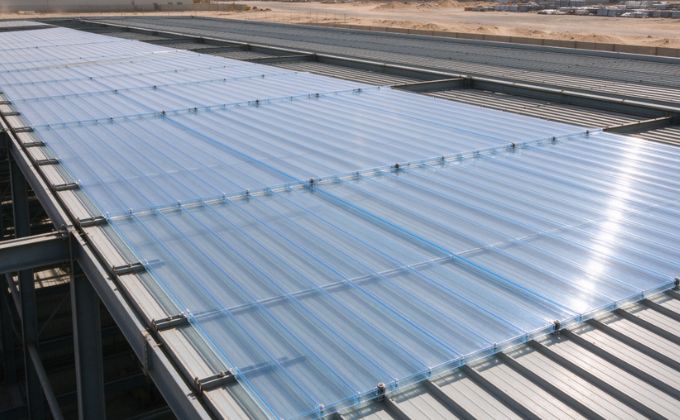
In a 3500-square-meter industrial logistics warehouse roof project, 10mm-thick solid polycarbonate roofing sheets were installed, which are specifically designed for harsh circumstances with high temperatures and frequent sandstorms.
After installing our polycarbonate roofing sheets, this roof reduced the indoor temperature by 6-8 °C and increased the utilization of natural lighting by about 60%.
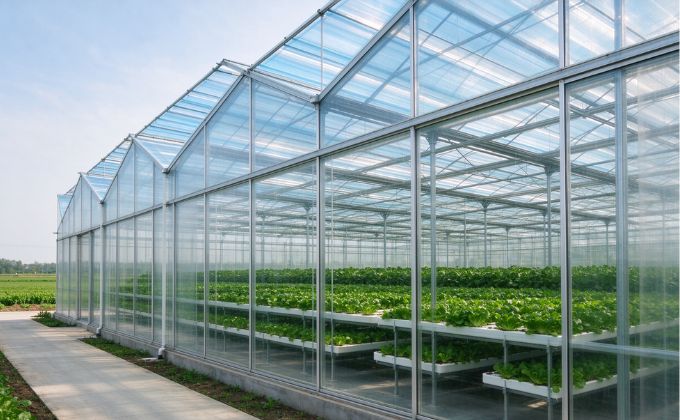
This project is a 5200-square-meter commercial greenhouse specifically designed for vegetable cultivation, with a roof made of 8 mm-thick multi-layer polycarbonate roofing sheets.
Upon completion, the greenhouse’s light diffusion efficiency increased by 25%, significantly improving photosynthesis conditions and boosting crop yields by approximately 18-22%.
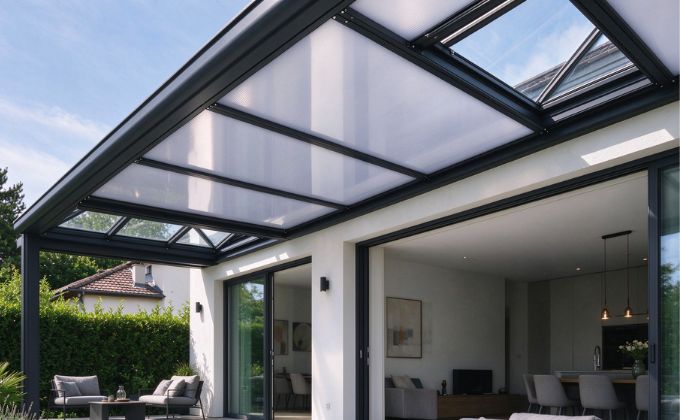
This project uses 6 mm-thick polycarbonate roofing sheets for UV protection to renovate residential skylights and terrace ceilings, covering the skylights, terrace ceilings, and natural lighting roof systems.
After installation, the natural lighting rate increased by 70%, while the heat absorption decreased by about 30%, creating a more comfortable living circumstance.
The installed cost of our polycarbonate roofing sheets typically ranges from $5 to $25 per square foot, but the exact price depends on panel types, thickness, project complexity, and local labor costs.
Thickness and Walls:
- 6 to 8 mm: It’s ideal for lightweight roofs, sunshades, and small greenhouses.
- 10 mm: These thick sheets are designed for courtyards, pergolas, and carports.
- 16 mm (3 to 6 walls): You can use it for insulated roofs, balconies, and areas with heavy snow.
- 25 to 32 mm: With maximum insulation and span, you can use it for professional greenhouses and large roofs.
Color:
- Clear: This color can maximize natural light penetration under roofs.
- Bronze: It can reduce glare and heat from direct sunlight on roofs.
- Opal: It diffuses light evenly, reducing glare and hot spots.
Because multiwall polycarbonate sheets are internally hollow with air chambers, they provide good insulation performance, lighter weight, and higher cost-effectiveness. However, their impact resistance and optical clarity are relatively lower.
In contrast, solid polycarbonate sheets have a high density, just like glass, with superior impact resistance, higher transparency, and better extreme weather performance, making them ideal for use in industrial roofs, skylights, high-safety or heavy-duty environments.
If installed and maintained properly, high-quality polycarbonate sheets’ service life can reach 8-10 years and even longer.
However, thickness, material quality, and specific usage circumstances can all impact the service life of polycarbonate roofing panels.
We suggest using sealing strips because most polycarbonate roofing sheets are corrugated or hollow in structure, making it easy for gaps to form at the sheet ends. Without sealing strips, it’s easy for rainwater to splash back, dust to enter, insects to breed, and water to seep, thus impacting the lighting effect and service life.
To avoid sheets cracking or breaking, it’s best to use a circular saw with fine-toothed blades or a curved saw with a downward-cutting blade when cutting polycarbonate roofing sheets.
At the same time, when cutting, you need to wear protective equipment like goggles, gloves, and masks to prevent inhaling dust and debris particles.
You should pay attention to the following:
Do not use strong chemicals or abrasive materials on polycarbonate roofing sheets because they can break them.
When cleaning polycarbonate roofing sheets, you should use mild soap and warm water instead of ammonia-based cleaners, abrasive scrubbers, or high-pressure cleaners.
Properly installing polycarbonate roofing sheets can prevent water leakage, cracking, yellowing, or deformation. Here are some issues you should pay attention to:
- Roofs should be made of steel, aluminum, or treated wooden purlins, and the spacing should be checked to guarantee that structures are horizontally aligned.
- Install the side coated with ultraviolet protective coating on the sunny side.
- Do not overtighten the sheets during installation.
- The drilled holes’ diameter should be slightly larger than the screws’ diameter.
- Use appropriate self-tapping screws and EPDM rubber sealing washers.
- When installing overlapping parts and joints, compatible polycarbonate H-profiles or aluminum connectors are required.