Choosing the wrong engraving material often leads to blurred edges, low contrast, yellowing outdoors, and even the generation of toxic smoke during processing. This guide provides a detailed introduction to five mainstream engraving materials, helping you select the most suitable material for your plastic processing project.
The Common Plastic Materials for Engraving
Polymethyl methacrylate(PMMA)
Features
High Transparency
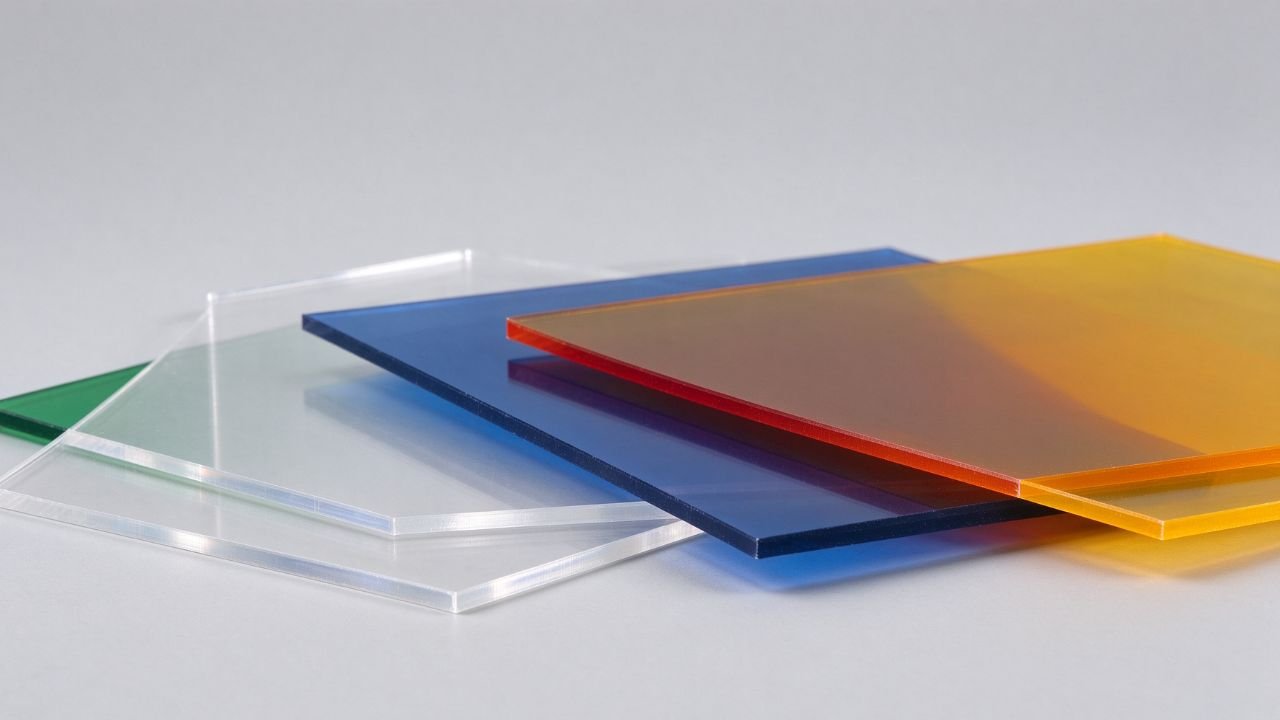
PMMA has a light transmittance of up to 92%, which is higher than that of ordinary inorganic glass, making it the material with the best optical properties among transparent plastics. Its refractive index is approximately 1.49, similar to that of optical glass, and it is often referred to as an optical plastic.
Lightweight and High Strength
PMMA has a density of 1.15–1.22 g/cm³, which is half that of ordinary glass. Its unnotched impact strength is 7–18 times that of ordinary soda-lime glass, giving it much better fracture resistance.
Weather Resistance
UV-stabilized PMMA supports long-term outdoor use with minimal yellowing. It delivers better UV resistance than standard PC, with an expected service life of 10–20 years in outdoor environments.
Processability
PMMA features a broad processing window and high forming accuracy, adapting well to both high-volume production and custom precision fabrication.
Engraving Performance
Laser engraving produces a uniform, frosted white finish with high contrast and burr-free edges, requiring no post-processing. It is suitable for engraving intricate patterns and text, with a minimum line width of 0.1 mm.
Processing Methods
Casting, extrusion, injection molding, thermoforming, laser processing, and machining.
Applications of PMMA
- Advertising signage. It is used in store signs, light boxes, and directional signs. Its excellent light transmittance delivers uniform, premium lighting effects for backlit signage.
- Trophies and gifts. PMMA is used for trophies, medals, and keychains because, when engraved, it produces a high-end frosted white finish with a premium texture.
- Commercial displays. PMMA can be used to create trade show display stands or product display cases because laser cutting allows it to be shaped into even the most complex forms, and the flame-polished edges result in a clear, aesthetically pleasing finish.
Acrylonitrile Butadiene Styrene(ABS)
Features
Excellent Mechanical Properties
ABS has exceptional impact resistance and maintains good toughness even in low-temperature environments. With a tensile strength of approximately 40–50 MPa, it combines rigidity with impact resistance. These outstanding mechanical properties are attributed to its two-phase structure, in which butadiene rubber is uniformly dispersed within a rigid acrylonitrile-styrene matrix.
Processing Flowability
ABS offers excellent processing flowability, with a wide melt flow index range and short injection molding cycles. This makes it suitable for the production of high-volume and structurally complex products.
Chemical Resistance
ABS exhibits good resistance to water, inorganic salts, alkalis, and dilute acids, making it suitable for everyday use. However, it is not resistant to organic solvents such as ketones, esters, and aromatic hydrocarbons. Care should be taken to isolate your products from these solvents during use.
Engraving Performance
Laser engraving is prone to melted edges, so low-power, high-speed settings are required. The resulting color tends to be dark, with average contrast, and manual coloring is needed for some designs. CNC engraving produces better results than laser engraving.
Processing Methods
Injection molding, extrusion, 3D printing, CNC machining, and laser engraving.
Applications of ABS
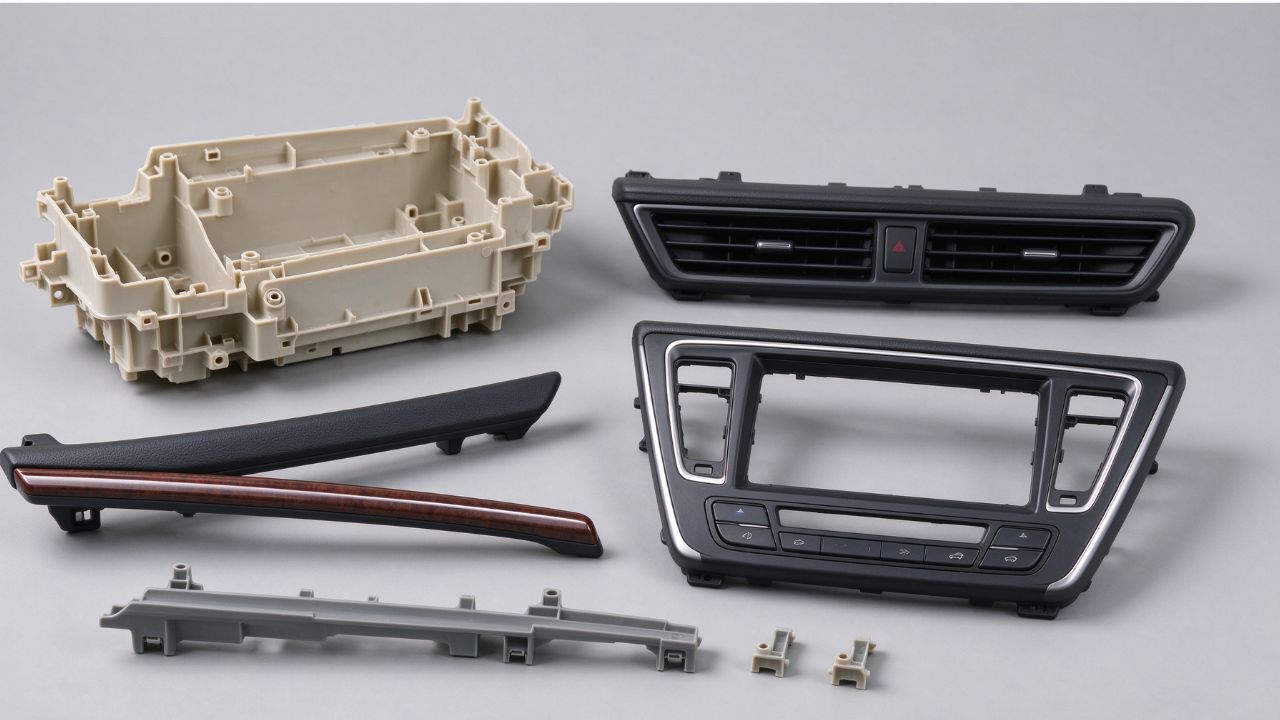
- For electronic and electrical product casings. Such as keyboard keycaps, mouse casings, TV remote controls, audio panels, mobile phone protective cases, etc.
- For automotive components. Such as dashboard trim strips, air conditioning outlet panels, door handles, interior control buttons, and other interior parts. Engraving can enhance their functional identification and decorative textures.
Polycarbonate(PC)
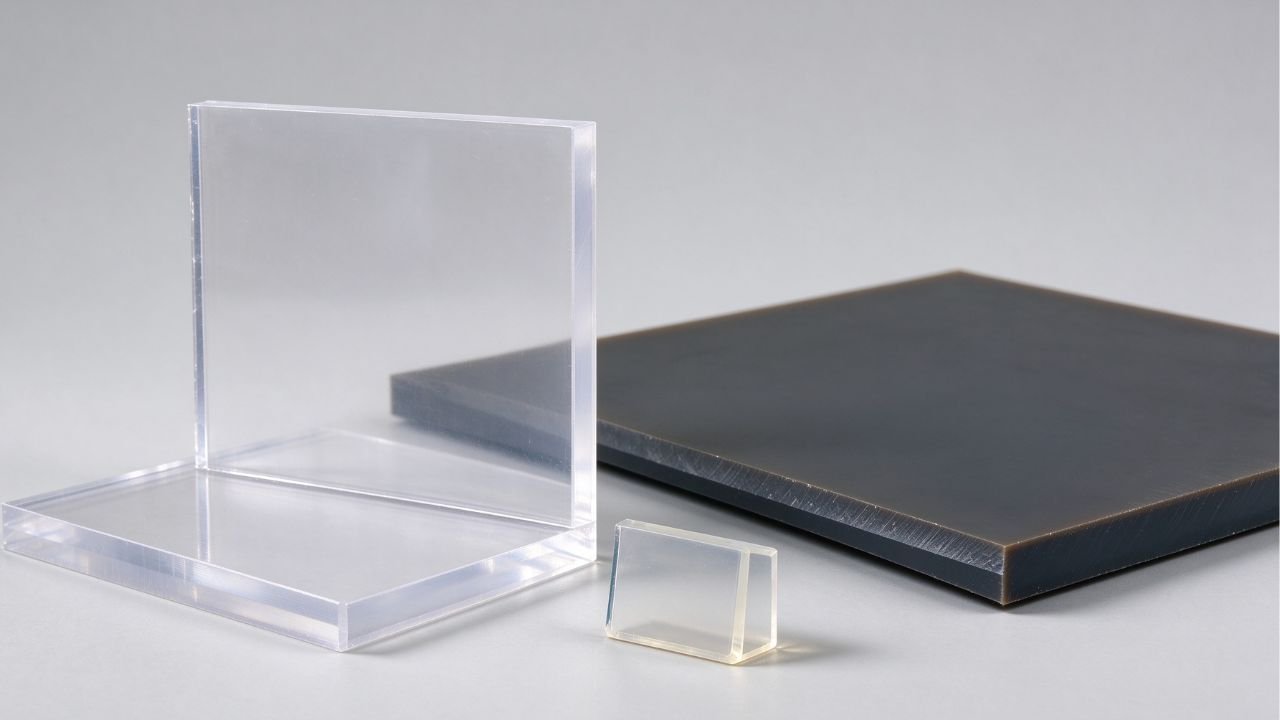
Features
Impact Resistance
PC features a notched Izod impact strength of 600–900 J/m, which is approximately 20–30 times that of acrylic and more than 200 times that of ordinary glass. It maintains excellent impact resistance even at low temperatures of -40°C.
Optical Properties
PC offers superior optical properties, with a light transmittance of up to 89% and a refractive index of 1.586. Its optical performance is second only to PMMA, and it features high transparency.
Wide Operating Temperature Range
PC has a glass transition temperature of approximately 147–150°C, a heat deflection temperature (HDT) under 1.82 MPa load of approximately 130–140°C, and a brittle temperature of approximately –135°C. Its long-term operating temperature range is –40°C to +120°C, allowing it to maintain stable performance across an extremely wide temperature range.
Engraving Performance
Standard-grade PC tends to yellow and has low contrast when laser-engraved, and specialized PC with added laser marking agents produces clear black markings. It is suitable for deep engraving and resistant to cracking.
Processing Methods
Injection molding, extrusion, thermoforming, CNC cutting, laser engraving, and CNC drilling and engraving
Applications of PC
- Equipment nameplates and labels. PC can be used to manufacture nameplates for mechanical equipment, electrical control panels, and safety warning signs; laser engraving enhances marking contrast for improved visibility, making them more conspicuous.
- Protective face shields and safety products. PC is used to manufacture protective face shields, safety goggles, and blast shields; its excellent impact resistance makes it the material of choice for transparent protective gear.
- ID cards and credentials. PC is the primary material for ID cards, employee badges, and access cards; laser marking can be used to imprint information such as photos, names, and ID numbers.
Polyethylene(PE)
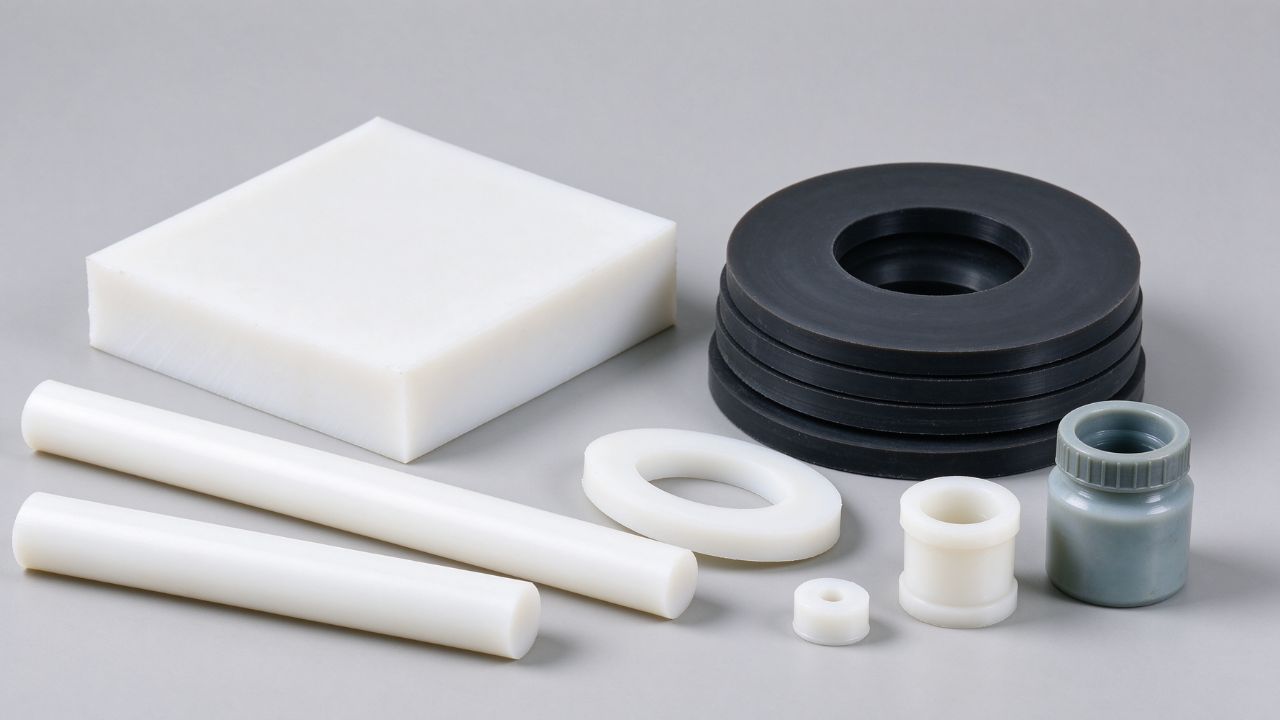
Features
Lightweight
With a density of only 0.91–0.97 g/cm³, PE is one of the lowest-density plastics and can float on water.
Excellent Chemical Resistance
As a nonpolar material, PE offers excellent resistance to most acids, alkalis, and salt solutions, as well as polar solvents like alcohols. It has limited resistance to nonpolar solvents such as ketones, aromatic hydrocarbons, and chlorinated liquids, which may cause swelling with prolonged contact.
Electrical Insulation
PE has a volume resistivity of approximately 10¹⁶ Ω·cm and extremely low dielectric loss, making it one of the preferred materials for high-frequency cable insulation.
Engraving Performance
CO₂ laser engraving tends to cause melting and edge adhesion, requiring low-power, high-speed settings. Fiber lasers have low absorption rates, requiring the addition of additives, and the engraving precision is generally moderate.
Processing Methods
Injection molding, extrusion, blow molding, laser cutting, and CNC machining.
Applications of PE
- Cable and pipe marking. PE is used for ring-shaped markings and barcode labels on automotive wiring harnesses, building pipes, and telecommunications cables. It produces clean, legible markings and offers excellent durability and chemical resistance
- Packaging and containers. PE is used for branding, production dates, lot numbers, and QR codes on food packaging, personal care product containers, and industrial drums.
- Toys and household goods. Examples include children’s toys, plastic storage containers, and stationery.
Gravoply™
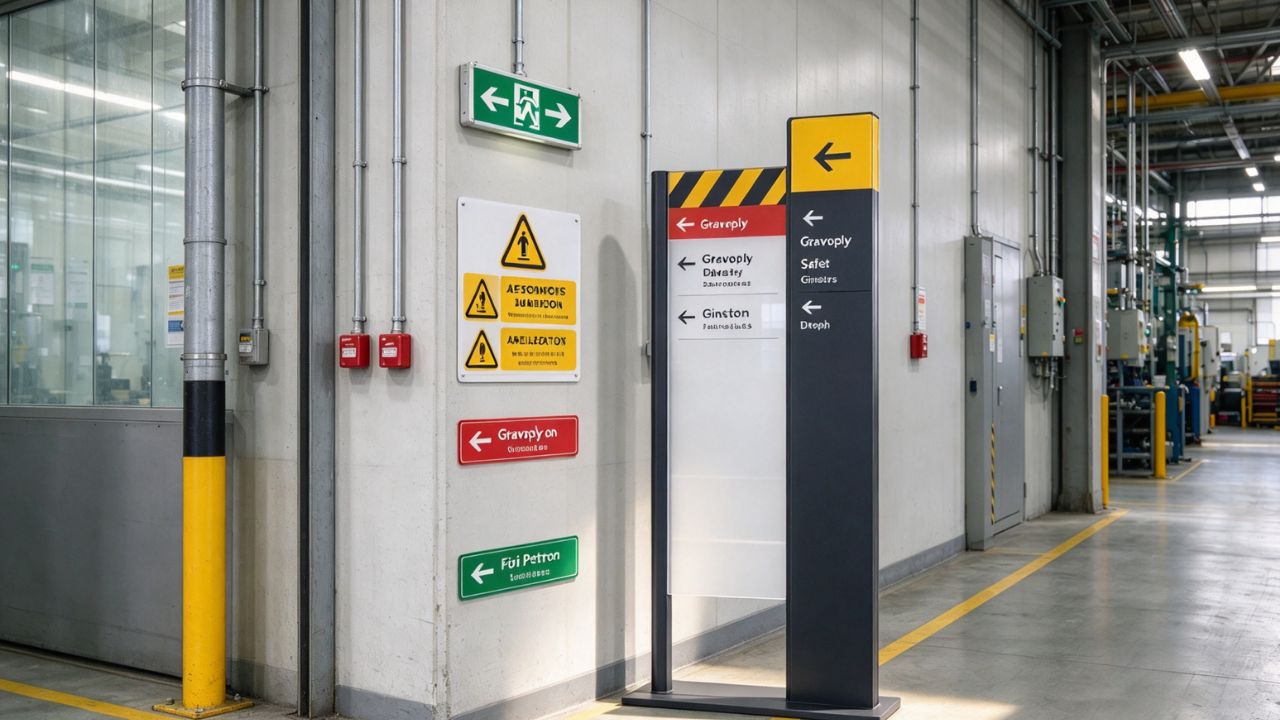
Features
No Post-Processing Required
Gravoply™ consists of an ultra-thin top layer laminated to a contrasting-color base layer. During engraving, the laser ablates the top layer, instantly revealing the color of the base layer—no pigment filling or additional processes are required.
Suitable for Indoor and Outdoor Use
The Gravoply™ Laser series is UV-stabilized and has passed the ISO 4892-3 1,500-hour UV aging test, ensuring a service life of over 3 years outdoors without significant fading.
Compatible with Dual Processes
Gravoply™ supports both CO₂ laser engraving and CNC (rotary) engraving, offering high process flexibility. A single material can be used with multiple engraving devices, reducing the number of inventory SKUs.
Weather and Chemical Resistance
Gravoply™ withstands industrial solvents such as gasoline, diesel, and mineral oil, maintaining its integrity even in the harshest environments. With fire ratings of UL 94 V-2 and UL 94 V-1, it is an ideal choice for industrial signage and safety signs.
Engraving Performance
Laser engraving reveals the contrasting background color with sharp edges and requires no post-processing. It is suitable for engraving fine text and logos, with a minimum line width of 0.05 mm.
Processing methods
Laser engraving, CNC rotary engraving.
Applications of Gravoply™
- Industrial nameplates and equipment labels. Because engraving exposes the contrasting base color beneath, resulting in clear, sharp characters that remain permanently wear-resistant, it is used for permanent nameplates in industries such as machinery manufacturing, power equipment, and instrumentation.
- Construction signage and wayfinding systems. Because it meets the requirements for high-contrast safety-color signage and complies with industrial safety standards, it is used for factory safety warnings, fire evacuation signs, and pipeline direction indicators.
- Control panels and instrument panels. Because the Gravoply™ 3C series features a three-layer structure that reveals different colors at varying engraving depths, making it suitable for complex functional panels, it is used for equipment control panels, labels on operating interfaces, switch labels, and indicator light labels.
Comparison of Different Plastic Engraving Materials
| Comparison Dimension | PMMA | ABS | PC | PE | Gravoply™ |
| Engraving Effect | Frosted white, high contrast, premium feel | Prone to melting. Moderate contrast with optimized parameters | Prone to discoloration, low contrast | Clean but easily melted | Reveals core color, high contrast, extremely professional |
| Surface Hardness | Low (2H–3H for cast grade) | Medium (≈1H pencil / Rockwell R60–R80) | Medium (≈2H pencil / Rockwell R115–R125) | Low | Medium (scratch-resistant surface layer) |
| Weather Resistance | Excellent (10–20 years) | Poor (aging, fading) | Good | Fair | Excellent (UV‑stable, 3+ years) |
| Laser Safety | Safe | Releases toxic fumes without proper fume extraction | May release harmful fumes when overheated. Fume extraction required | Safe | Safe |
| CO₂ Laser Compatibility | Best | Requires ventilation | Prone to yellowing | Low power needed | Best |
| Cost | Low | Low | Medium | Low | High |
| Typical Applications | Signage, trophies, light boxes | Electronic housings, automotive parts | Nameplates, protective panels | Packaging, cable markers | Premium signage, industrial nameplates |
How to Choose the Right Plastic Engraving Materials?
Long-Term Outdoor Use
If your product is intended for long-term outdoor use, we recommend choosing Gravoply™ Laser or UV-stabilized PMMA, as they offer strong resistance to UV rays and can withstand varying temperatures. Furthermore, they retain their vibrant colors over time and exhibit excellent resistance to yellowing.
Aesthetic Appeal of Engraving
If you’re seeking an aesthetically pleasing engraved finish for your product, consider cast PMMA or Gravoply™.
When engraved, cast PMMA reveals a uniform, fine-textured matte white surface that creates high contrast with transparent or colored substrates, making it ideal for products that aim for a subtle, sophisticated look.
Gravoply™ engraving ablates the surface layer instantly, directly revealing the contrasting color beneath. The saturation, gloss, and uniformity of its base color are superior to those of manually colored products, making it suitable for products that require high color accuracy.
Seeking Value for Money
If your production prioritizes value for money, extruded PMMA and PE are both excellent choices.
Extruded PMMA offers higher production efficiency than the casting method, making it suitable for high-volume, standardized production and simple text engraving.
PE has a low raw material cost and low density, requiring less material for the same volume. It is suitable for high-volume labeling, packaging identifiers, cable marking, and other applications where visual appeal is not a top priority.
Impact Strength
When high impact resistance is a top priority, PC and ABS are the two best options.
PC delivers industry-leading toughness and retains its performance even at extremely low temperatures, making it suitable for safety gear and heavy-duty industrial parts.
ABS offers balanced rigidity and impact resistance at a lower cost, making it ideal for consumer electronics and automotive interior parts.
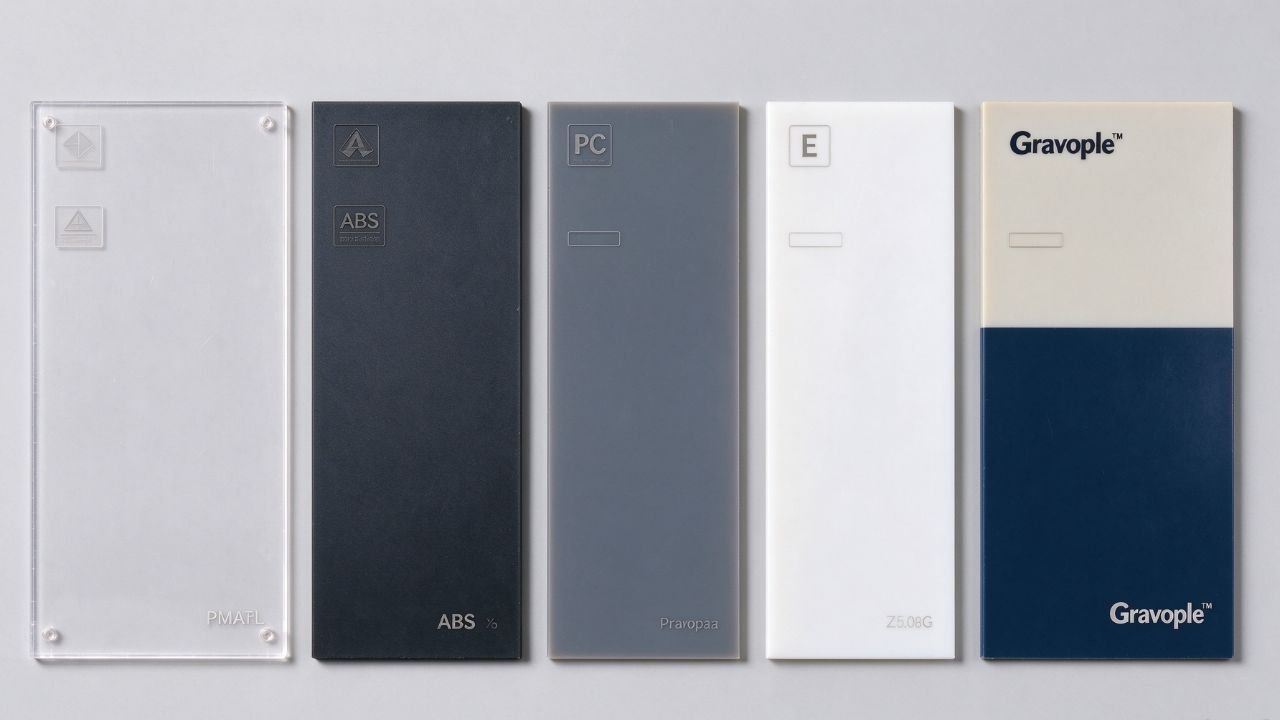
FAQs
How Deep Can Plastic Engraving Be?
The depth of laser engraving on plastic is influenced by the type of laser, power, material type, and parameter settings. For surface engraving, the depth ranges from 0.01 to 0.1 mm, which is suitable for engraving logos, text, and barcodes. For standard engraving, the depth ranges from 0.1 to 3 mm. Generally, the higher the power or the slower the speed, the greater the engraving depth.
What Plastics Should You Never Laser Engrave?
Plastics that cannot be laser-processed include polyvinyl chloride (PVC), polytetrafluoroethylene (PTFE), and halogen-containing, nitrogen-containing, or benzene-ring-containing polymers. These materials produce toxic or corrosive gases that can endanger the operator’s health and damage the equipment.
The following materials are not recommended for laser processing without optimized parameters: low-density polyethylene (LDPE), polypropylene foam, and fiberglass, among others.
How Do I Prevent Plastic from Melting during Engraving?
Plastic melts during processing because it has a low melting point. These issues can be avoided by adjusting equipment parameters and using certain auxiliary methods. When setting parameters, follow the principle of low power and high speed, or set a low pulse per inch (PPI).
Auxiliary methods include applying a protective mask to the plastic surface before engraving, spraying a small amount of water mist onto the mask, or slightly defocusing the laser so that the focal point is offset by about 3 mm.
What Is The Difference Between Laser Engraving And Laser Cutting Plastic?
The differences between laser engraving and laser cutting can be examined from four aspects: processing depth, purpose, speed, and energy density. Engraving only removes the surface layer, while cutting completely penetrates the material. Engraving creates surface designs such as patterns or text, whereas cutting divides the material into separate pieces. Engraving is fast because the laser stays on the surface briefly, while cutting is slower as it takes time to penetrate. Engraving requires lower energy density (only vaporizing the surface), whereas cutting needs higher energy density to vaporize the entire path.
Can Engraved Plastic Parts Be Used Outdoors?
Yes, but it depends on the material you use. When purchasing materials, make sure they are labeled as “outdoor weatherable” or “UV-stable.” You can also buy specialized engraving sheets, which can reduce the likelihood of problems. You should also be aware that some materials are not suitable for outdoor use, such as PMMA without UV stabilizers and standard ABS.
Final Thought
The choice of different plastic engraving materials will affect your price, the engraving precision, and the lifespan of the product. You can make your selection based on your needs. If you have any unclear points or want professional processing services, you can contact us.