In the manufacturing and processing industry, the cutting process of polycarbonate sheets directly affects product precision and production efficiency. This article will introduce the tools and processing methods required for PC sheet cutting to help you choose a suitable cutting solution.
Tools for Cutting Polycarbonate Sheet
Hand Tools
- Utility Knife/Hook Knife: Used for cutting thin sheets 2–3 mm thick.
- Aviation snips/tin snips: Suitable for cutting thin sheets under 1.5 mm thick and ideal for quick trimming.
- High-Quality Scissors: Suitable for cutting thin sheets under 1.5 mm thick.
Power Tools
- Circular Saw: Suitable for cutting sheets thicker than 10 mm or for long cuts. A 60–80-tooth blade is recommended.
- Band Saw: Used for cutting large panels or thick curved pieces, and many customers consider this the fastest tool for cutting PC sheets.
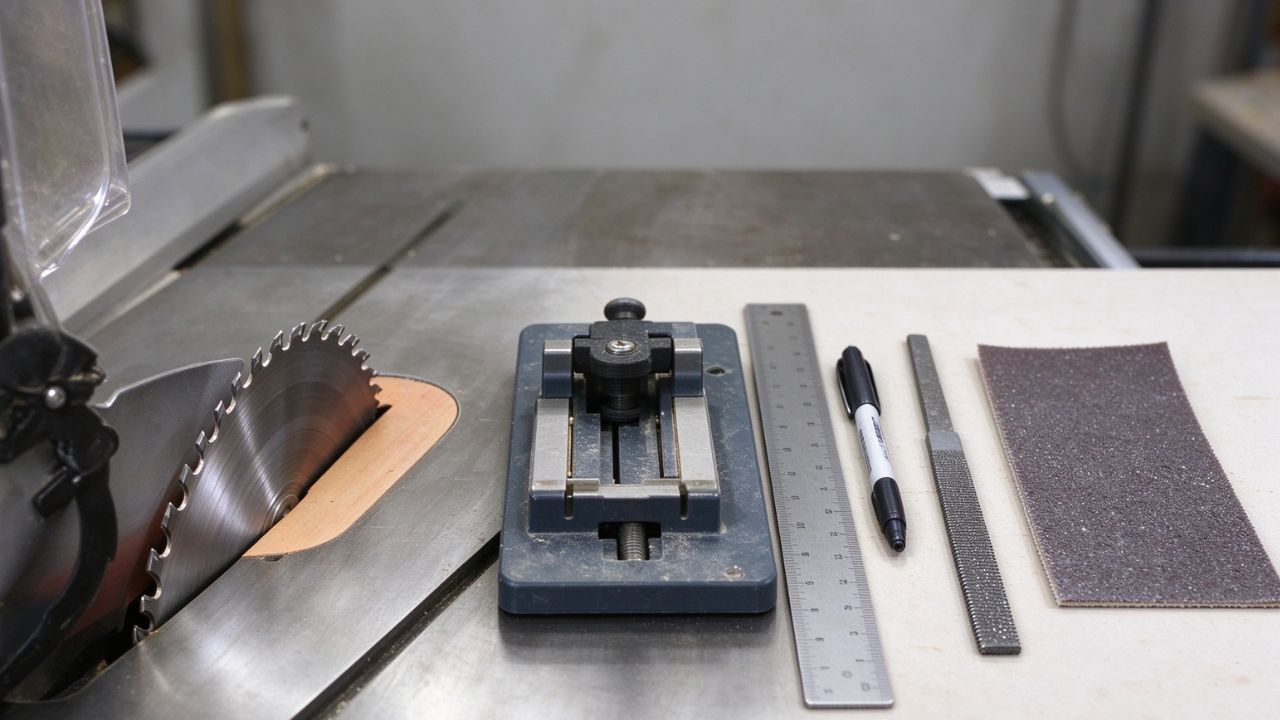
- Table Saw: Suitable for high-precision straight cuts and requires an 80-tooth, triple-chip grind saw blade specifically designed for plastic.
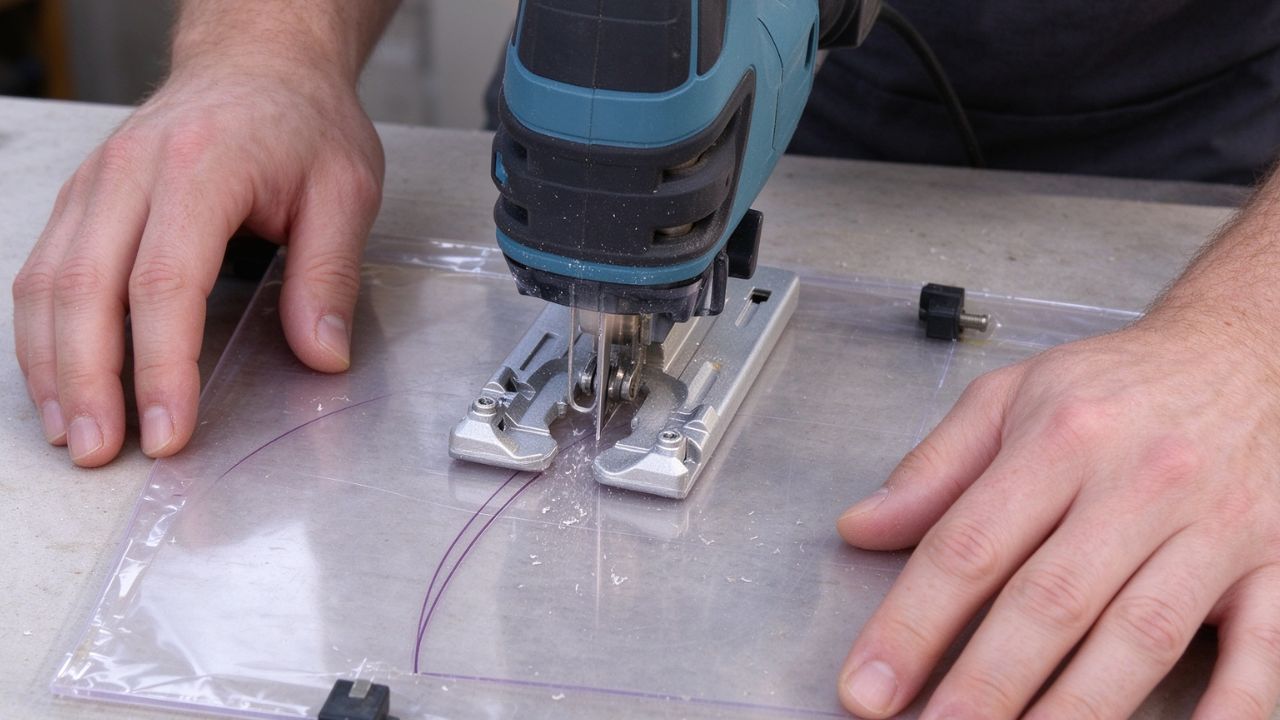
- Jigsaw: Used for cutting curves, irregular shapes, or for on-site work. Choose a fine-tooth saw blade.
Precision and Professional Machining
- CNC Milling Machine: Suitable for high-precision, batch production of complex shapes with minimal error. It can use single-flute or double-flute helical end mills.
Auxiliary Tools
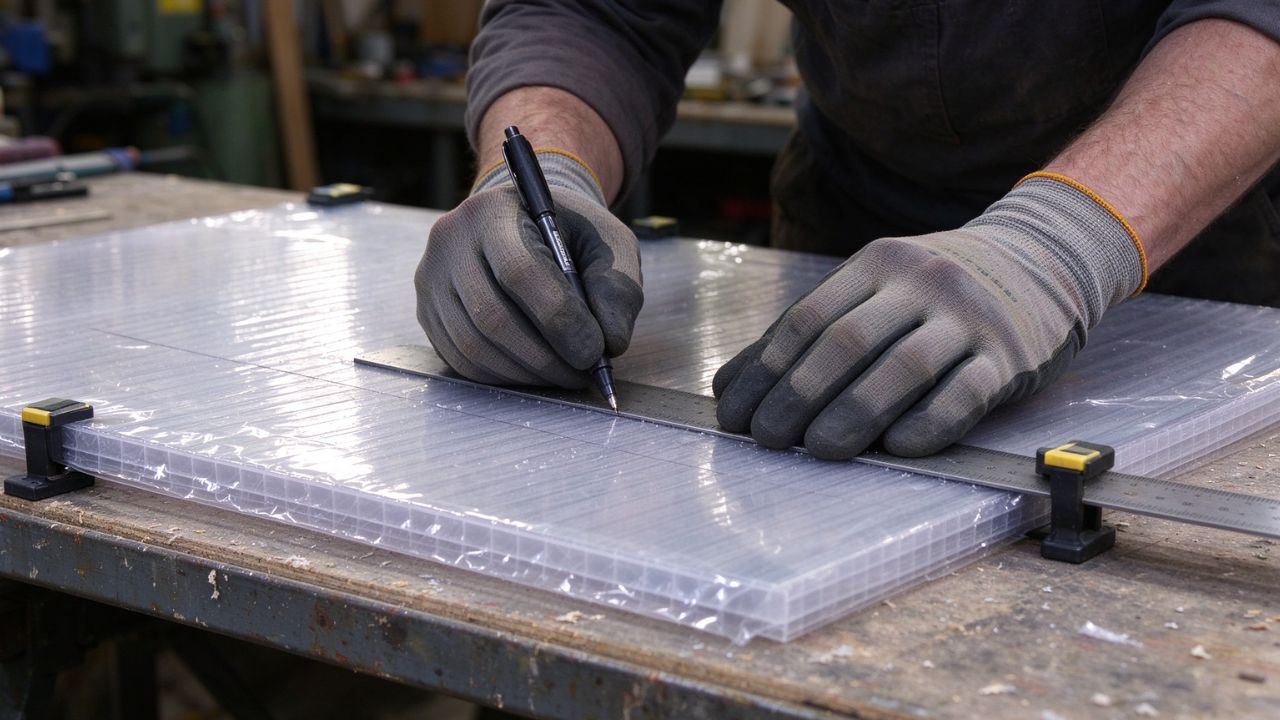
- Marker pens, rulers, or tape measures: Used for measuring and marking
- Clamps: Used to secure panels
- Fine-grit files or sandpaper: Suitable for smoothing after cutting
- Masking tape: Used to protect materials and also to reduce scratching by the saw blade.
Protective Equipment
- Safety goggles
- Cut-resistant gloves
- Dust masks
- Hearing protection
The specific tools required depend on the thickness and shape of the sheet material you need to process.
The Preparation Work Before Cutting
Prepare the Work Area
Clean the workbench and ensure it is tidy. Lay down a layer of cardboard or flat plywood to protect the workbench surface. Work in a cool, dry environment.
Measure the Sheet Material.
Determine the dimensions of the sheet and mark the cutting lines on the protective film. Then identify the UV-coated side and position it facing outward.
Select Your Tools
Choose tools suitable for your cutting needs.
Perform a Check
Verify that the tools are in good working order, ensure the sheet material is securely clamped, and check that all protective equipment is properly worn.
The Different Cutting Processes for Polycarbonate Sheet
Mechanical Cutting
Mechanical cutting is the most common and cost-effective method for processing PC sheets.
Straight-line Cutting
For straight cuts, install a fine-toothed saw blade specifically designed for plastic, such as one made of tungsten carbide. We recommend a blade with 60–80 teeth with a triple-chip grind (TCG) profile, designed specifically for plastic. Set the cutting depth slightly deeper than the thickness of the sheet material, and this reduces vibration and makes the cutting process safer.
To cut, align the saw blade with the starting point and advance it at a steady, even pace. Do not apply downward pressure. Let the saw blade cut on its own to complete the straight cut.
Curve Cutting
For curved cuts, use a jigsaw equipped with a fine-tooth blade designed specifically for plastic, with 10–14 teeth per inch. Maintain a low-to-medium speed while cutting. For more intricate curves, you can use a band saw. Standard bench-type band saws are typically capable of cutting sheet materials with a thickness ranging from 2 to 20 millimeters. In this case, a fine-toothed saw blade with matching tooth specifications should be used, and the machine should operate at a medium to low cutting speed.
To cut, advance slowly and at a steady speed along the marked line to avoid jamming. When cutting around curves, do not force the tool to turn. This allows the blade to follow the curve naturally.
Multi-wall Sheet Cutting
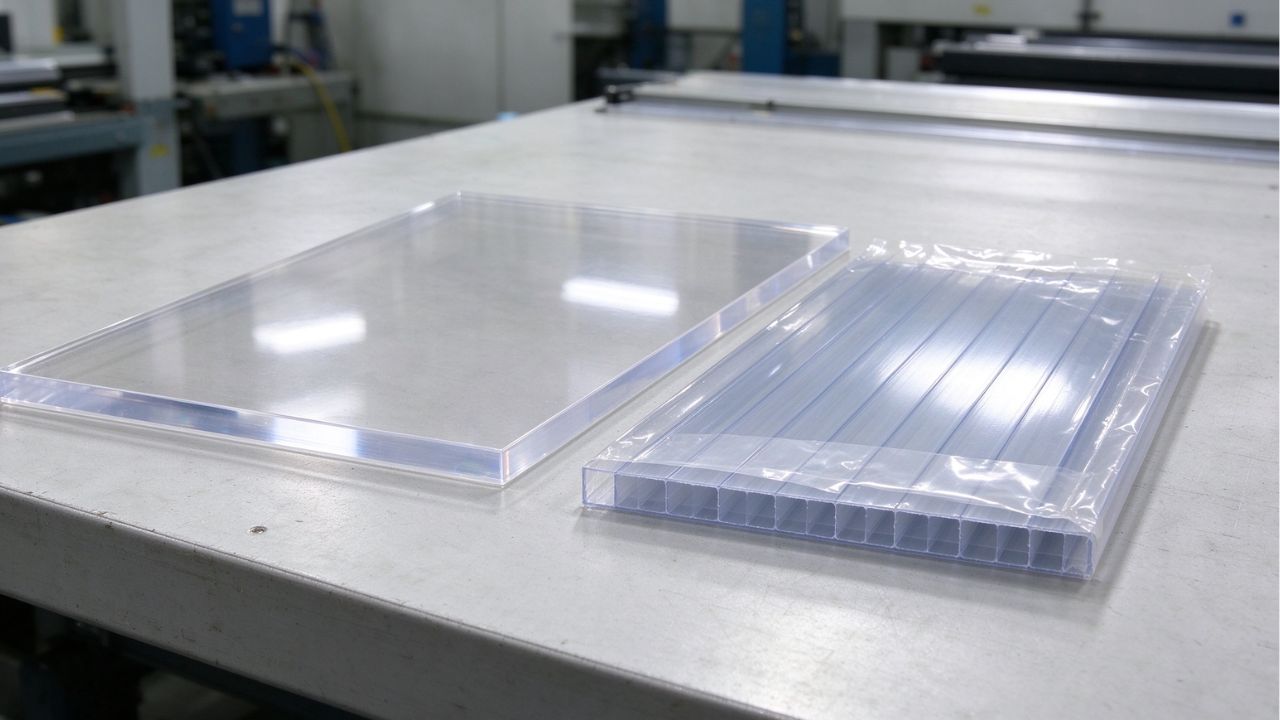
The choice of tools for cutting multi-wall PC sheets depends on the thickness of the sheet. For sheets thinner than 6 millimeters, a utility knife can be used. For straight cuts on sheets thicker than 6 millimeters, a circular saw or table saw is recommended. For sheet materials with a thickness exceeding 6 millimeters, a curved saw is the best choice for arc cutting. Choose a blade with more than 10 teeth per inch, avoiding coarse-tooth blades, as they result in a rough cut surface and excessive vibration.
When cutting multi-wall PC sheets, you should cut one sheet at a time, either along or perpendicular to the rib direction, and avoid bevel cuts as they can crush the internal rib structure. Maintain a steady, even speed during the cut and do not apply downward pressure. After cutting, you should also apply edge sealing.
CNC Milling
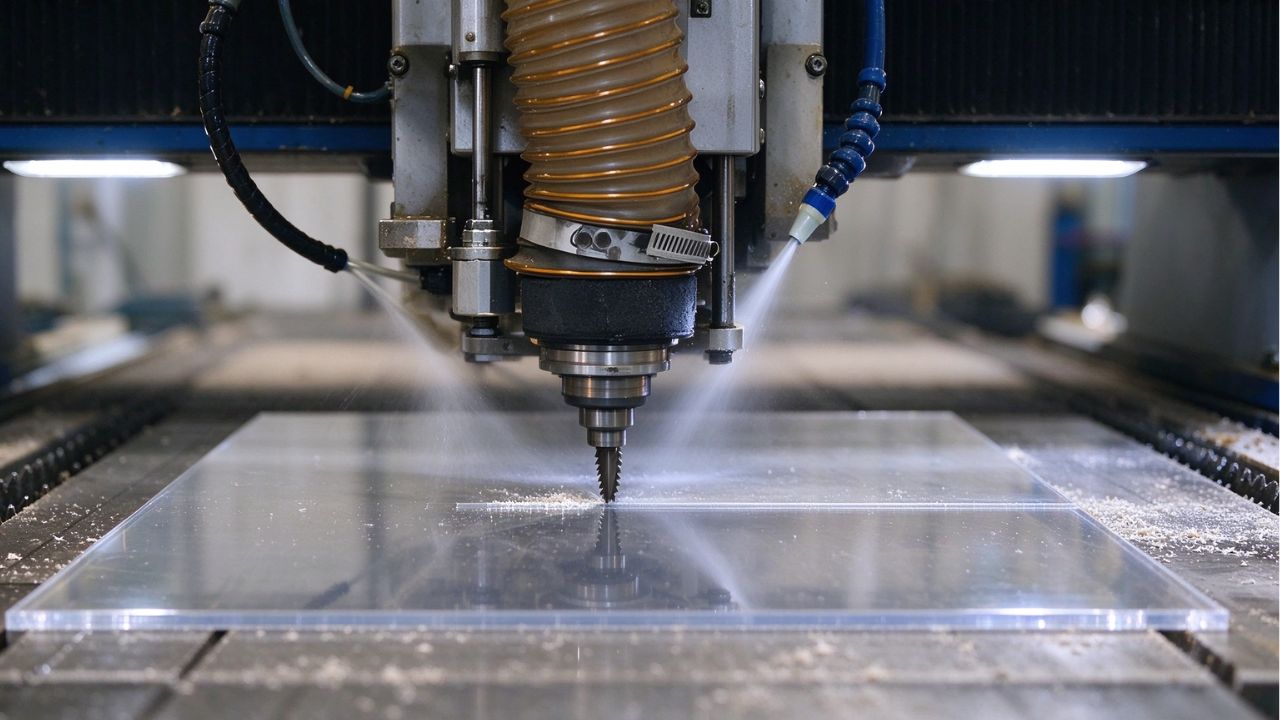
CNC milling requires a CNC milling machine with three or more axes, a single-flute helical end mill or a double-flute tungsten carbide end mill, and a cooling system.
The CNC milling process begins with programming and designing the product drawing, followed by fixing the PC sheet to the CNC worktable and setting the cutting parameters. For high-speed CNC machines, spindle speed ranges from 20,000 to 25,000 RPM, with a cutting speed of 100 to 500 m/min, and a feed rate of 0.1 to 0.5 mm/rev. The general principle is that the greater the cutting depth, the slower the feed rate should be set to prevent excessive load on the cutting tool and overheating of the material.
During CNC milling, you can employ a layered cutting strategy. To start with rough machining using a large cutter, followed by finish machining with a smaller cutter. Chips must be removed promptly.
Waterjet Cutting
Waterjet cutting uses a high-pressure water jet to cut materials, with the advantage of having virtually no heat-affected zone. Thin sheets under 0.8 millimeters can be cut with a pure waterjet, while thick sheets over 3 millimeters can be cut with an abrasive waterjet. Like CNC milling, waterjet cutting is also controlled by a system.
Waterjet cutting involves incorporating the product design into a waterjet cutting system, and then the PC board is completely immersed in it or fixed on the workbench. Cutting parameters are selected based on the sheet’s thickness. During cutting, you only need to monitor the entire process. There is no need to worry about melting or deformation, and minimal secondary finishing is required.
The Finishing Work after Cutting
Cleaning and Inspection
First, use a soft-bristled brush to remove debris. Then, remove the clamp and check the cut edges for burrs or chips.
Edge Finishing
You can choose the appropriate edge processing method based on the product requirements. If only burrs need to be removed, use a fine file or 180-400-grit sandpaper for basic grinding. For multi-layer PC boards, use a nylon brush and an electric sander.
In order to get a smoother edge, please perform fine sanding. Start with 400-grit sandpaper and gradually transition to 1200-grit sandpaper. Advanced polishing is required to achieve a transparent surface effect. You can choose mechanical polishing or flame polishing. However, the flame polishing technique is more challenging and requires professional skills.
Removing the Protective Film
Peel off the protective film only after cutting and edge finishing to maximize protection against scratches.
Edge Sealing for Multi-wall PC Sheet
Multi-wall PC sheets with internal cavities must undergo edge sealing using specialized breathable tape and aluminum foil edge-sealing tape.
Relieve the Stress
This step is optional, but annealing is recommended for panels thicker than 4 mm or with complex patterns. The specific operation is as follows: Place the panel in a temperature-controlled oven and heat it to 60–70°C, keeping it at this temperature for 2–4 hours, and then slowly cool it to room temperature over several hours.
The Final Cleaning
The final cleaning
After the entire process is completed, please use a neutral cleaner and warm water. Soak a soft cloth or sponge in the cleaning solution and wipe the panel surface. Then rinse with clean water and thoroughly dry.
FAQs
Can Laser Cutting be Used on Polycarbonate Materials?
Laser cutting is not recommended. Because it produces toxic gases, requires a highly controlled cutting environment, and poses health risks to operators. It also affects cutting quality. For example, yellowish-brown or brown scorch marks may appear along the edges, compromising the quality of the cut. If the laser parameters are not checked before use, the risk of burn damage and fire occurrence on thicker materials will increase.
How Can Edge Melting be Prevented During Cutting?
Edge melting is primarily caused by excessively high cutting temperatures. This issue can be addressed in three ways. Choose a sharp saw blade with a high tooth count, as dull blades generate more friction, leading to excessive heat. During operation, feed the blade at a steady speed without pausing or applying excessive downward pressure. For heat dissipation, use compressed air to blow across the cutting surface. This cools the material and clears away debris. During CNC machining, water mist cooling can also be used.
What Should be Done if Stress Cracking Occurs after Cutting?
Cracks can compromise the strength of polycarbonate sheets. If only minor hairline cracks are present and they do not affect the structural integrity, the sheets can continue to be used. However, sheets with severe cracking must be scrapped and cannot be used any longer.
To prevent this from occurring, the material can be left to stand at 20–25°C for 48 hours before processing to relieve internal stress, or undergo an annealing process. Additionally, the temperature in the processing workshop should be maintained between 18–30°C.
Can Polycarbonate Sheets be Cut Without Damaging the Protective Coating?
Yes. During the cutting process, please ensure that the protective film attached during manufacturing remains intact – it not only protects the anti-ultraviolet coating beneath from being scratched by tools, but also provides a clear surface for marking. Please note that the protective film may age and become difficult to remove if exposed to UV light for an extended period, so store it away from light. If it cannot be removed, you can heat it to soften or soak it in a solvent suitable for that type of sheet.
Does Cutting Polycarbonate Affect its Strength and Durability?
Normal operation does not affect the strength and durability of polycarbonate. However, if the mechanical cutting parameters are set incorrectly, strength and durability will be compromised. For example, fine cracks or burrs on the cut edges can serve as initiation points for cracks under future stress. To prevent this from happening, control the temperature during cutting to keep it below 135°C. After cutting, be sure to grind the edges to remove fine cracks and burrs.
Final Thought
Selecting the appropriate method for cutting polycarbonate sheets depends on material properties, product requirements, and processing precision. Whether processing standard sizes or complex structures, Zoycen offers a one-stop PC sheet processing service to meet your needs.