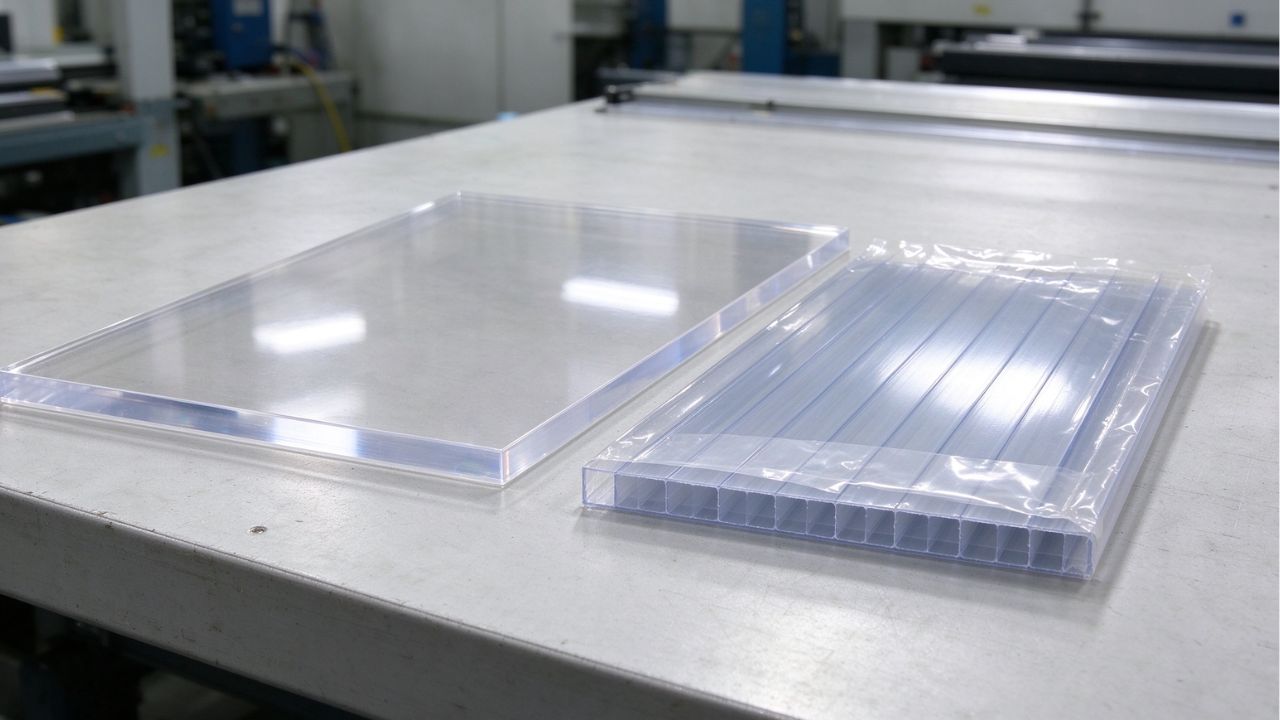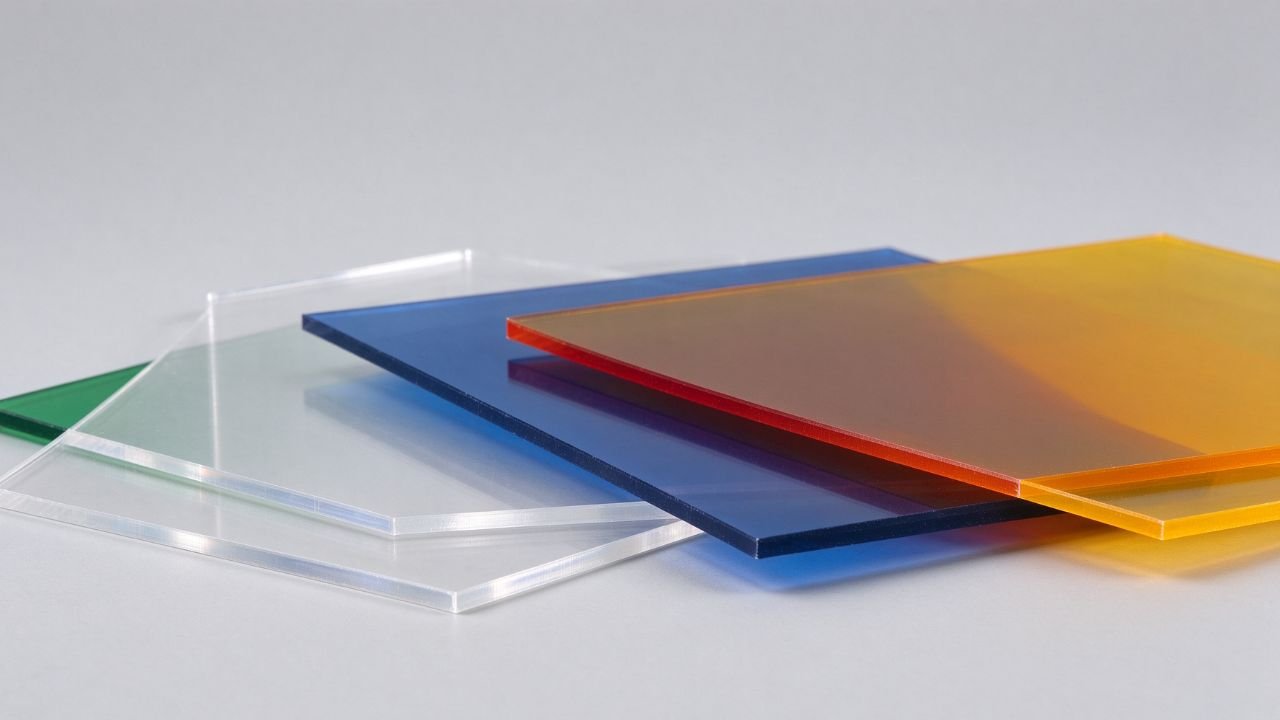
Different acrylic engraving techniques directly affect the appearance, machining precision, and production costs of your products. Currently, mechanical engraving and laser engraving are the two most commonly used methods for acrylic processing. This article provides an in-depth comparison of their characteristics, advantages, and applications, helping you select the appropriate acrylic engraving process for your project.
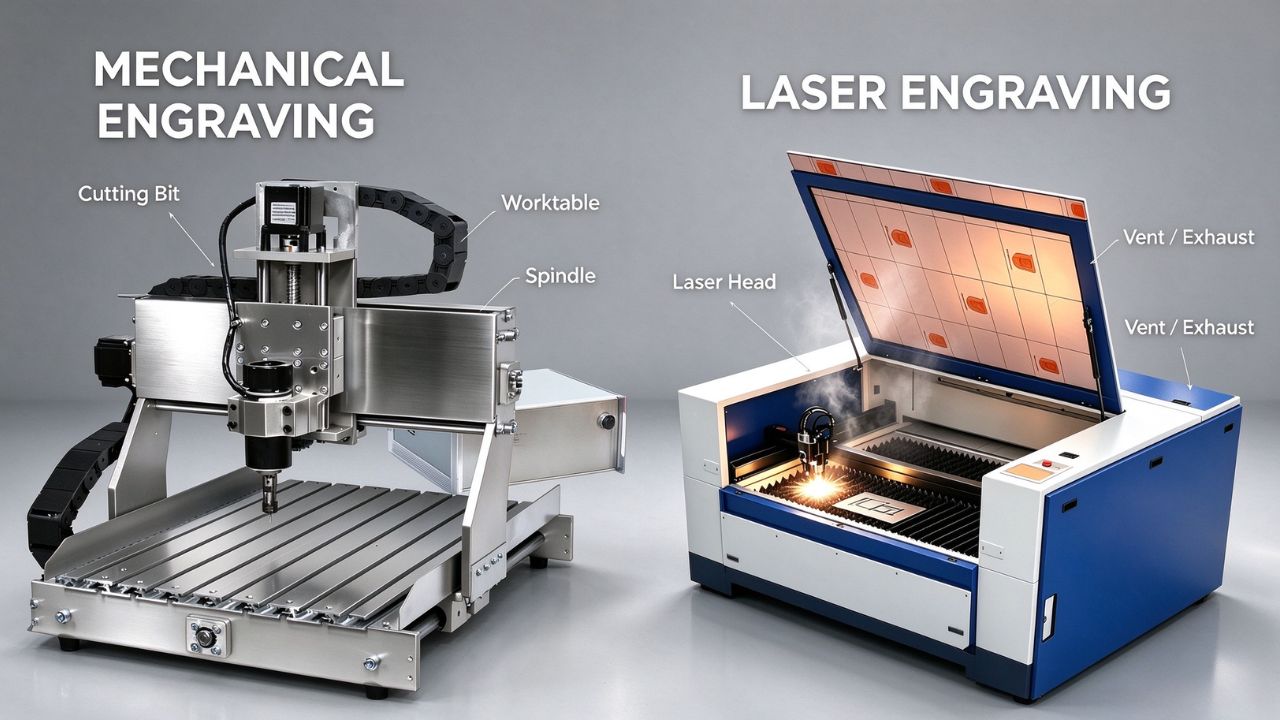
The Comparison of Mechanical Engraving and Laser Engraving
Mechanical Engraving
Mechanical engraving is a contact fabrication process that uses a high-speed rotating cutting bit to remove material. Guided along a pre-programmed path, the bit carves away acrylic in chips from a firmly fixed sheet, producing results ranging from shallow surface marks to deep 3D reliefs.
The Advantages of Mechanical Acrylic Engraving
The advantages of mechanical engraving include:
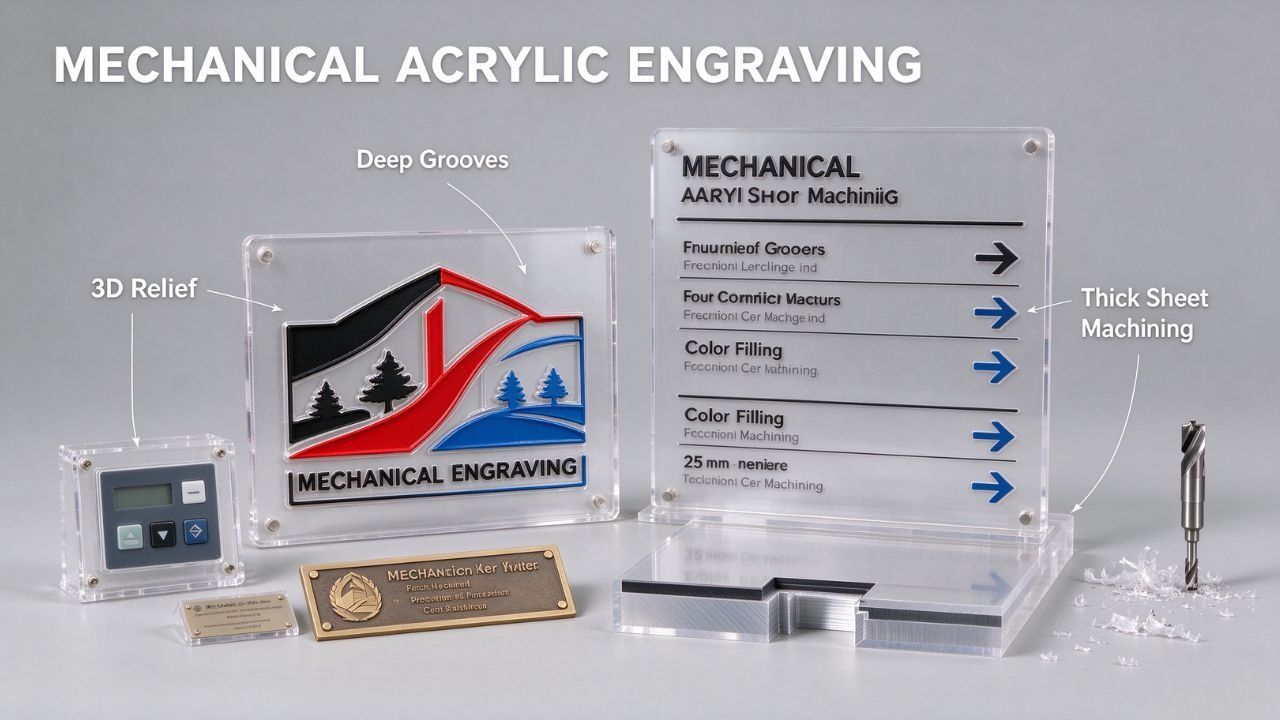
- Deep engraving. Mechanical engraving can easily achieve depths on the order of millimeters, making it suitable for applications requiring deep grooves and three-dimensional reliefs. Deep grooves can also be filled with color to enhance the durability and visibility of your product.
- No heat-affected zone. Since the process involves purely physical cutting, it does not generate high temperatures, thus preventing thermal deformation or bubbling at the edges of the material.
- High material compatibility. Both cast and extruded sheets can be engraved, without relying on the material’s absorption characteristics at specific wavelengths.
- Suitable for thick sheets and large-sized products. Sheets thicker than 25 mm can be processed through mechanical engraving and precision 3D milling.
The Applications of Mechanical Acrylic Engraving
Applications of mechanical engraving include:
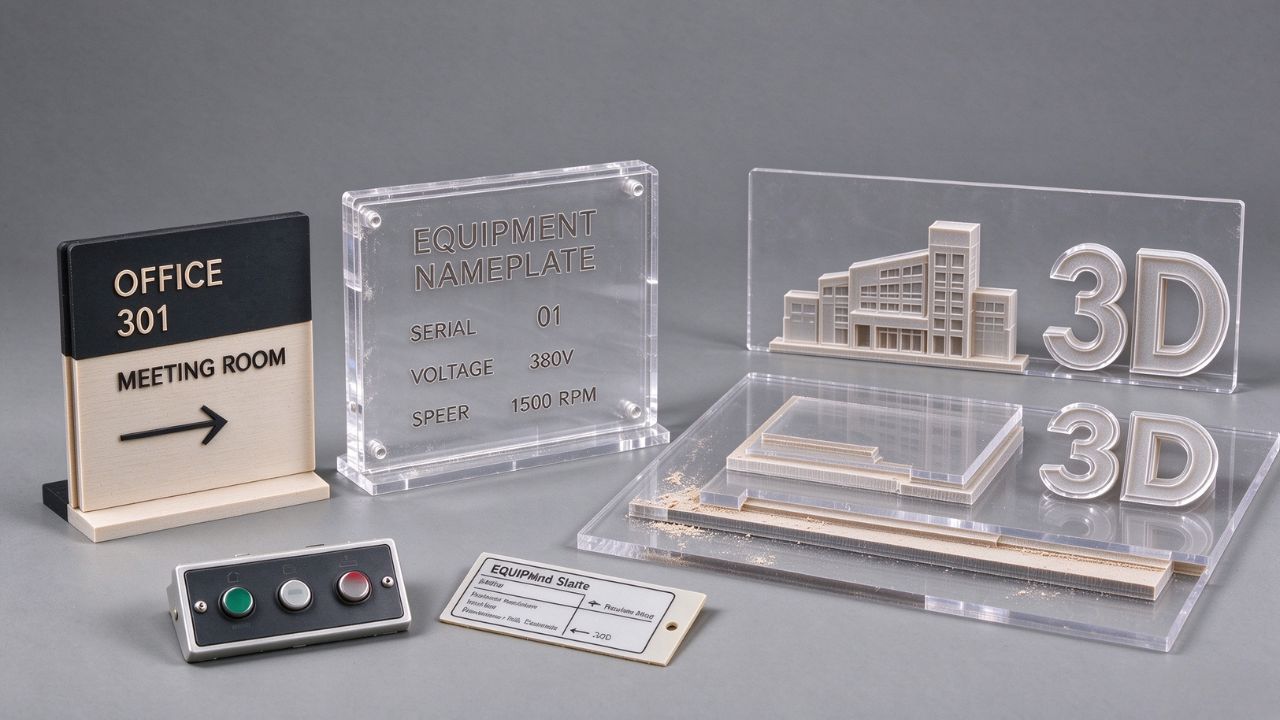
- Professional nameplates and industrial signs. Used for equipment nameplates, control panel labels, and electrical labels. It can produce a variety of finishing effects, ranging from surface marking to recessed or raised markings, making it suitable for projects requiring special textures or long-term use.
- Two-color acrylic signs and indoor/outdoor signage. For example, office door signs, indoor wayfinding signs, and outdoor building signage. This process removes the colored top layer of the material to reveal the underlying substrate, thereby achieving a clean engraved finish.
- Cutting of thick panels and engraving of three-dimensional shapes. It is used for architectural scale models, aircraft models, and acrylic 3D letters. It removes material layer by layer, allowing for precise engraving.
Laser Engraving
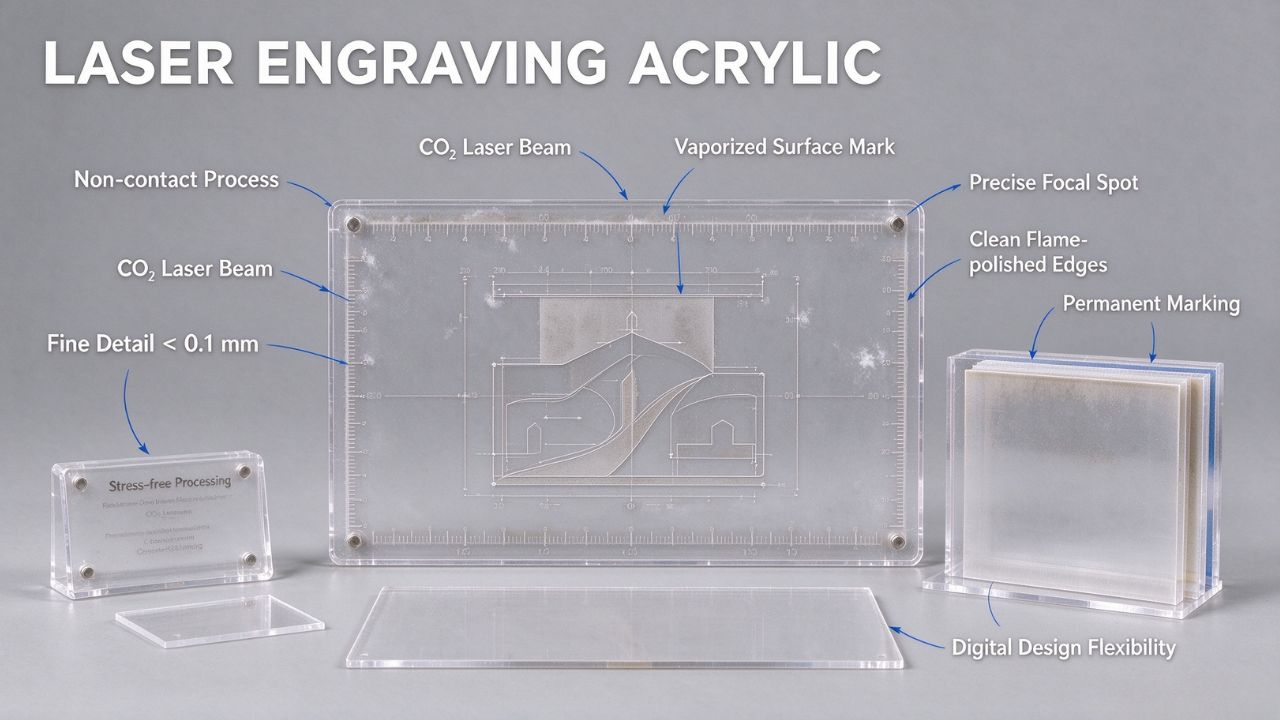
Laser engraving is a non-contact process that uses a focused carbon dioxide laser beam to vaporize the surface of the material, thereby creating a permanent mark. Guided by an XY positioning system, the laser beam is focused by a reflector and lens into a precise focal spot, concentrating high energy and enabling the etching of acrylic resin without the need for physical contact, which also eliminates tool wear.
The working wavelength of the carbon dioxide laser is 9.6–10.6 μm, and the absorption rate of acrylic resin for this wavelength is approximately 95%, ensuring efficient processing performance.
The Advantages of Laser Acrylic Engraving
The advantages of laser engraving include:
- Non-contact processing with no mechanical stress. It does not generate cutting forces, which helps prevent acrylic from cracking due to cutting stress.
- High-precision products and fine detail capability. The laser beam’s spot size can be focused to less than 0.1 mm, allowing for intricate detailing.
- Clean edges on thin sheets. CO₂ lasers also deliver clean, flame-polished edges when cutting thin acrylic sheets under 30 mm, making them ideal for your integrated engraving and cutting projects like signage and display stands.
- Design flexibility. It requires no molds, and digital control allows for rapid design modifications.
- Permanent marking. It directly alters the structure of the material’s surface, so the markings are not at risk of peeling or fading and can withstand common chemicals and outdoor environments.
The Applications of Laser Acrylic Engraving
Applications of laser engraving include:
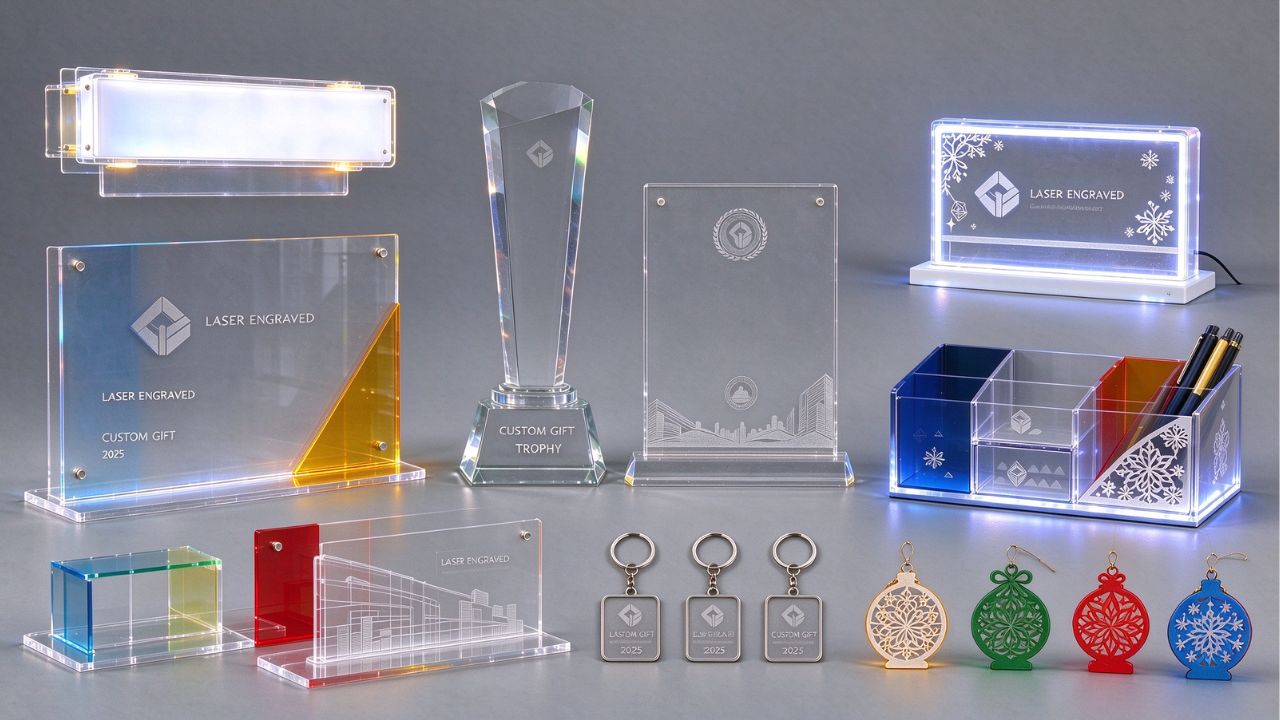
- Advertising signage and displays. It is suitable for corporate logo walls, illuminated acrylic sign letters, and point-of-sale (POS) displays. This is the most widespread application of laser engraving.
- Trophies, medals, and personalized gifts. It is used for acrylic trophies, commemorative plaques, and personalized keychains, as it can create a high-quality frosted effect on acrylic surfaces.
- Creative designs and decorative items. Laser engraving is applied in LED-backlit signs, desktop storage boxes, and colorful acrylic holiday decorations. Its high-precision engraving technology is a key advantage in the production of these items.
How to Choose the Right Acrylic Engraving Technology
Sheet Thickness
If your product requires a sheet thickness of less than 8 mm, you can choose laser engraving.
For sheet thicknesses between 8 and 25 mm, you can choose between laser engraving and mechanical engraving based on your product requirements. In this case, the speed of laser engraving will decrease, while mechanical engraving can still be performed reliably, though it will require post-processing.
If the sheet thickness exceeds 25 mm, please choose mechanical engraving.
Engraving Depth
When the engraving depth is less than 1 mm, you can opt for laser engraving, which can be completed in a single pass and offers fast processing speeds.
When the engraving depth is between 1 and 3 mm, mechanical engraving is the preferred choice, as the number of laser passes increases, leading to reduced production efficiency.
When the engraving depth exceeds 3 mm, mechanical engraving is your best option.
Production Quantity
Small batch production (<100 parts): Laser engraving is usually more cost-effective. It does not require custom molds, fixtures, or complex fixturing or lengthy setup, thereby reducing the upfront costs of prototype production and small-batch manufacturing.
Mid- to high-volume production (>100 parts): Both processes are applicable. For fine planar patterns, the processing cycle of laser engraving is shorter, but the cost of consumables is higher. Mechanical engraving, after completing the initial setup, maintains a stable unit cost, so it is more economical when conducting deep engraving or 3D engraving on a large scale.
Product Precision
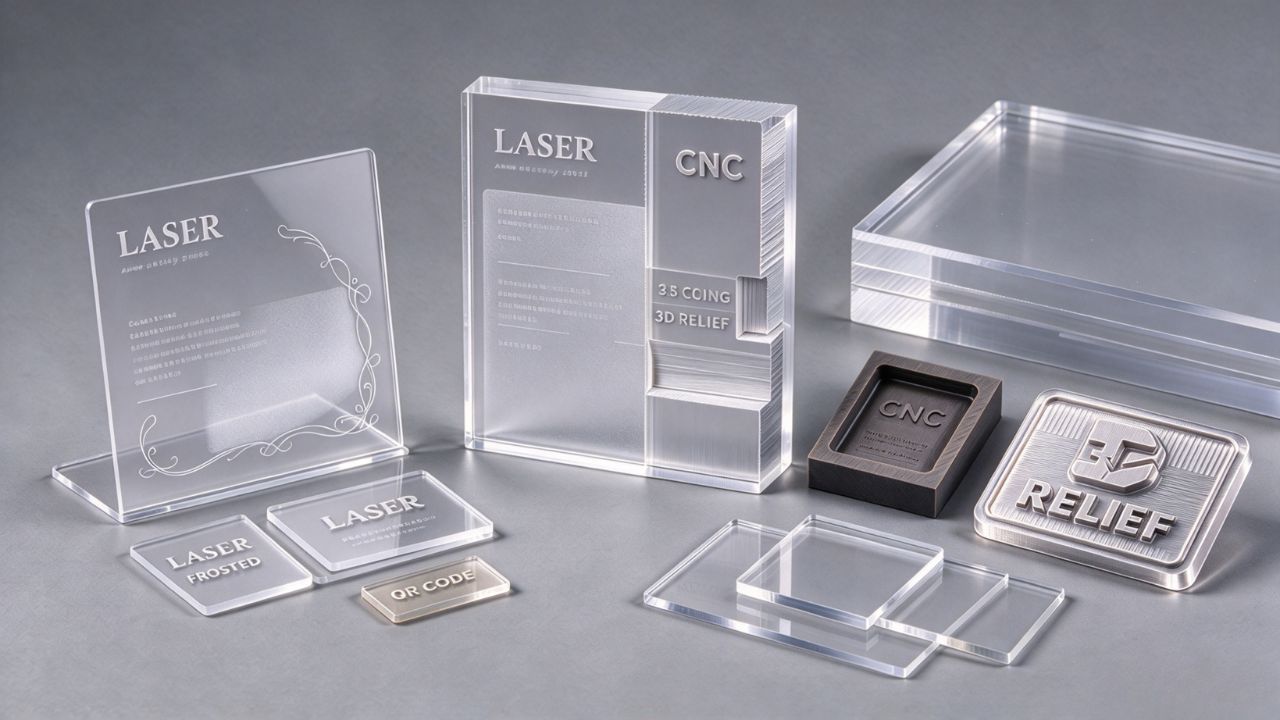
For extremely precise micro-text engraving, laser engraving is one of the few outstanding techniques, as its focused light spot (less than 0.1 millimeters) can achieve extremely detailed presentation.
Laser engraving is ideal for marking barcodes and QR codes because this process not only offers high clarity but also enables the creation of permanent and durable marks. Besides, laser engraving can precisely reproduce complex curves and fine patterns; its digitally controlled processing path ensures precise results, so you can confidently choose this technique.
Standard signs and large-sized promotional materials can be produced using either mechanical engraving or laser engraving. Both techniques can meet the requirements of regular production.
For three-dimensional surfaces or relief designs, mechanical engraving techniques should be employed, as they support three-dimensional cutting and can accurately reproduce the desired 3D geometry of your product.
FAQs
Why Does Acrylic Appear White after Engraving?
This frosted white appearance is the result of transparent acrylic being laser-engraved and cut. It is caused by microscopic surface irregularities in the laser-processed area, including residual air bubbles and heat cracks. The rough surface causes diffuse reflection of light, while the uncut areas maintain mirror-like transmission. This visual contrast makes the engraved area appear white.
Which One Is Better for Engraving: Cast or Extruded Acrylic?
Cast sheets are better suited for engraving. Cast acrylic is made by pouring liquid acrylic resin; it has a high molecular weight and offers excellent rigidity, strength, and chemical resistance. When laser engraving, cast acrylic produces a milky white engraved effect that contrasts with the transparent areas, resulting in a higher-quality engraving.
Extruded acrylic, however, is manufactured using a high-volume extrusion process and has a lower molecular weight, resulting in weaker mechanical properties. Its laser engraving produces gray or translucent engraved patterns with less-defined contours; therefore, we recommend using cast acrylic for engraving.
Does Laser Engraving of Acrylic Produce Toxic Gases?
During the acrylic laser engraving process, harmful fumes containing toxic compounds will be released, mainly including methyl methacrylate (MMA) monomer, as well as carbon monoxide (CO) and fine particulate matter.
To protect the operator’s health, we recommend working in a well-ventilated area, using a fume extraction system, and wearing a gas mask. You should also be aware that certain materials must not be heated by a laser, as they can produce highly toxic gases, such as polyvinyl chloride (PVC), polycarbonate, and ABS.
How to Control the Engraving Depth?
For laser engraving, the engraving depth is determined by the laser power, scanning speed, pulse frequency, and focal position. When processing thin materials, the engraving depth should not exceed one-third of the total thickness of the sheet to prevent warping or breakthrough. You can test the parameters on scrap material of the same type before processing to determine the optimal combination of power and speed.
How to Clean and Maintain Acrylic Engraving Products?
Avoid using cleaning agents containing alcohol or ammonia, as they may corrode the surface of the material. For routine cleaning, simply wipe the surface with a soft cloth dampened with a neutral cleaner or plain water, and avoid scratching the engraved surface with hard objects. If used outdoors, dust should be removed regularly to maintain light transmission.
Final Thought
In actual projects, choosing the appropriate acrylic engraving process requires comprehensive consideration of the product structure, processing accuracy, and production requirements. If you are still unsure about which engraving method is suitable for your product, please contact us. Zoycen will offer you professional technical support to help you achieve high-quality processing results.