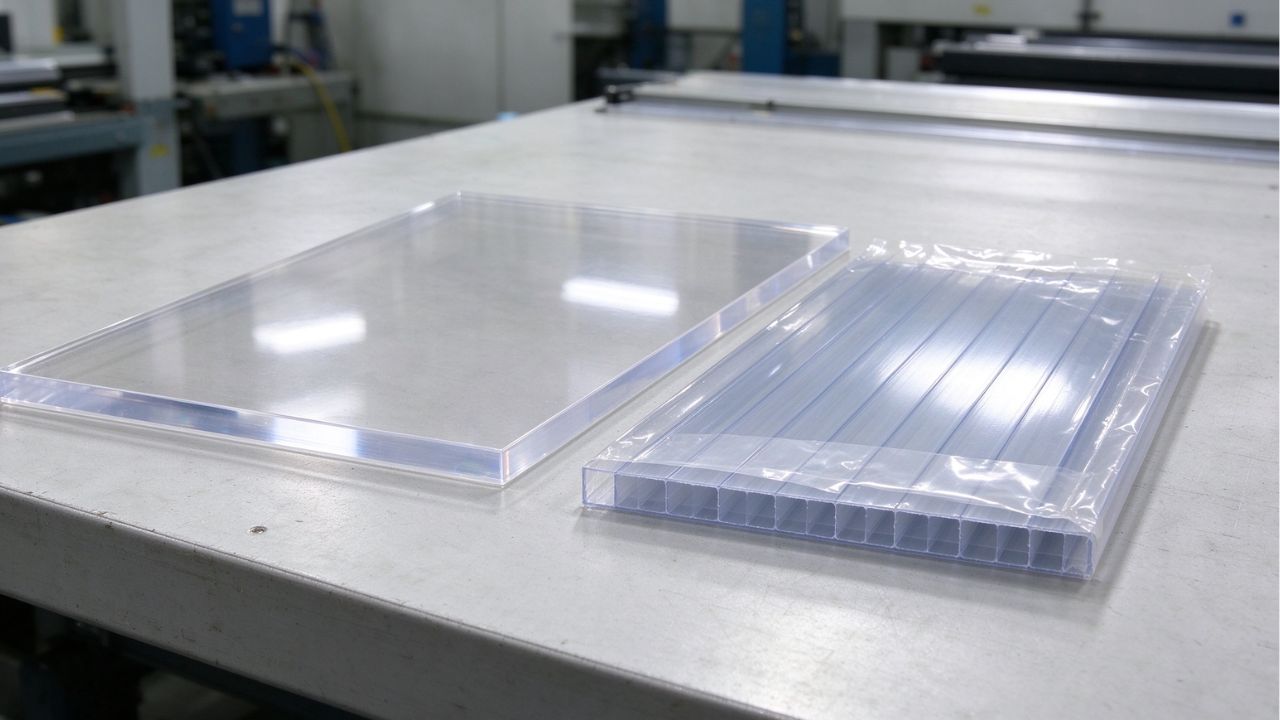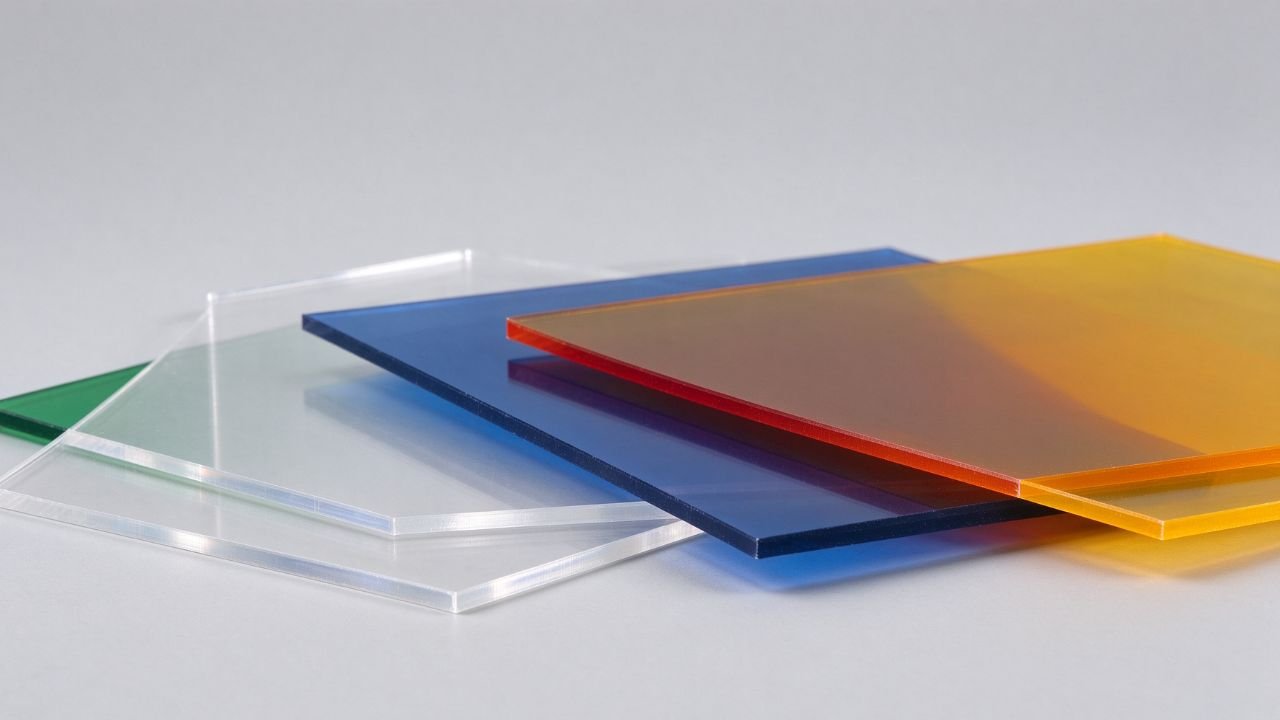
Acrylic sheet printing can give your acrylic products a variety of visual effects and enhance their practical value. It is widely used in advertising displays, signage, and decoration. This article will introduce acrylic printing methods and the production process to help you choose the right processing solution for your project.
The Mainstream Acrylic Sheet Printing Technology
UV Printing
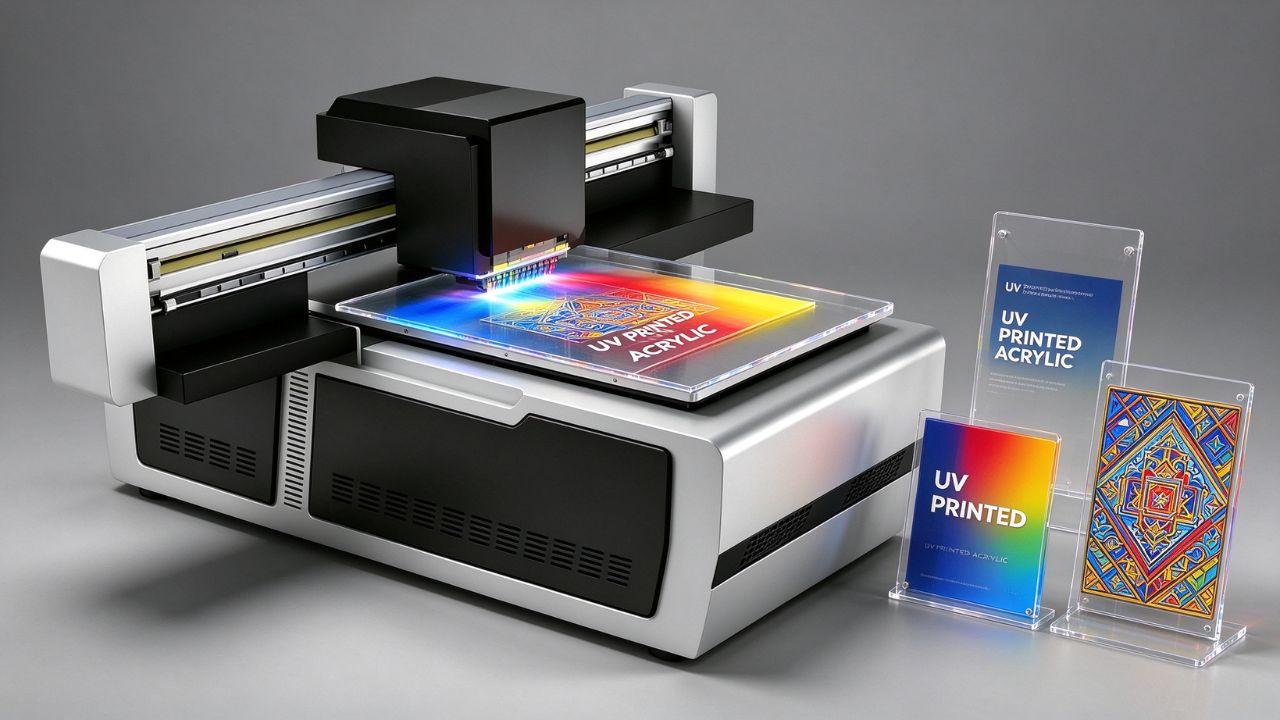
UV printing uses UV-curable inks jetted directly onto the surface of an acrylic sheet.
Advantages: UV printing requires no need for plate making, offers rich colors, instant drying, and high printing efficiency.
Disadvantages: UV printing has a slightly tangible ink texture and higher equipment and ink costs.
Equipment: The equipment required for this process includes UV flatbed printers, UV roll-to-roll printers, and laser cutters, among others.
Screen Printing
Screen printing is a type of stencil printing. It works by allowing ink to pass through the image and text areas of the screen, while preventing ink from passing through the non-image areas, thereby producing the print.
Advantages: Screen printing offers a thick ink deposit, high color saturation, and strong adhesion, so it is suitable for mass production.
Disadvantages: Screen printing requires creating screens, and it has the risk of registration deviation, poor performance with fine gradients and intricate details, and high costs for multi-color designs.
Equipment: Screen printing requires a screen printing press, a screen stretching machine, a screen exposure unit, and a UV curing machine, among others.
Offset Printing
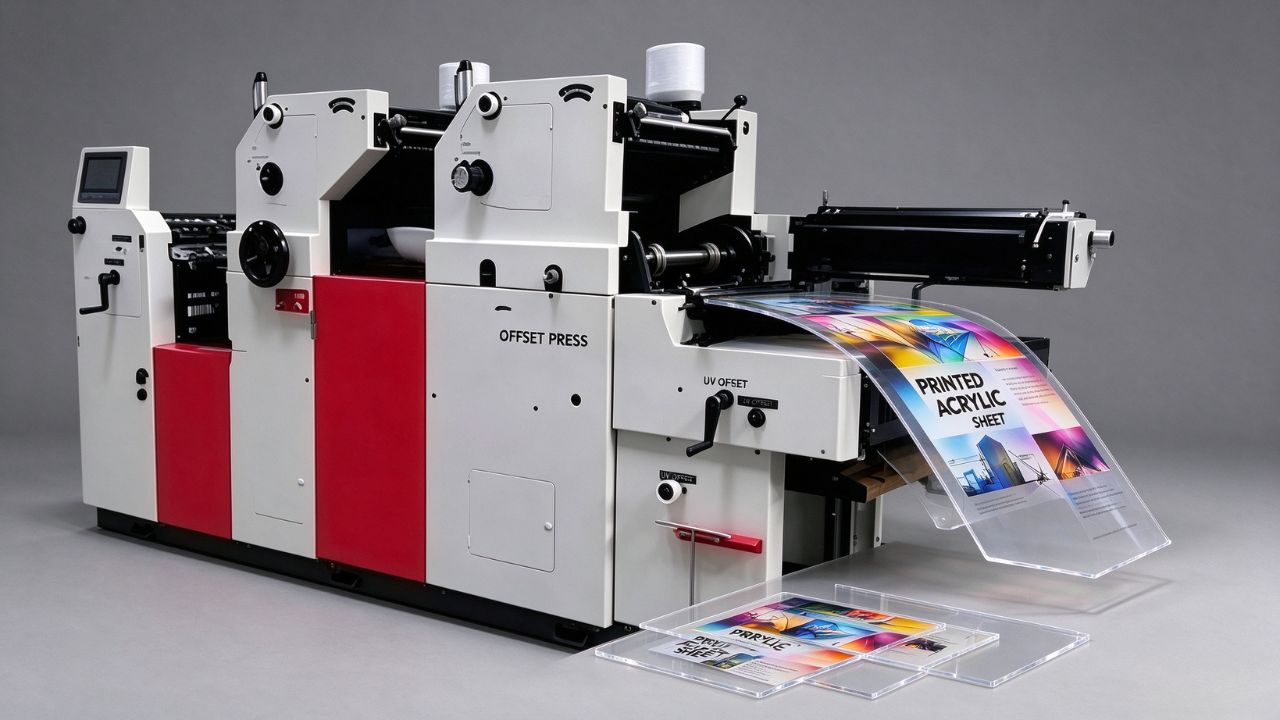
Offset printing is based on two fundamental principles. The first is that water and oil do not mix: the image areas are oil-loving and water-repellent, allowing them to absorb ink, while the non-image areas are water-loving and oil-repellent, causing the ink to be repelled. The second is indirect printing, in which the ink passes through three stages before reaching the paper: the printing plate, the rubber blanket, and the substrate.
Advantages: Offset printing provides extremely high color fidelity and very high production efficiency, making it suitable for ultra-high-volume production.
Disadvantages: Offset printing has high plate-making costs and produces an additional film layer on the surface of the finished product.
Equipment: This process includes UV offset printing presses.
Heat Transfer Printing
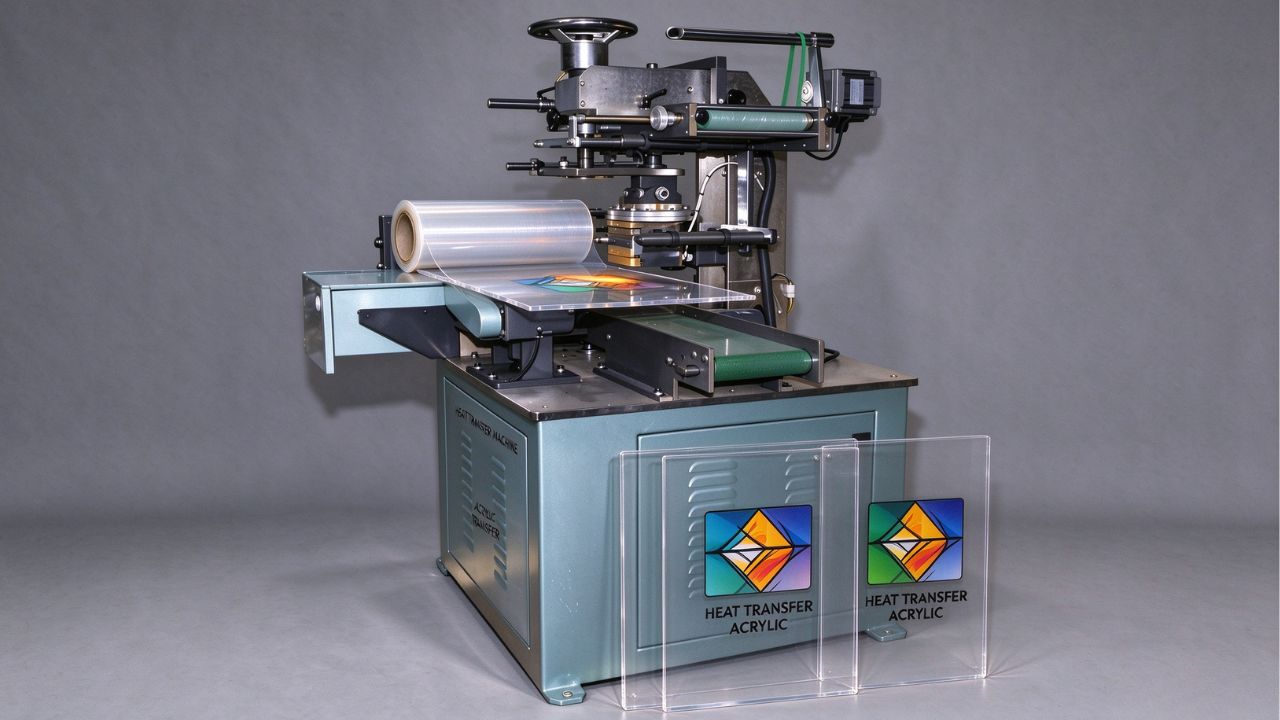
Heat transfer printing is a two-step process: the design is first printed onto transfer paper or film, then transferred to the acrylic surface under heat and pressure.
Advantages: Heat transfer has the ability to print on curved or irregularly shaped objects, and the color reproduction of the printed patterns is highly accurate.
Disadvantages: Heat transfer’s process is relatively complex, and the printed layer has relatively low scratch resistance and weather resistance.
Equipment: Heat transfer requires a digital printer for transfer film and a heat transfer machine. A laser cutter can be used as supporting equipment for pre-cutting acrylic sheets to size.
The Basic Processes of Acrylic Sheet Printing
Preparation
First, select a transparent or colored acrylic sheet with a thickness of 2-10 mm based on the product design, and cut it to the required size. Next, clean the acrylic sheet, and finally perform surface treatment according to the process requirements.
For example, UV printing requires corona treatment or an adhesion primer. For screen printing, proper surface cleaning and optional corona treatment are standard practices for enhancing the adhesion of the ink; grinding is only used for specific matte surface treatment applications. These methods all help improve ink adhesion.
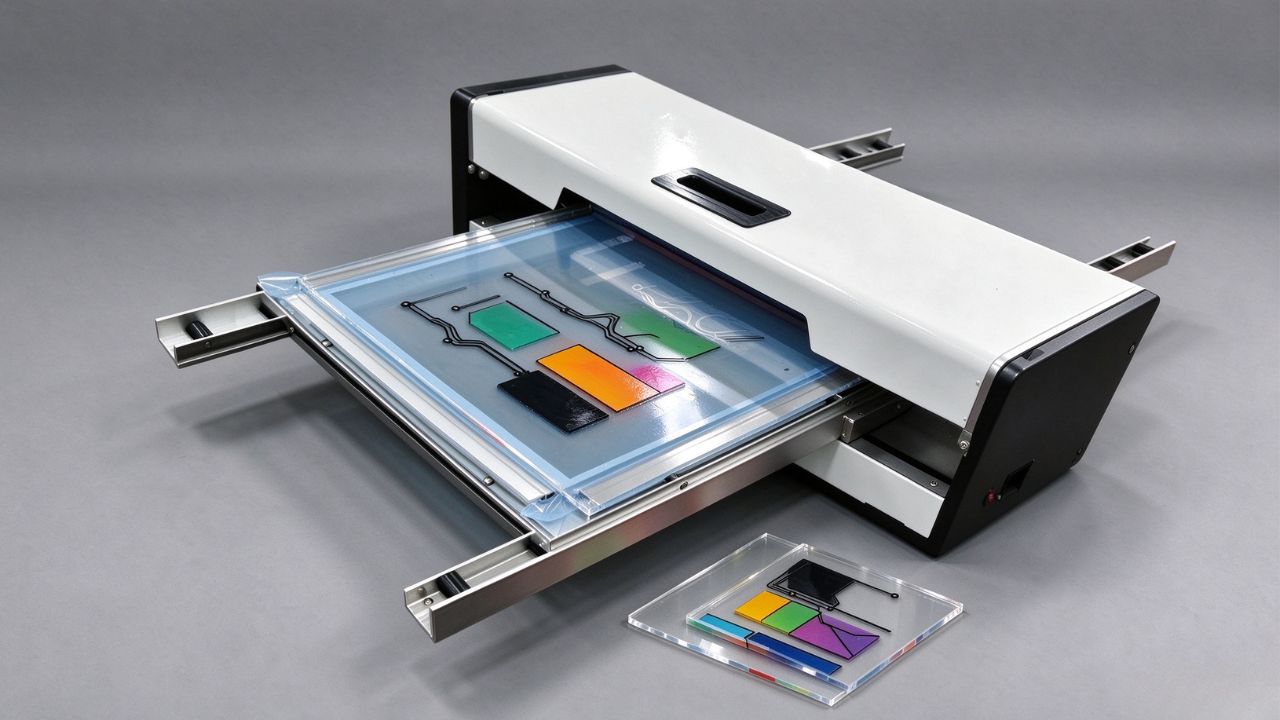
UV Printing
The UV printing process is as follows:
- First, secure the acrylic sheet to the printing table, calibrate the coordinates, and ensure the design is positioned accurately.
- Second, import the design file, typically in CDR or AI format, and set the printer’s resolution to 600-1200 dpi.
- Third, the printer sprays UV ink onto the designated areas of the acrylic sheet.
- Fourth, as the printer prints, the UV light moves in tandem with the print head, causing the ink to cure instantly.
- Notes: For enhanced durability and full ink curing, a secondary full-surface UV exposure is recommended after printing. The surface of the acrylic sheet must be cleaned, and it must be allowed to cool naturally for 5–15 minutes.
If you need to print complex designs in small batches, UV printing is your better choice.
Screen Printing
The screen printing process is placing the screen over the acrylic surface and then using a squeegee to evenly spread the ink, allowing it to pass through the screen and transfer onto the acrylic. For multi-color designs, this step must be repeated because only one color can be printed at a time. Finally, the ink is dried and cured.
When you need a large quantity of solid-color patterns and require high color adhesion of the product, then you can consider screen printing.
Offset Printing
In offset printing, ink is transferred to the surface of the acrylic sheet using cylinders, or the image is first printed onto PET film, which is then laminated onto the acrylic sheet; the image is divided into multiple color blocks and printed one color at a time.
If you have a large-scale production demand and have high requirements for the precision of the printed patterns, then offset printing will be your ideal choice. It can reduce the production cost per unit while ensuring the accuracy of color reproduction.
Heat Transfer Printing
The steps for heat transfer are as follows:
- Place the heat transfer film with the printed design on the surface of the acrylic sheet.
- Apply heat and pressure using a heat transfer machine.
- Typical parameters are 120–160°C at 0.15–0.2 MPa, held for 30–60 seconds, varying by acrylic thickness and transfer film type.
- The ink penetrates the coating at high temperatures and solidifies upon cooling to form the transferred design.
For your curved or shaped products with medium-batch production needs, heat transfer will do the job.
The Applications of Printing Acrylic Sheet
Advertising Industry
The advertising industry is one of the most common applications for printed acrylic sheets. UV-printed acrylic billboards and light boxes feature vibrant colors and excellent light transmission, while screen printing is used for large-scale promotional materials and signage.
When you need outdoor advertising, you can choose UV-printed acrylic materials; when you require large-area, high-saturation colors for your products, you can opt for screen-printed acrylic materials.
Consumer Goods and Gifts
Acrylic printing is commonly used on cell phone cases, acrylic display stands, and refrigerator magnets. The most common methods are UV printing and offset printing, both of which are suitable for printing intricate designs.
In this sector, choose UV printing for small-batch production and offset printing for large-batch production.
Customization
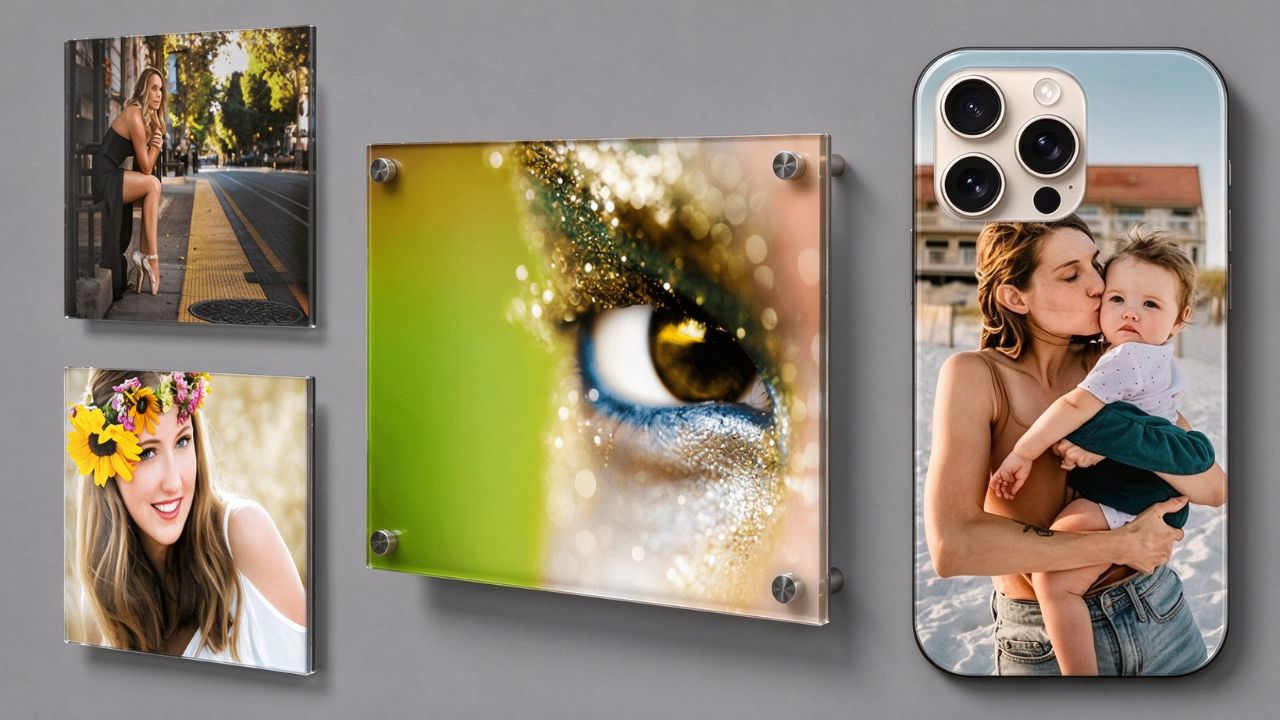
Acrylic printing is commonly used for photo printing, pet portrait souvenirs, and cultural and creative products. The most common printing methods are UV printing and heat transfer printing, both of which reproduce colors and patterns with great accuracy.
UV printing is ideal for small-batch customization needs, while heat transfer printing offers high production efficiency and is suitable for large-scale production. The specific choice depends on the quantity of products you require.
FAQs
What Factors Affect the Price of Acrylic Printing?
Factors affecting the price of acrylic sheet printing include material costs, printing processes, the complexity of the design, and the print area. New materials cost more than recycled materials. Processes requiring specialized adhesion primer cost more than standard ones. The more complex the design, the higher the cost. The larger the print area, the higher the price.
How to Choose the Thickness of Acrylic Sheet?
The thickness of acrylic sheets can be determined based on your product’s intended use and dimensions. For example, when used in ultra-thin light boxes, which are generally less than 60 cm in size and relatively small, you can choose sheets that are 2–3 mm thick. On the other hand, if the acrylic sheets are to be used in load-bearing structures, the thickness should be at least 8 mm.
Why Does Acrylic Printing Tend to Fade?
The main reasons for the fading are that the ink has not undergone UV stabilization treatment, lacks a protective topcoat, and is exposed to outdoor UV rays for a long time. Using low-quality recycled acrylic materials will also accelerate the yellowing of the paper itself, thereby reducing the glossiness of the printed materials. Other reasons include improper surface treatment of the board. During cleaning, more thorough cleaning can be carried out using solvents such as isopropyl alcohol.
What to Do If There are Bubbles, Blurriness, or Ghosting in the Printed Pattern?
When these issues arise during printing, the causes may include improper printhead height or misalignment during UV printing, or improper screen printing techniques.
For UV printing, the solution is to manually adjust the printhead height based on the thickness of the acrylic or to use a machine with automatic height adjustment, ensuring the acrylic sheet is placed flat on the printing bed.
For screen printing, these issues can be resolved by replacing the squeegee with one of appropriate hardness, adjusting the distance between the screen and the substrate, and increasing the printing speed to reduce the dwell time of the ink.
Is It Possible to Perform UV Printing on Transparent Acrylic Sheets?
Yes, that’s possible. But please note that you can first apply a specialized transparent UV coating to improve ink adhesion. You should also apply a white ink base coat, which will make the subsequent colors appear more vibrant.
For transparent acrylic sheets, the second surface printing is the most commonly used: first print the colored layer, then apply a layer of white ink base coat to make the colors more vivid. Printing on the front is done by applying a layer of white ink base coat first, and then printing the colored layer.
Final Thought
Acrylic printing can help you enhance the appearance of your products and attract a wider range of consumers. If you need acrylic printing services, please contact us. Zoycen can provide you with high-quality printed acrylic products and meet your customization needs.