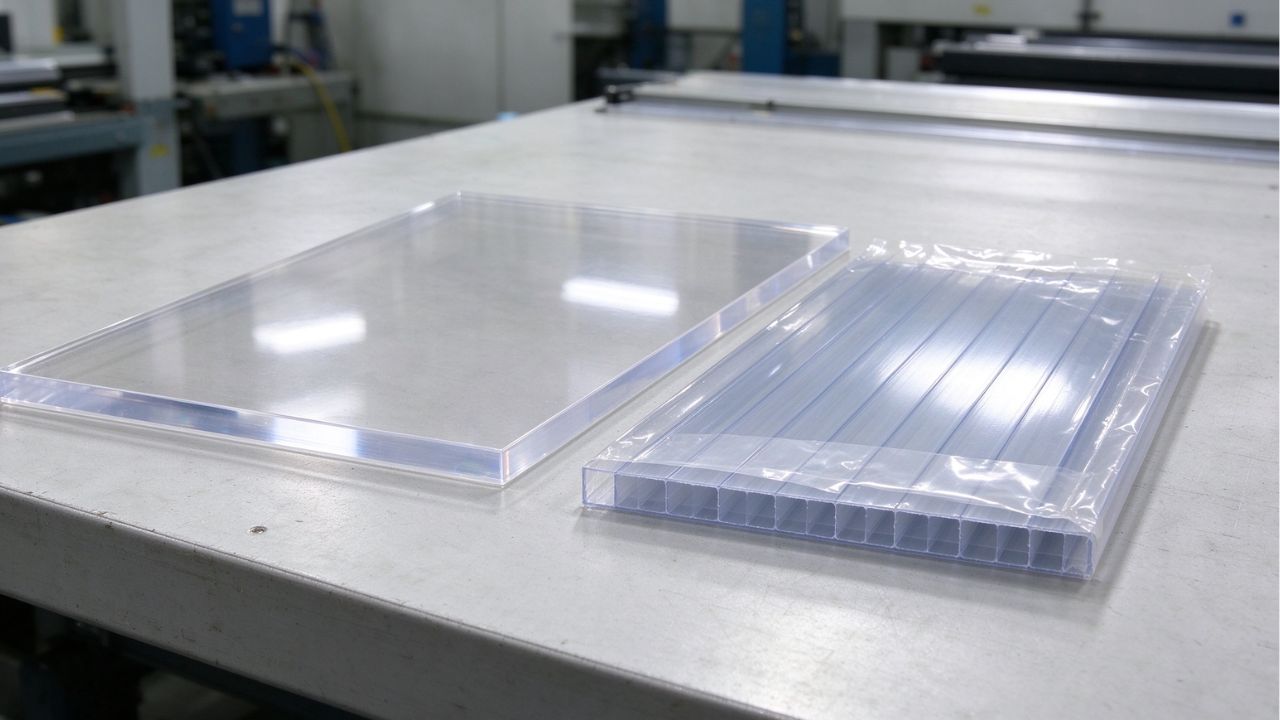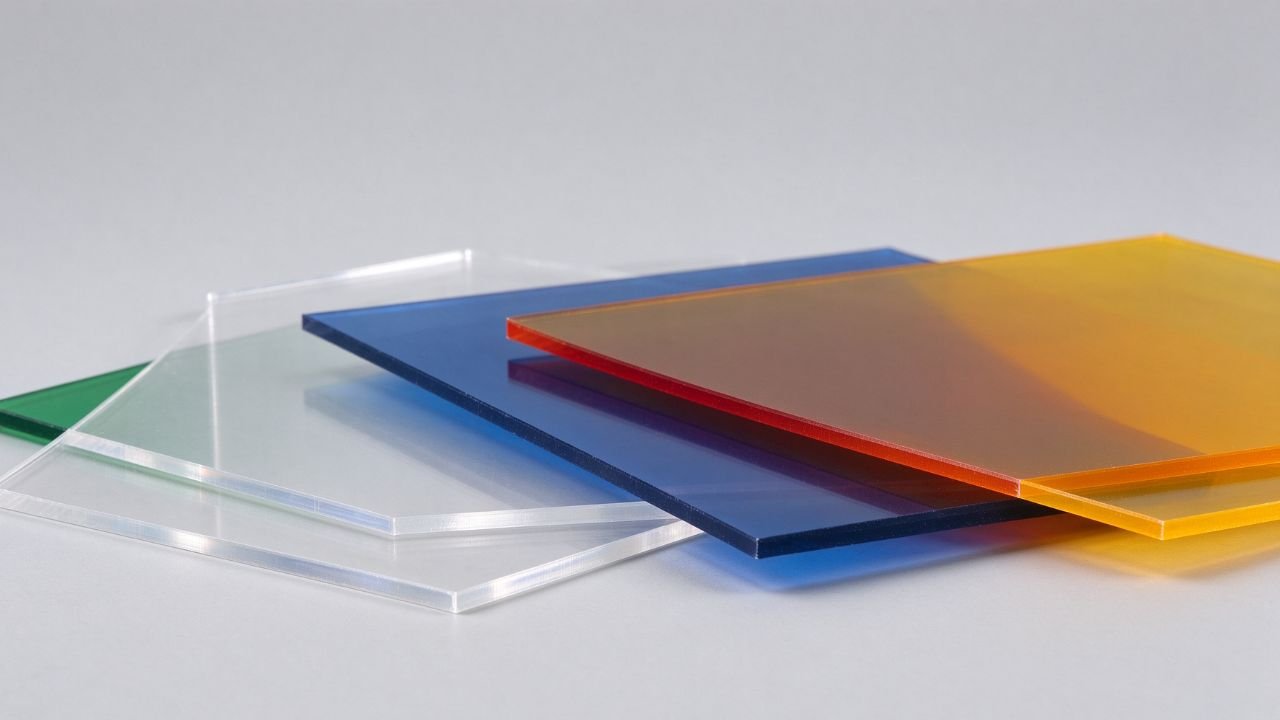
Different plastic materials have distinct surface properties and structural characteristics. Not all glues achieve a firm and long-lasting bond. Selecting the appropriate plastic bonding glue is crucial for the plastic sheet’s strength and reliability. This article will introduce four common types to help you choose the solution for your application requirements.
Common Glues for Plastic Sheet Bonding
Epoxy
Introduction
Epoxy resin is a high-performance structural adhesive made from reactive liquid polymer resins and is widely used for the secure bonding of plastic sheet components. When the resin and hardener are mixed in the correct proportions and cured, they form a hard and durable bonded layer. Epoxy resins are available in both single-component and two-component formulations, with two-component epoxy resins being the most commonly used in the manufacture of plastic sheets.
Advantages
- High bond strength. Epoxy resin has high overall strength and offers the best performance among all common adhesives; it can provide structural bonding even under various harsh conditions and in adverse environments.
- Excellent weather resistance. Epoxy resin exhibits excellent resistance to high temperatures, solvents, and outdoor environments.
- Good filling capability. It can fill gaps in bonding surfaces, making it suitable for accommodating uneven bonding surfaces and providing reliable gap-filling and surface-leveling performance.
- Versatile formulation options. For example, there are formulations designed to deliver improved toughness or enhanced elongation at break. Formulation adjustments can enhance strength, impact resistance, or elongation, better meeting the specific needs of your plastic sheet fabrication.
Applications
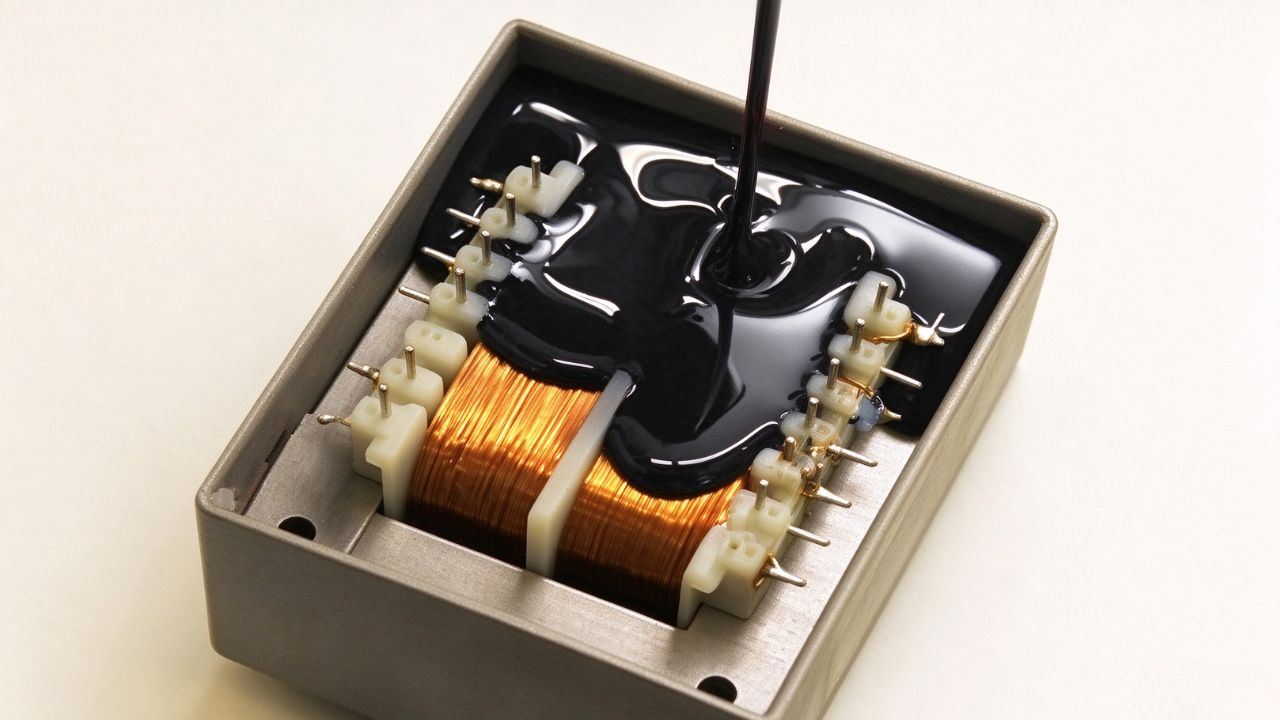
Epoxy resins are widely used in the transportation, electrical, and construction industries, among others. For example, they are used for the repair and bonding of structural load-bearing components, the bonding of dissimilar materials such as metals and plastics, and the potting and encapsulation of electronic components.
When heat-cured, single-component epoxy enables structural bonding of lightweight plastic sheets, serving as a clean alternative to welding and riveting.
Cyanoacrylate (CA)
Introduction
Cyanoacrylate (CA) adhesives, commonly known as “instant adhesives” or “fast-curing glues,” are ideal for the rapid assembly of plastic parts. This is a single-component, fast-curing adhesive that cures through an anionic polymerization reaction triggered by moisture in the air, achieving sufficient bonding strength within seconds to minutes.
In terms of chemical composition, cyanoacrylates are primarily divided into two categories: ethyl cyanoacrylates and methyl cyanoacrylates. Ethyl cyanoacrylates are suitable for bonding plastic sheets and rubber materials, forming a more flexible bond. Methyl cyanoacrylate, on the other hand, is suitable for bonding plastic sheets to metal materials and produces a harder bond after curing.
Advantages
- Fast curing speed. It can achieve initial bonding within 60 seconds, making it one of the fastest-curing adhesives available.
- Easy to use. It is a single-component formulation that requires no mixing of different materials; it is ready for use immediately after dispensing.
- High bond strength. Tensile strength on common plastic substrates typically ranges from 1,000 to 2,000 psi, and can exceed 2,900 psi on metal surfaces.
- Wide range of applications. It can bond materials such as plastics, ceramics, and metals, as well as common industrial plastics like PVC, PMMA, and ABS.
Applications
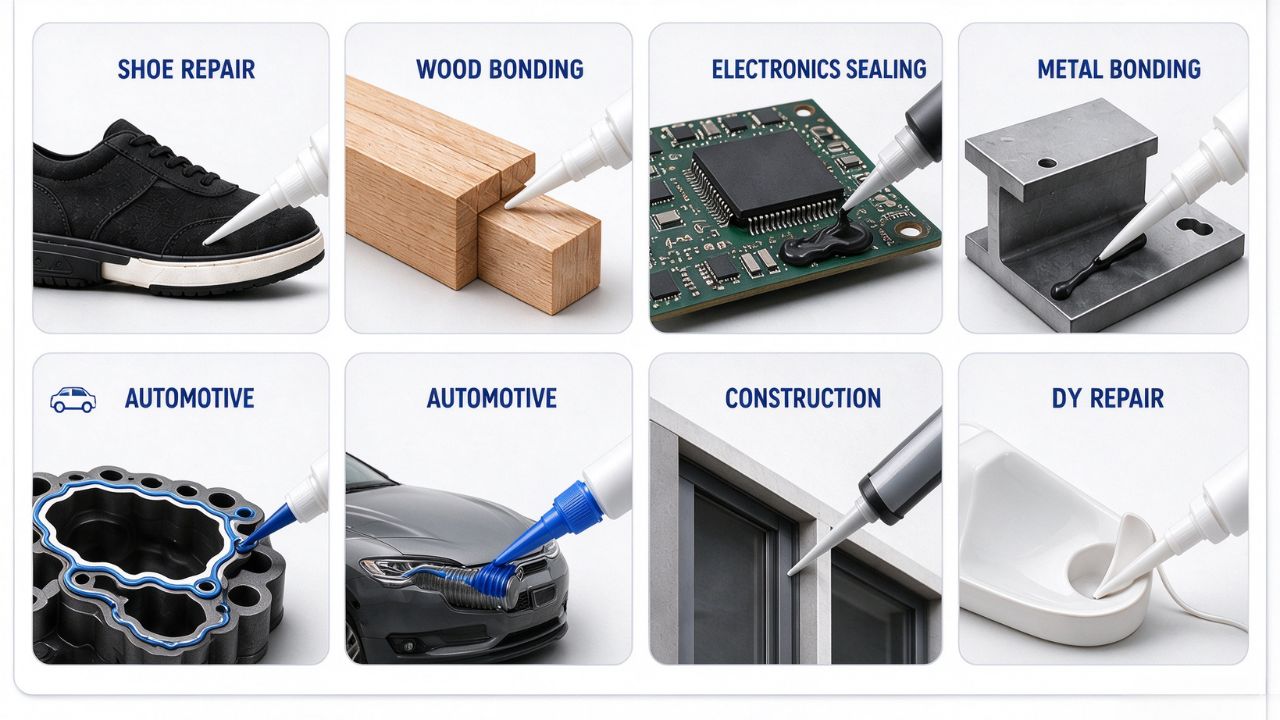
CA adhesive is used in industrial manufacturing for assembling plastic components, such as for quick repairs of small areas, securing electronic product housings, and achieving seamless joints and rapid positioning of non-load-bearing structures in model making. However, the adhesive layer is relatively brittle and has poor impact resistance, so it is not suitable for use on plastic sheets that are frequently subjected to impact.
Solvent Cement
Introduction
Unlike ordinary adhesives, which can only form surface bonds, solvent cement provides a permanent, molecular-level fusion bond for thermoplastic sheets.
In solvent-based adhesives, organic solvents soften and partially dissolve the surface layer of the plastic sheets. Once the solvent evaporates, the molecular chains of the two bonded surfaces intertwine and bond together, forming a continuous, seamless bond.
It is suitable only for thermoplastic materials and achieves optimal results when bonding sheets of the same type or chemically compatible thermoplastics.
Advantages
- High bond strength. It enables molecular-level bonding and can maintain nearly the same strength as the base material.
- Excellent thermal cycling resistance. Its joints are far less sensitive to temperature cycling than those of traditional adhesives.
- A simple and cost-effective joining method.
Applications
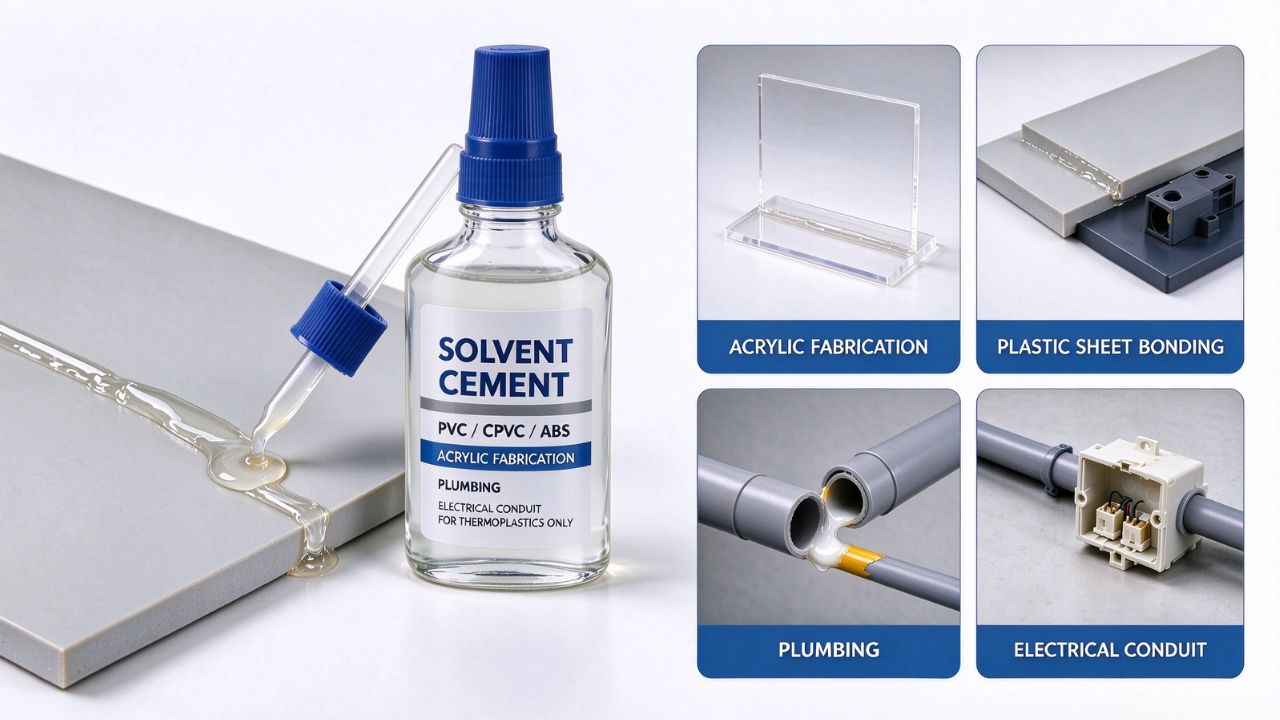
Solvent cement is widely used to bond and seal PVC, CPVC, and ABS sheets, and is the standard material for manufacturing acrylic display stands, signage, and custom acrylic products. It is also commonly used in plumbing installations and the assembly of electrical conduit. But it is important to note that each type of plastic sheet requires a solvent-based adhesive specifically formulated for that material.
Structural Acrylic
Introduction
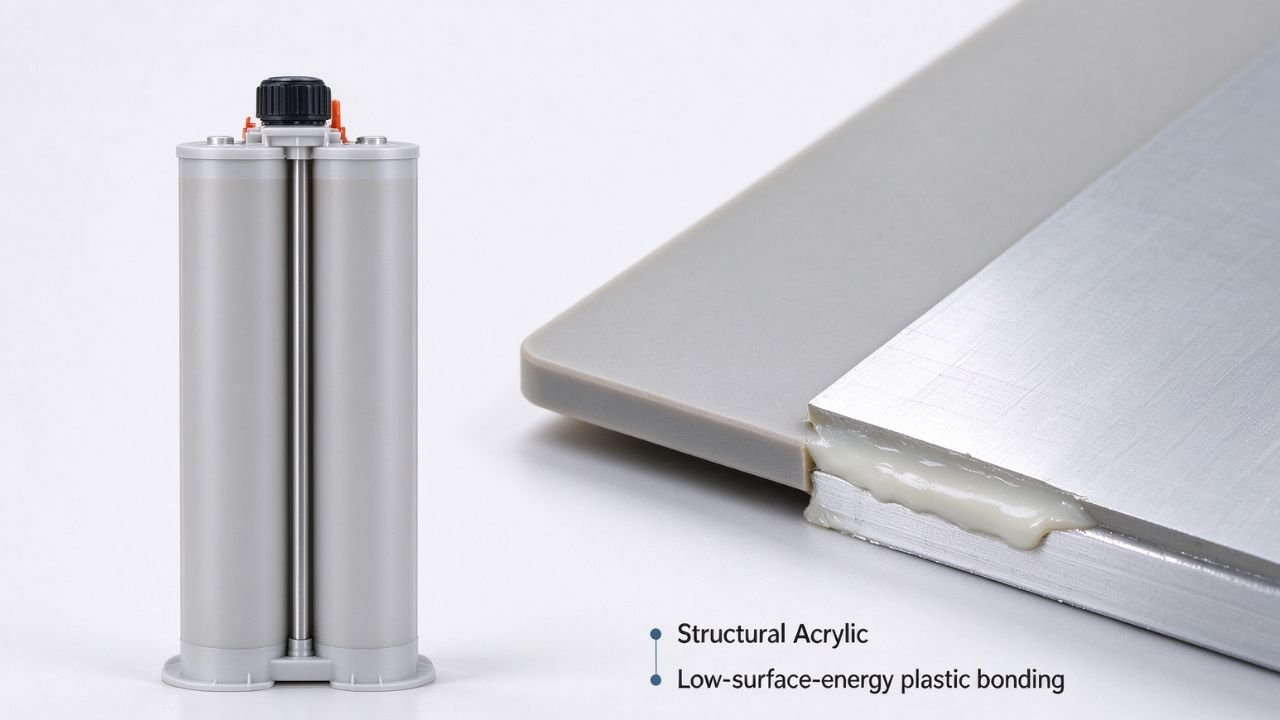
Structural acrylic adhesives are high-performance structural adhesives that are particularly suitable for bonding hard-to-bond plastic sheets with low surface energy. These adhesives are typically two-component systems based on methyl methacrylate or acrylic acid, which cure through a reaction between the resin and the curing agent—a process similar to that of epoxy resin curing. Structural acrylic adhesives can bond metals, glass, composites, and industrial plastic sheets without requiring extensive surface pretreatment.
Advantages
- Fast curing speed. It sets and cures quickly at room temperature without requiring additional curing equipment, which helps increase your production speed and reduce production costs.
- High tolerance for surface contamination. Its bonding performance is not compromised by impurities on the surface, thereby preventing bonding failures.
- High strength and toughness. Its bonding strength is comparable to that of epoxy, and it offers high peel strength and impact resistance.
- Can replace mechanical fasteners. This helps avoid deformation and surface defects caused by welding, brazing, or riveting.
Applications
Structural acrylics are used in the automotive, transportation, construction, and electronics industries. Their most common applications include the structural bonding of high-strength plastic sheets, the bonding of low-surface-energy plastic sheets, and the composite joining of plastic sheets with other dissimilar materials.
It is important to note that MMA-based structural acrylics typically have a noticeable odor, although low-odor products are also available.
How to Choose the Best Plastic Bonding Glue for Your Project?
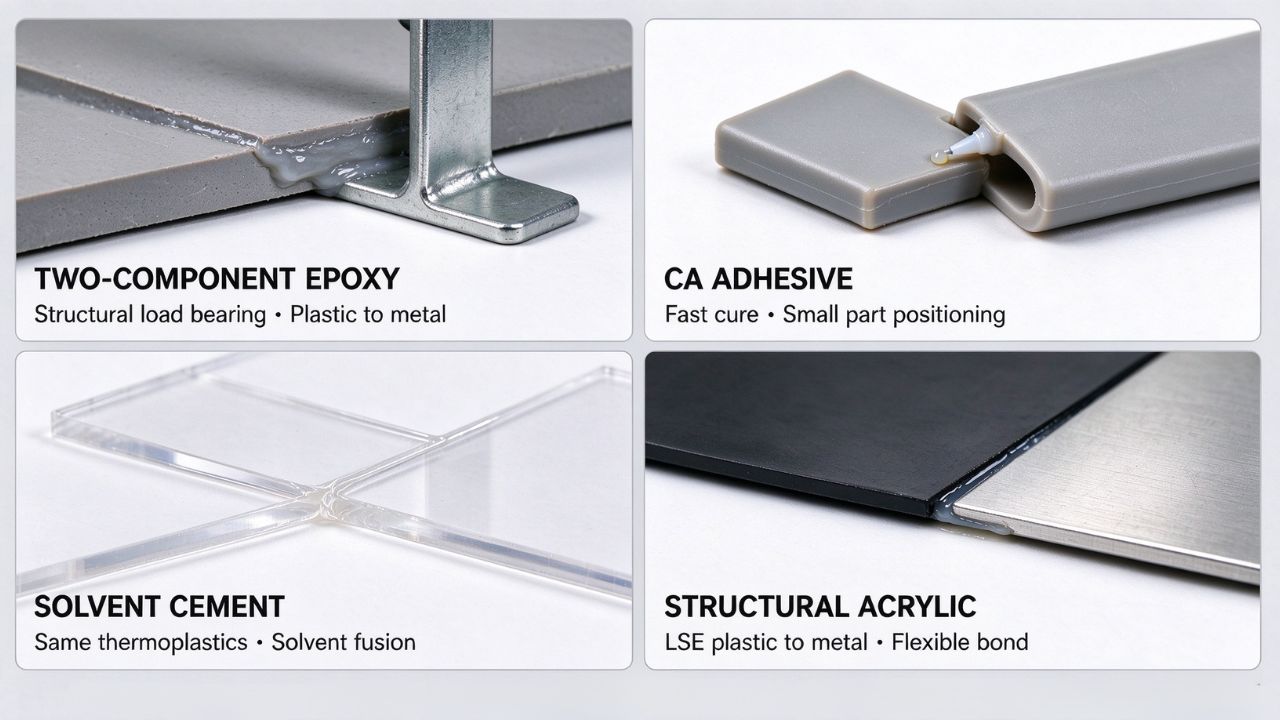
- When your plastic sheet product requires structural load-bearing capacity and high strength, you can choose a two-component epoxy resin, which offers high tensile strength and does not deform over time.
- If the plastic sheet being processed is non-load-bearing and requires rapid positioning, CA adhesive is your best choice—it cures extremely quickly, allows for rapid positioning, and is easy to use.
- If you are bonding identical, chemically compatible thermoplastic materials, solvent cement is the optimal choice. It fuses the substrates at the molecular level rather than only bonding the surface, effectively merging two parts into a single continuous piece.
- Low-surface-energy plastics are suitable for bonding with structural acrylics; specifically, MMA-based structural acrylics should be selected. The extremely low viscosity of methyl methacrylate (MMA) monomers allows them to penetrate the microscopic pores on PE/PP surfaces, achieving a certain degree of physical anchoring before the adhesive cures. Furthermore, the polymerization reaction of MMA monomers is highly tolerant of surface contaminants, enabling bonding even if the surface is slightly dirty.
- When your plastic sheet needs to be bonded to metal, structural acrylic is an excellent choice. With an elongation at break of 15–50%, it can absorb stresses caused by thermal expansion and contraction, preventing bond delamination and premature failure.
Key Points for Plastic Sheet Bonding Process
Proper procedures are essential to ensure the bonding strength of plastic sheets and prevent cosmetic defects. You can follow the steps below to carry out the process.
Surface Preparation
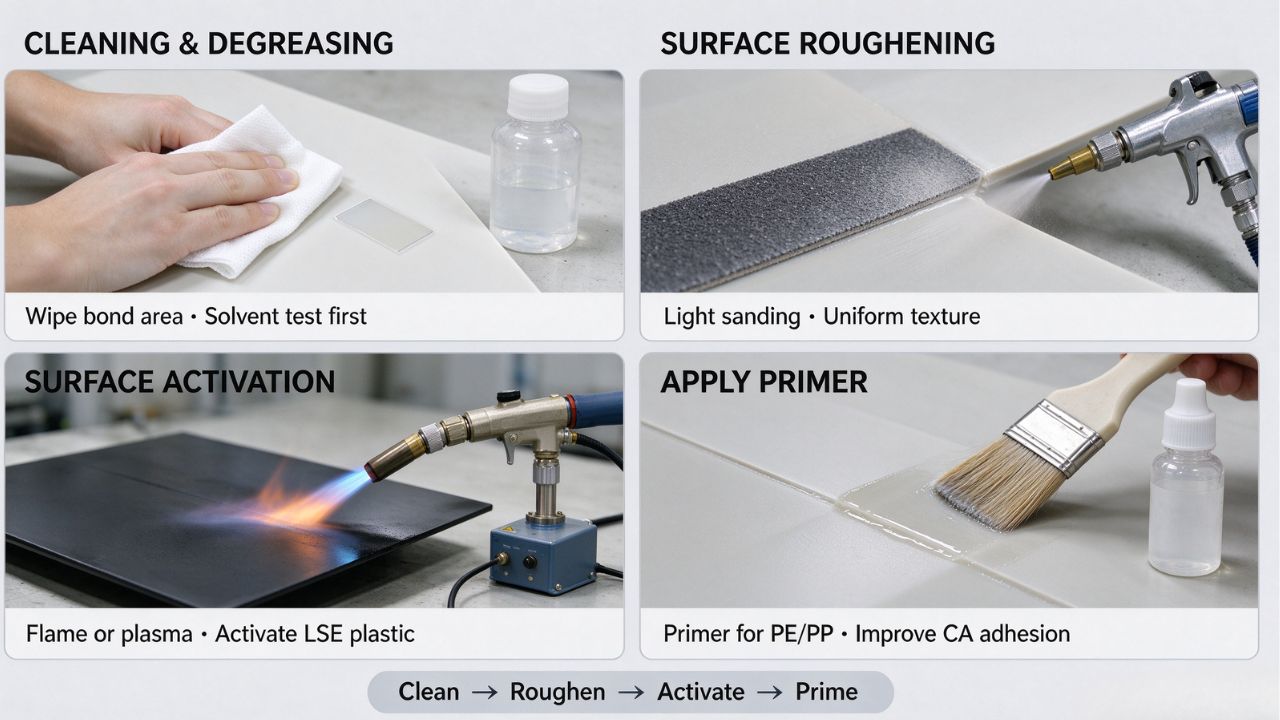
Cleaning and Degreasing
Wipe the bonding surfaces with a non-woven cloth saturated with isopropyl alcohol, acetone, or butanone to remove all visible contaminants. Before wiping, test the solution on an inconspicuous area of the sheet to prevent stress cracking or surface corrosion.
Surface Roughening
After cleaning, lightly sand the bonding surfaces with medium-grit sandpaper to increase their roughness. This enhances the physical interlocking force, allowing the adhesive to penetrate and form a mechanical structure similar to a mortise-and-tenon joint. After sanding, blow away dust with compressed air, then wipe the surface with a solvent.
Surface Activation
This step is mainly required for low-surface-energy plastic sheets like PE and PP sheets. Activation methods include flame treatment, corona treatment, plasma treatment, and the application of a primer.
- Flame treatment uses an oxidizing flame to introduce polar groups onto the plastic surface, raising the surface energy to 42–50 mN/m; it is commonly used in automotive parts, packaging, and medical devices.
- During corona treatment, high-frequency discharges generate plasma, introducing polar groups to the plastic surface.
- Plasma treatment involves ionized gas attacking the plastic surface to clean and chemically activate it. This method is frequently used in precision electronics and medical devices.
- A primer is a specialized chemical coating that forms a highly reactive transition layer on the surface, increasing the bonding strength of CA adhesive by 25–40 times. This method is used when bonding PE or PP sheets.
Proper Application Technique
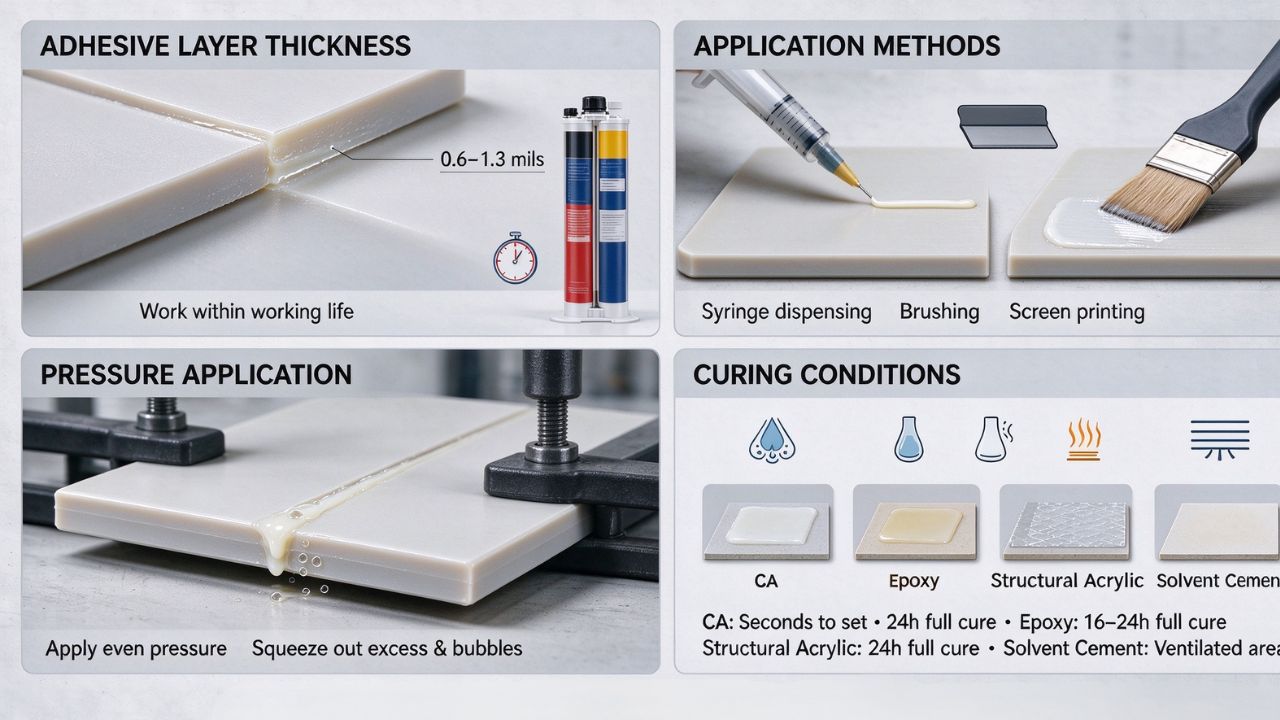
Controlling Adhesive Layer Thickness
The optimal adhesive layer thickness is 0.6–1.3 mils; this range is suitable for most bonding applications. For two-component adhesives, all applications must be completed within the working life, typically 5–30 minutes depending on the formulation.
Bonding Application Techniques
Single-sided and double-sided application.
In most cases, single-sided applications are used. However, for large-area or high-precision bonding, double-sided application is commonly employed to ensure complete coverage of the materials.
Application Methods
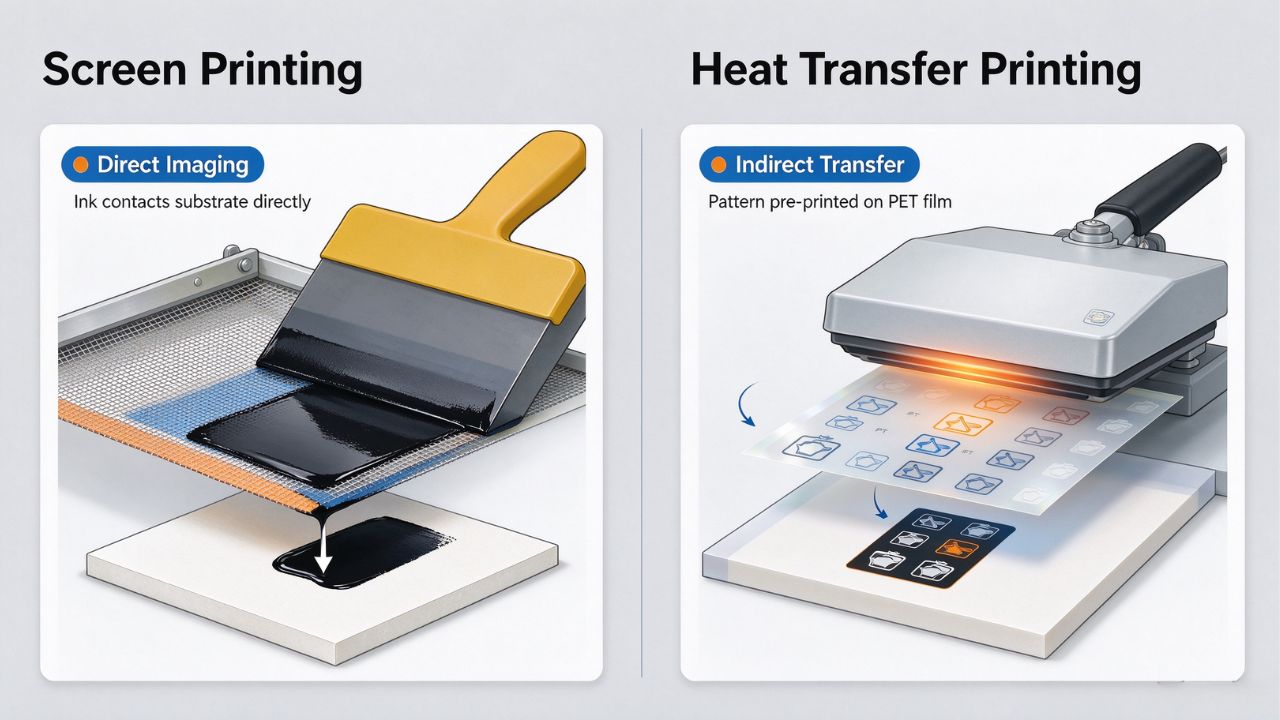
Depending on your production scale and product precision requirements, methods such as brushing, syringe dispensing, screen printing, spraying, or automated dispensing systems can be used.
Pressure Application
After the two items are joined, pressure must be applied to allow the adhesive to fill the joint and to squeeze out excess adhesive and air bubbles.
Curing Conditions
- CA adhesives take between a few seconds and 60 seconds to initially set, and 24 hours to fully cure. Curing takes place in an environment with a relative humidity of 40–80%; when humidity is below 40%, the curing rate slows down.
- Epoxy resins take 5–30 minutes to initially set, depending on the formulation. Full cure requires 16–24 hours at room temperature; heat curing can shorten the curing time.
- Structural acrylics achieve handling strength in 5–40 minutes and full cure in 24 hours at room temperature; heat curing can further shorten the cycle.
- Solvent cement cures in a few minutes to several tens of minutes; the full cure time depends on the evaporation rate of the solvent, and curing must take place in a well-ventilated indoor environment.
FAQs
Can Different Types of Plastic Sheets Be Bonded Together?
Yes, but of course you need to choose the right adhesive for bonding different types of plastic sheets together. The choice primarily relies on surface energy and chemical compatibility. If both plastics have high surface energy, you can use CA glues, epoxy resins, or structural acrylic adhesives. If one is high and the other low, choose standard structural acrylic adhesives or specialized grades for low-surface-energy materials. Alternatively, if both are very low, use a structural acrylic resin specifically designed for low-surface-energy plastics. In another case, if the two plastic sheets are of the same thermoplastic type, a solvent-based adhesive can be chosen.
Can Glue Bonding Replace Mechanical Fasteners for Plastic Sheet?
Yes, in most applications, structural adhesives can replace screws, rivets, and welding. Their advantages lie in the fact that they can evenly distribute stress, rather than concentrating it at one point like mechanical fasteners. Moreover, they possess both bonding and sealing functions, eliminating the need for additional sealing measures.
Furthermore, structural adhesives have excellent material compatibility and can bond various materials, such as plastics, metals, and composite materials. However, unlike mechanical fasteners, they do not require drilling holes in the materials.
How Can You Remove Excess Glue from the Surface of a Plastic Sheet Without Causing Damage?
The method for removing excess glue depends on the type of glue and how much it has cured. If it hasn’t cured yet, you can wipe the surface of the plastic sheet with a lint-free cloth soaked in isopropyl alcohol or acetone. If the glue has already cured, use a soft plastic scraper to gently scrape it off, applying light pressure to avoid causing a haze or cracks on the surface of the plastic sheet.
Why Does a Plastic Sheet Bonded Joint Keep Failing?
Causes of plastic sheet joint failure include using unsuitable glue, like standard CA or epoxy on low-surface-energy plastics, weakening the bond. Inadequate surface preparation or contaminants, like release agents, plasticizers, or oils, prevent glue contact. The glue layer may be too thick or too thin. If too thick, it may not cure internally or may shrink excessively. If too thin, it cannot secure the bond. Inadequate curing conditions, like low temperature, low humidity, or short time, prevent reaching the designed full strength.
What Causes Whitening Around the Bonded Area on Plastic Sheets with CA Adhesive?
This white, powdery substance is known as “blooming,” and it is a common phenomenon during the curing process of CA adhesive. Blooming does not affect the bond strength of your plastic sheets.
Causes of blooming during curing include applying too much adhesive, excessive humidity, poor ventilation, or application to acidic surfaces. Preventive measures include reducing the amount of adhesive used, working in a well-ventilated environment with low humidity, or using adhesives formulated to minimize blooming.
Final Thought
The key to bonding plastic sheets is to first determine the sheet material used, and then select the appropriate glue and bonding process. Zoycen can provide you with various materials and specifications of plastic sheets, and can offer you professional material selection guidance. If you are interested, please contact us.