Transfer printing technology is widely used in the product manufacturing industry, with screen printing and heat transfer being the most common techniques. This article will introduce the differences and applications between them, allowing you to make a better choice.
What is Screen Print?
The core principle of screen printing is stencil printing, which uses photosensitive technology to block the mesh openings in the non-image areas, leaving the image areas open so that ink can be transferred.
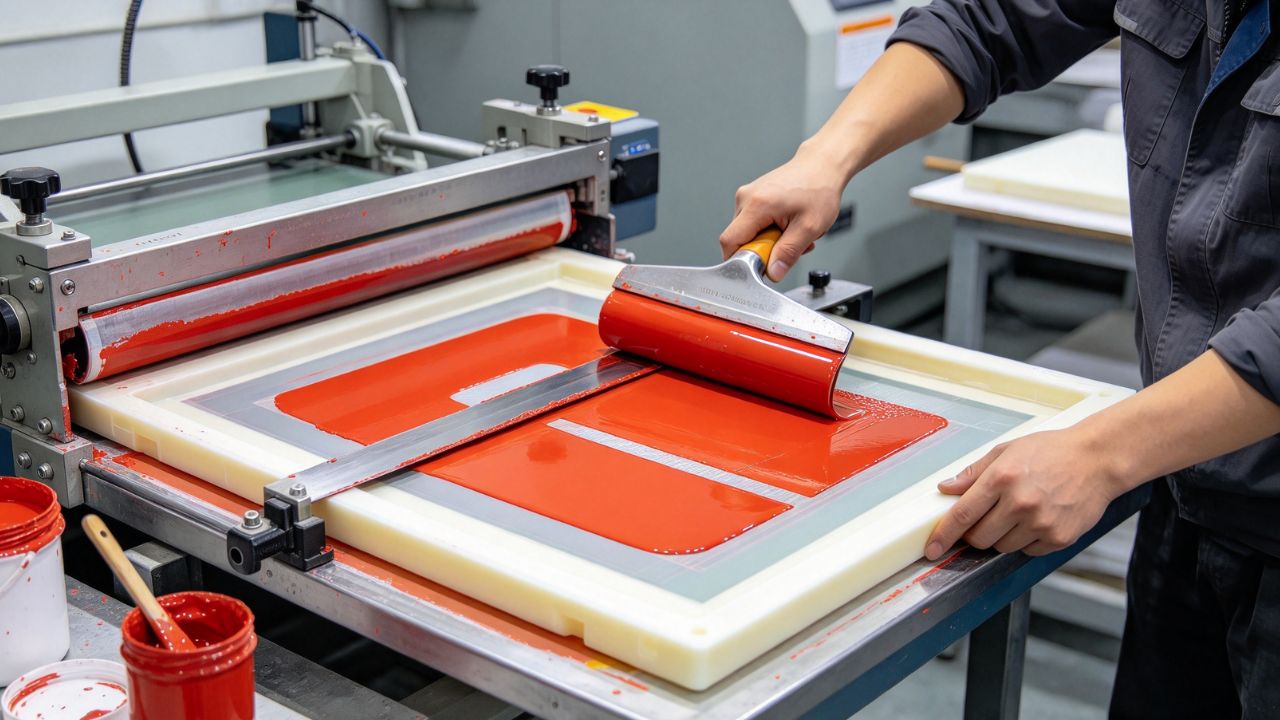
During the printing process, a squeegee forces the ink through the mesh to transfer the design onto your product. It is compatible with a wide range of materials, including plastic, metal, and glass, and works on surfaces of virtually any shape, from flat panels to curved and spherical parts. Furthermore, the ink layer in screen printing can reach a thickness of 20-100 micrometers, offering high color saturation and exceptional durability.
What is Heat Press?
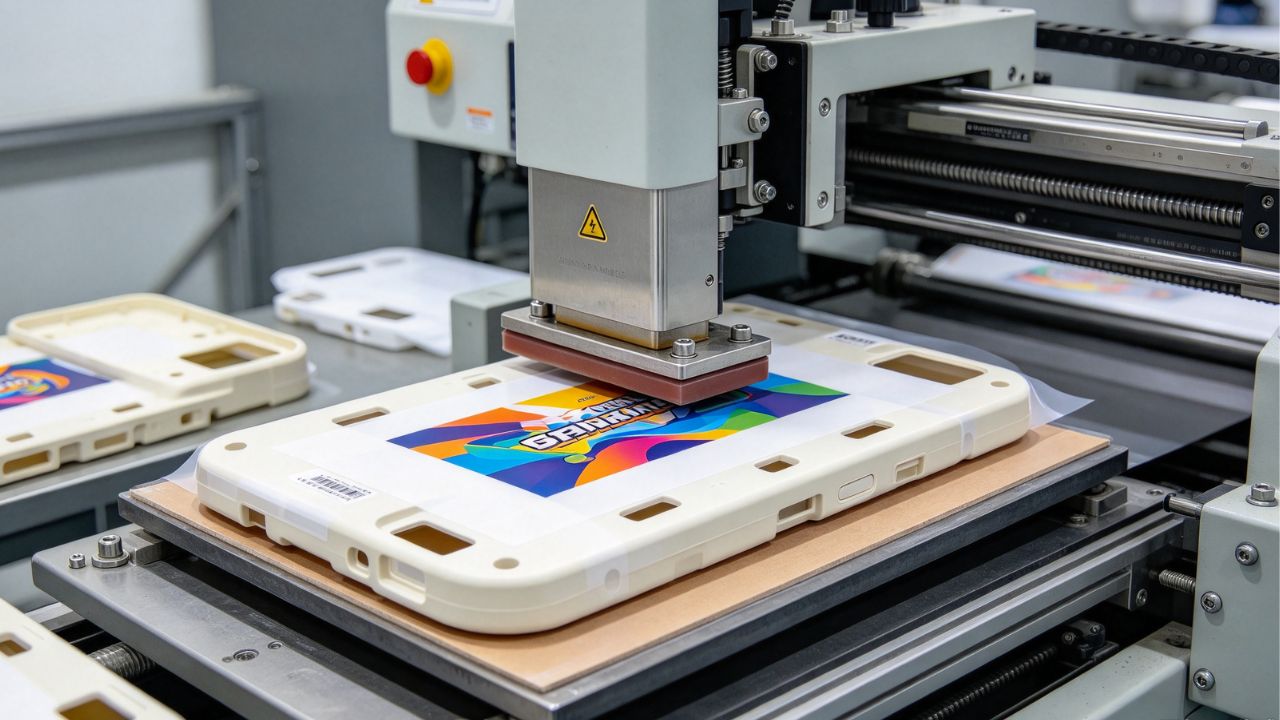
Heat transfer printing is commonly referred to as a heat press in the industry. It involves first pre-printing a design onto a special transfer film or transfer paper, then applying heat and pressure to transfer the design from the transfer medium onto your product.
There are two main types of this process: sublimation heat transfer and hot-melt heat transfer. It is characterized by the ability to transfer designs with rich colors and great detail, while maintaining excellent overall fidelity. The process is relatively flexible and well-suited for producing a wide variety of products in small batches. Compared to traditional transfer methods, the heat transfer process is cleaner.
The Differences Between Screen Print and Heat Press
Transfer Mode
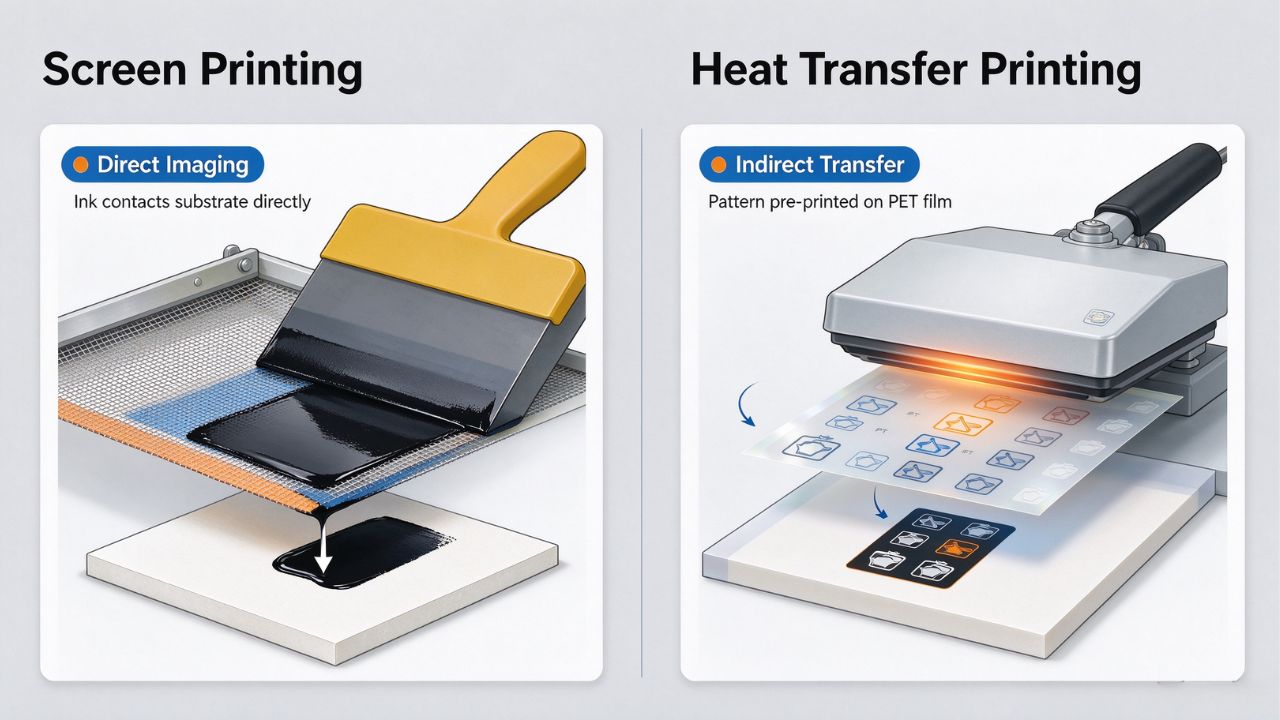
The transfer process in screen printing is direct imaging, in which the ink comes into direct contact with the substrate. In heat transfer printing, the transfer process is indirect: the design is first pre-printed onto a transfer medium, most commonly PET film or specialty transfer paper, and then, through heating, the design is transferred from the film to the substrate to complete the transfer.
If you prefer a simple processing method, then you can choose screen printing.
Ink Film Thickness
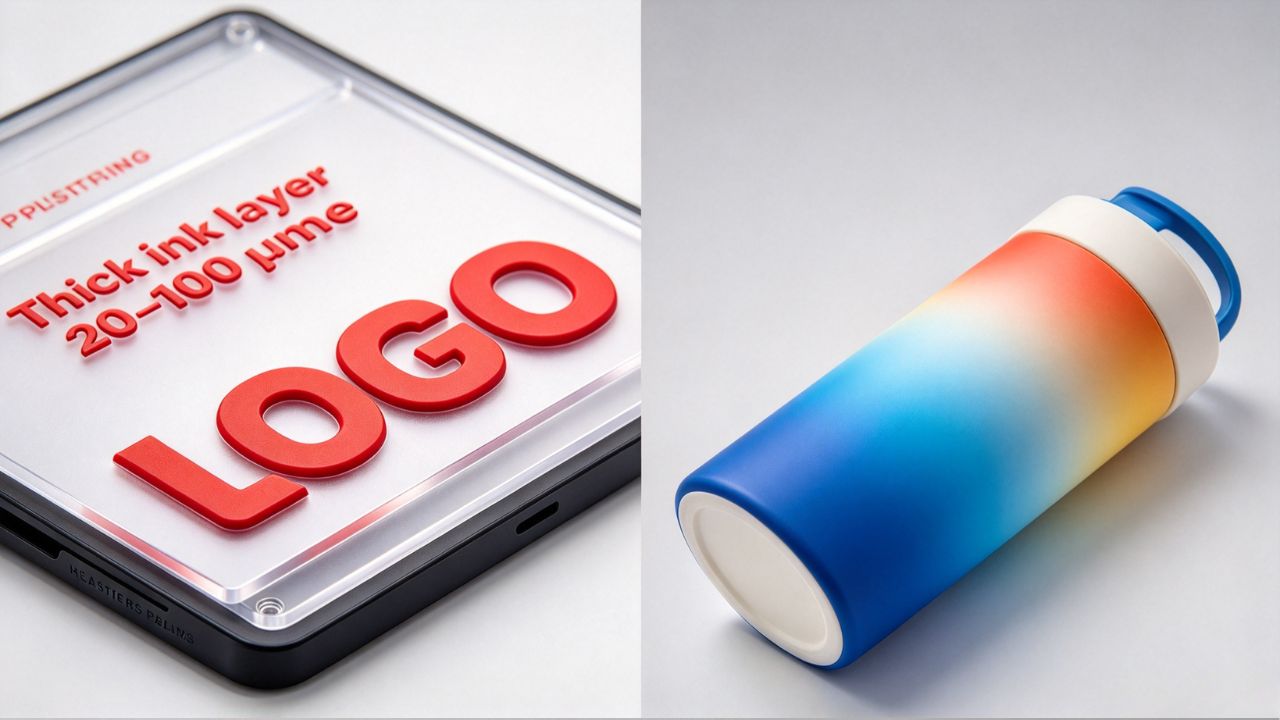
Screen printing produces a thick ink layer, typically ranging from 20 to 100 micrometres, creating a distinct raised, tactile finish. Heat transfer printing produces a thin ink layer, typically ranging from 3 to 8 microns. It does not create a tactile texture and lies virtually flush with the substrate after transfer.
Screen printing is suitable for products that you want to achieve a special texture, while heat transfer printing is suitable for products that require a smooth finish.
Color Rendering
Screen printing achieves color reproduction through spot color overprinting or halftone overprinting, using color separation plates to layer colors. Heat transfer printing achieves color reproduction via pre-printed halftone dots or full-image transfer. This method supports gradients and photo-quality transfer effects.
For products with rich colors or intricate patterns, heat transfer printing is the better fit. For those requiring high color saturation, screen printing is the way to go.
Initial Material State
Screen printing uses liquid or paste-form ink, and the ink’s viscosity determines whether it can pass through the mesh openings. Heat transfer printing uses a solid dry film; at room temperature, the pattern ink and heat-activated adhesive layer on the transfer film are solid, so they must be heated to melt before the image can be transferred.
Screen printing requires adjusting the consistency of the ink on-site, which demands high technical skills from the operators and requires the ink to be stored in a sealed container. However, heat transfer printing can be prepared in advance, and there is no need to worry about the curing issue.
Bonding / Adhesion Mechanism
Screen printing relies on chemical cross-linking and solvent bonding. The UV ink used undergoes a chemical cross-linking reaction when exposed to ultraviolet light, forming a molecular-level network structure that allows the ink to bond firmly to the substrate. Solvent bonding occurs when the solvent in the ink swells the surface of the substrate, allowing the ink layer to anchor and embed itself, thereby forming a tight bond with the substrate.
Heat transfer printing achieves the bond between the ink and the substrate through hot-melt adhesive and physical adhesion. After bonding, the adhesive layer must be cooled to cure.
Curing and Film-forming Timing
The curing step takes place after ink transfer. Depending on the ink formulation, curing can be done via UV light exposure, oven heating, or air drying. In contrast, the transfer operation itself is a single step: the adhesive layer melts under heat and pressure, then cures rapidly as it cools immediately after the press is released.
When you have sufficient preparation time and space, screen printing is a good choice. When your printing space is limited, you may prefer heat transfer printing, which completes everything in one go.
Pressure Application Mode
In screen printing, pressure is applied through the horizontal shear force generated by the movement of the squeegee. In heat transfer printing, pressure is applied vertically by a heat press plate or a silicone roller.
The Applications of Screen Print and Heat Press
Plastics Processing Industry
Screen Print
Screen printing is the most widely used method for printing on plastic products. It is suitable for text, numbers, and designs with distinct color blocks.
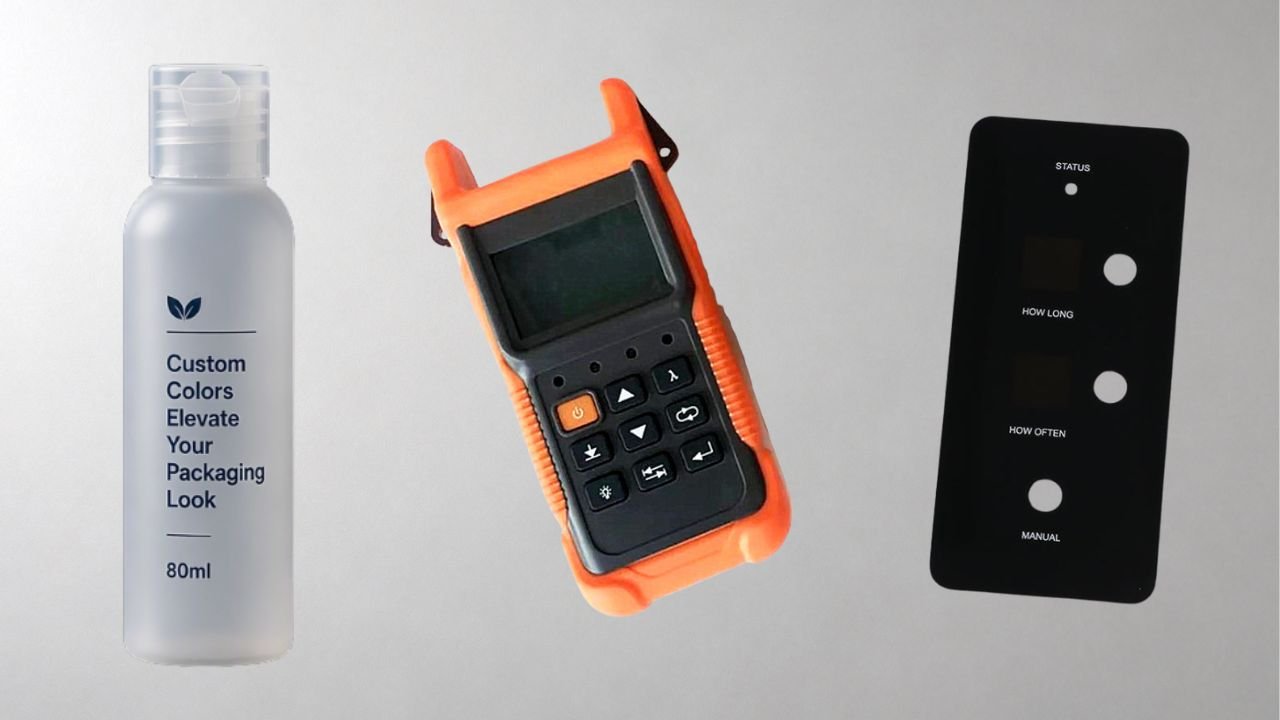
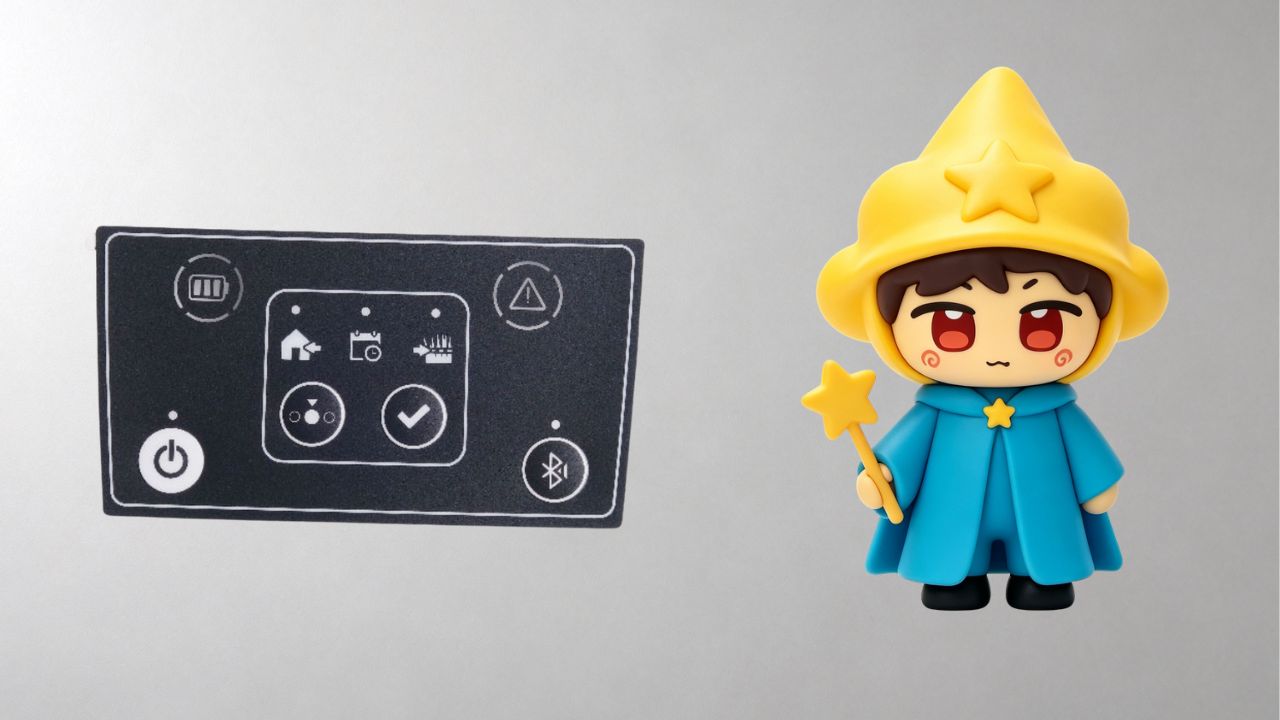
In the plastics industry, screen printing is used on plastic packaging containers, the surfaces of injection-molded parts, plastic panels, and nameplates, among other applications. The process is simple and cost-effective, making it a versatile option for most plastic part printing, providing good ink adhesion and a smooth print surface.
Heat Press
Heat transfer printing is the preferred solution for full-color printing on plastic products and is specifically used in high-end plastic packaging, the decoration of injection-molded parts, and plastic toys. High-end packaging typically features rich and delicate colors, and heat transfer printing’s high color fidelity makes it well-suited for these requirements. After heat transfer printing, the surface is smooth, wear-resistant, and corrosion-resistant.
However, the cost of consumables is high, and it has a longer per-unit production cycle. If your product requires precise reproduction of the design, it’s worth taking a little extra time to choose heat transfer printing.
Electronics Industry
Screen Print
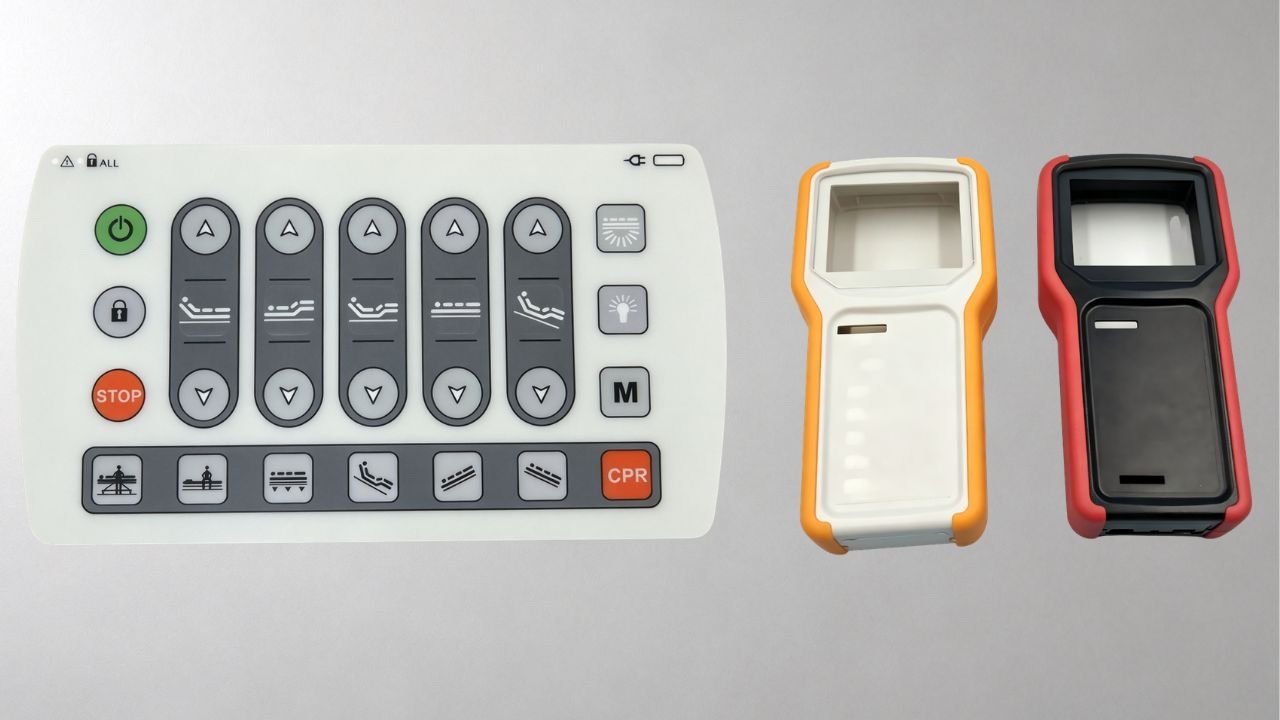
Screen printing has become an indispensable process in the production of electronic products; it serves not only decorative purposes but also enables functional printing. It is used in printed circuit boards, electronic components, membrane switches, and keyboards, among other applications.
Screen printing allows for high-precision printing on large-area substrates. With its ability to deposit functional layers, it can print conductive traces and tactile feedback layers.
Heat Press
In the electronics industry, heat transfer printing is primarily used for exterior decoration and customization, such as on cell phone cases, the casings of electronic devices, and the panels of home appliances. It is well-suited for small-batch production.
Automotive Industry
Screen Print
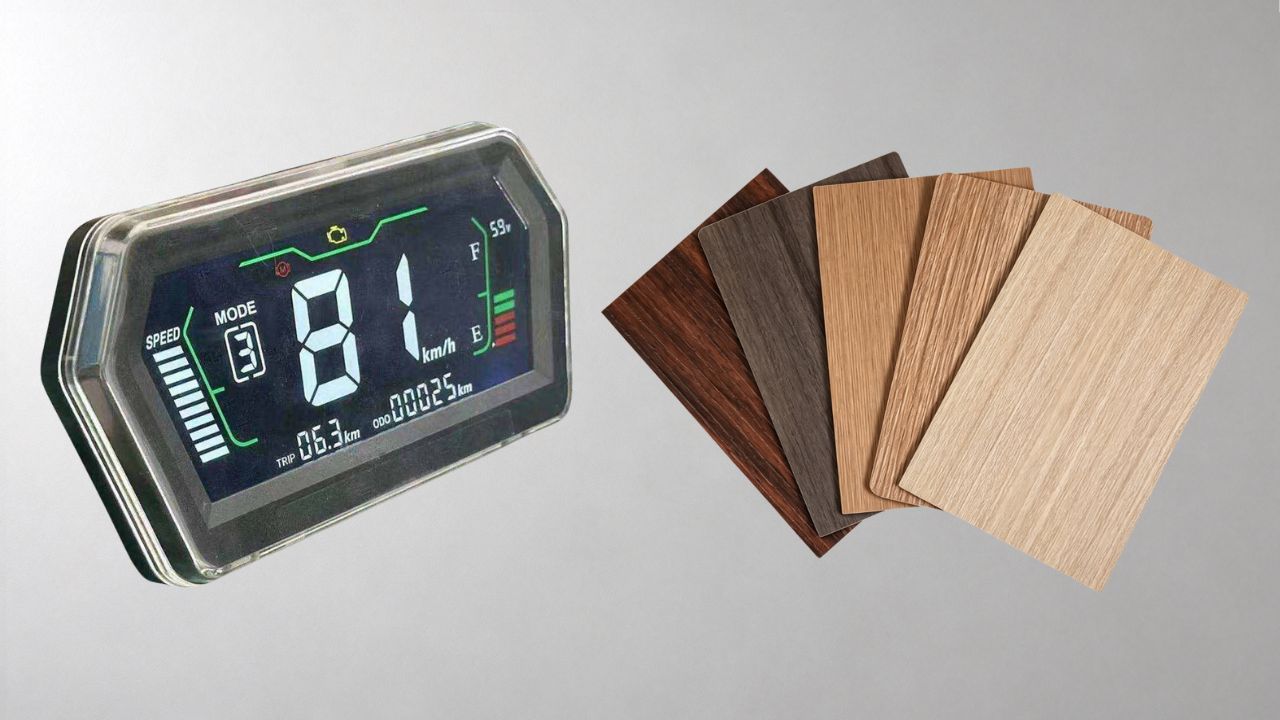
Screen printing plays a vital role in automotive manufacturing. For example, it works well on interior components such as instrument panels, center console panels, and touch-sensitive panels. On the exterior, it is ideal for logos, black windshield frames, and panoramic sunroofs.
Screen printing is also used on the vehicle’s electronic and functional components. This is because screen printing meets the requirements for high opacity and backlighting, and offers excellent post-processing performance.
Heat Press
In the automotive industry, heat transfer printing is primarily used for interior trim, such as wood-grain finishes, air conditioning vents, and engine cover accents.
Heat transfer printing can produce a wide range of decorative effects, making it ideal for companies seeking a premium visual experience.
Textile Industry
Screen Print
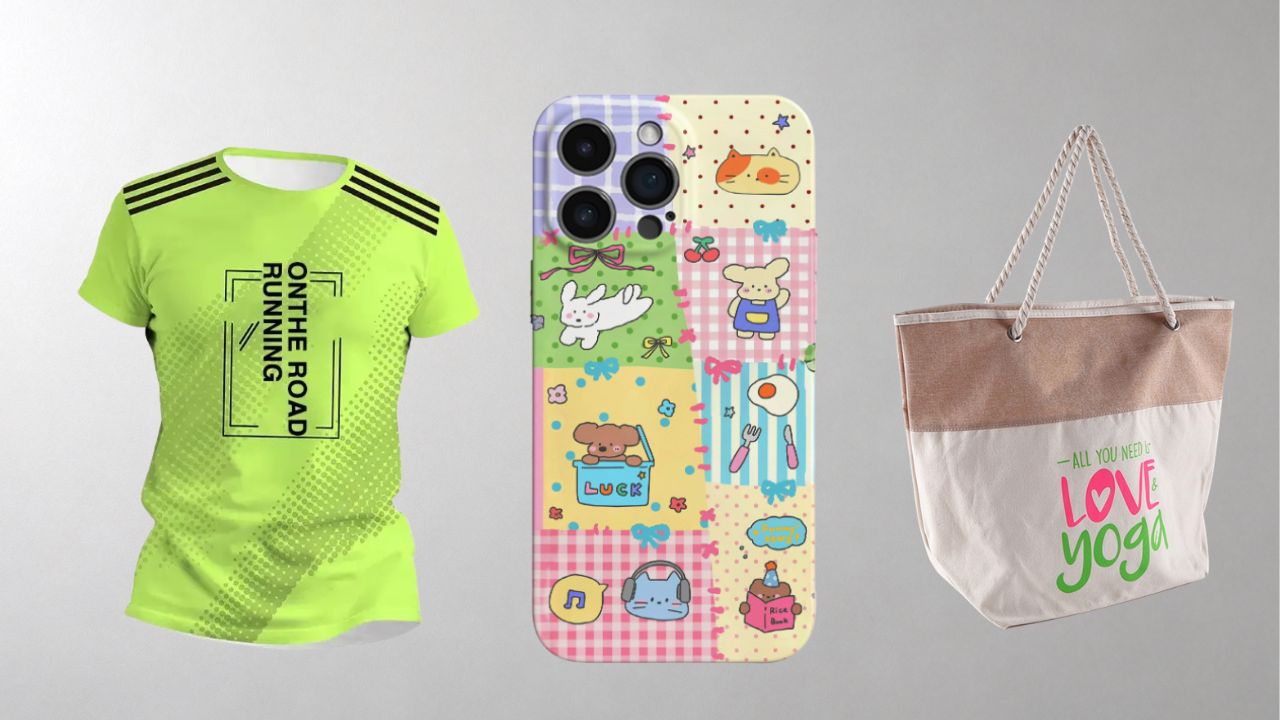
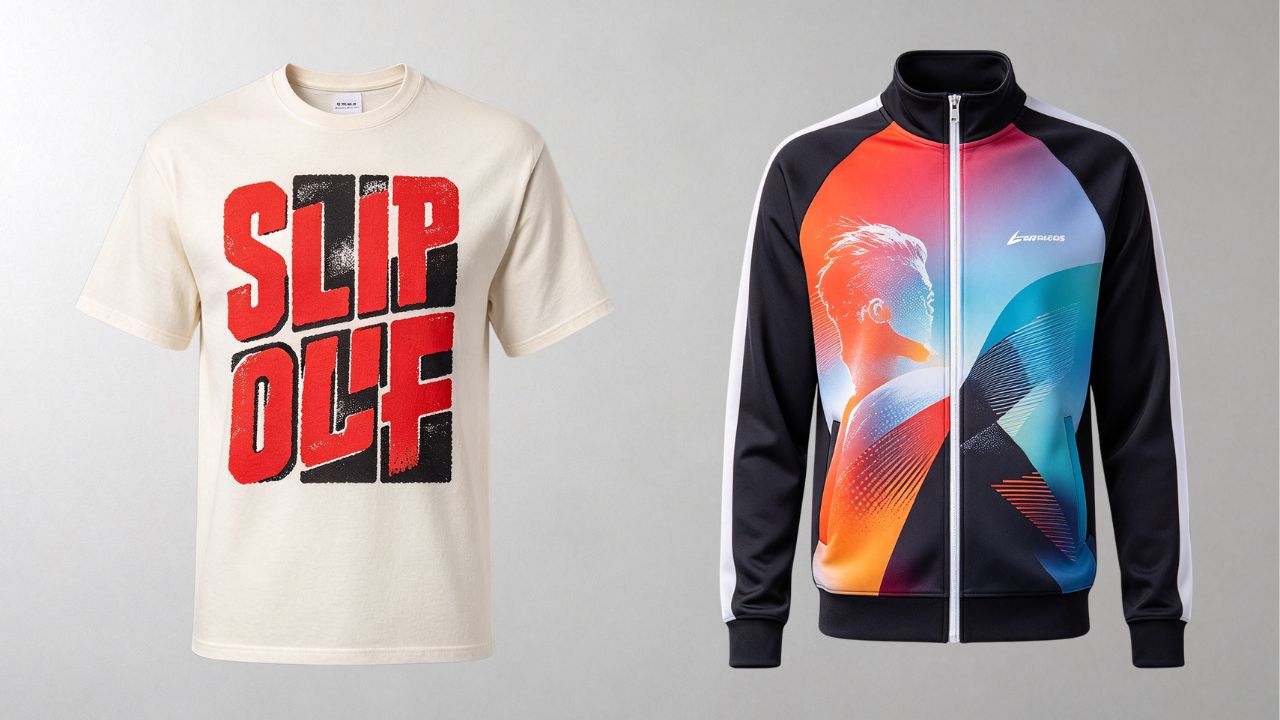
Screen printing is the most traditional method used in textile printing. It is commonly used on clothing, accessories, and promotional items. These prints typically feature vibrant colors, which are characteristic of screen printing, and the raised ink layer creates a unique texture. Screen printing is well-suited for high-volume textile production and remains the most cost-effective option for large runs of clothing, accessories, and promotional items.
Heat Press
Heat transfer printing remains a suitable option for manufacturers in the textile industry that specialize in customization and small-batch production. It is used on casual and athletic apparel, fashion accessories, and home textiles.
Across these industries, the techniques employed include sublimation transfer, direct-to-film transfer, and flock transfers.
FAQs
Can I Use a Heat Press for Screen Print Transfers?
Yes, heat press machines can be used not only for heat transfer printing but also for screen-printed transfers. The specific process involves first using screen-printing equipment to print the design onto special transfer paper, and then using a heat press machine to transfer the design onto the product. The advantage of this method is that it lowers the equipment barrier to entry and improves transfer efficiency.
How Long Do Screen Prints Last?
The lifespan of a screen-printed design varies depending on its application. Under normal usage conditions, the screen-printed patterns can remain intact for 5 to 10 years indoors and approximately 5 years outdoors. Using high-performance weather-resistant inks can significantly extend their service life.
What to Do if Ink Smudges After Screen Printing?
If ink smudges appear after screen printing, address it in four steps. First, if uncured, use a fine cotton swab or lint‑free cloth dipped in thinner to gently wipe edges, but do not rub hard to avoid dissolving surrounding ink. Wipe residual solvent to speed drying. Second, if cured in non‑image areas, scrape with a craft knife at a shallow angle, or use acetone (test on a hidden area) to swell and blot. Third, for large, irreversible stains, discard the substrate. Fourth, for minor scratches, polish with fine compound and wool wheel at low speed.
What Causes Bubbling or Poor Adhesion After Heat Transfer Printing?
This issue during the heat transfer process can be caused by a dirty substrate surface, material incompatibility, inappropriate parameter settings, or insufficient surface energy of the substrate, resulting in poor transfer adhesion and bubbling.
The solution is as follows:
- Thoroughly clean the substrate before processing to ensure it is free of oil, dust, and release agents.
- You need to verify that the heat transfer film and the substrate are compatible.
- You can adjust the process parameters based on the characteristics of the substrate and the film.
- You can perform surface pretreatment, such as corona, flame, or ion treatment.
What Causes Incomplete or Missing Patterns After Heat Transfer Printing?
Reasons for incomplete or missing designs after heat transfer include:
- The transfer temperature is too low, which prevents the ink and adhesive layer from fully melting, thus failing to complete the transfer.
- Insufficient pressure prevents the film from adhering tightly to the substrate.
- The transfer time is too short for the design to fully transfer.
- There may be a problem with the equipment, such as uneven hardness or marks on the transfer machine’s adhesive roller.
- The transfer adhesive was not applied thoroughly or evenly.
- Transfer paper or film that has been stored for too long or has become damp may also result in an incomplete or missing transfer design.
Final Thought
You can decide whether to use screen printing or heat transfer based on your product’s production scale and the required detail of the transferred image. Zoycen can provide professional transfer technology to meet your production needs. If you are interested, please contact us at any time.